
Iron On Patches vs Hook And Loop Patches: Which Backing Is Right For You
Choosing between iron on patches and hook and loop patches sounds simple — until you pick the wrong one and face a full production rework. I've watched buyers lose weeks of lead time and thousands of dollars because they treated backing selection as an afterthought. The right choice starts with understanding how your patch will actually be used.
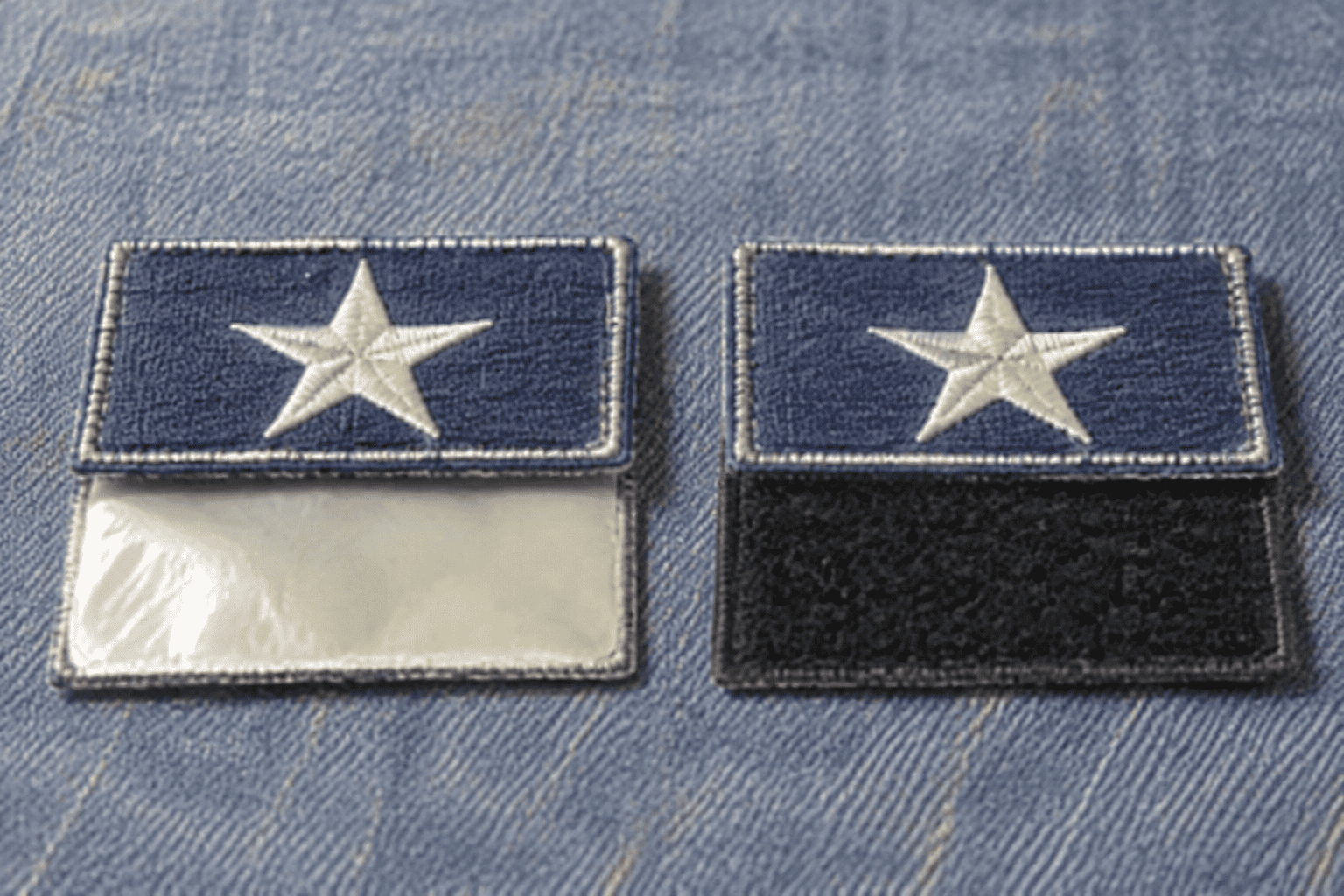
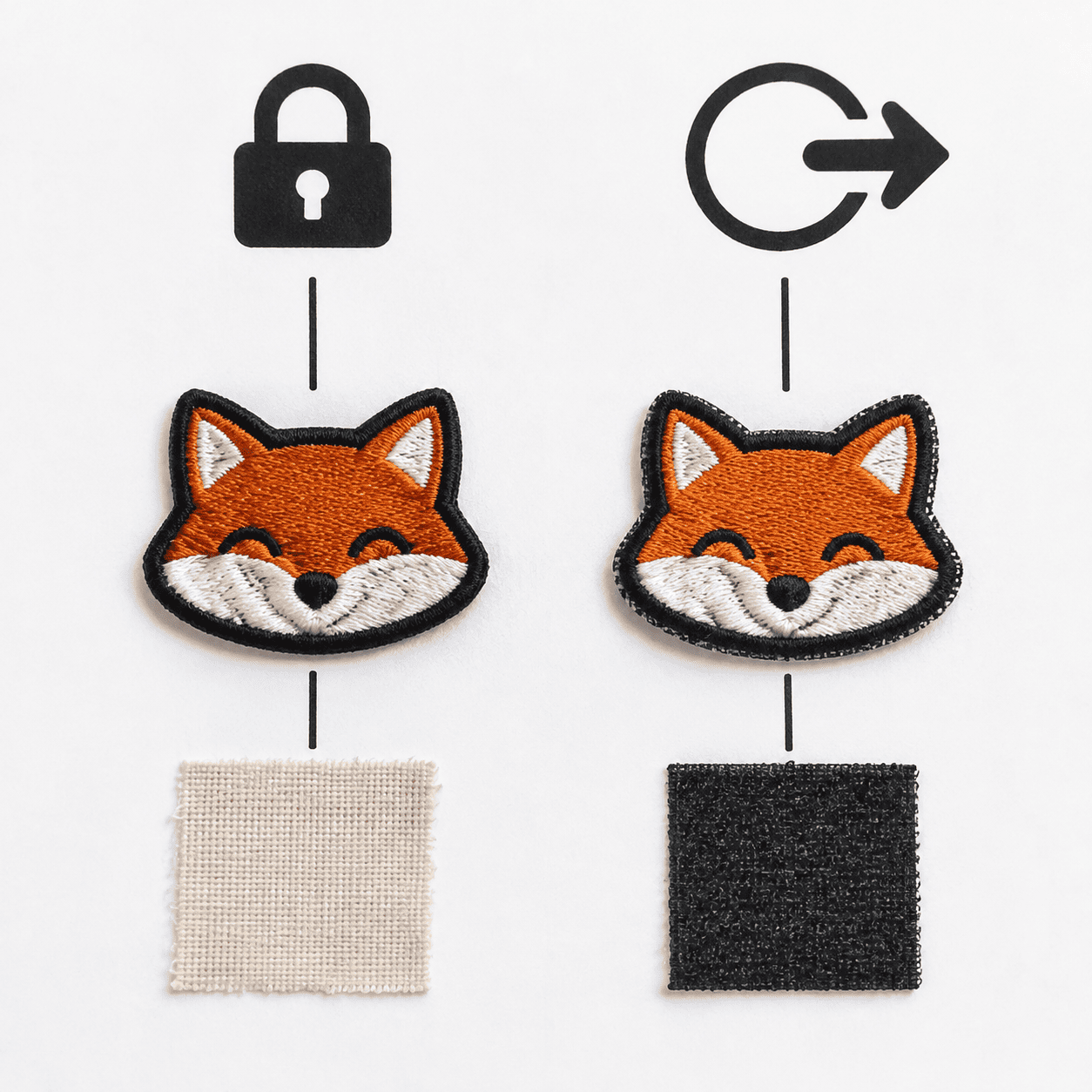
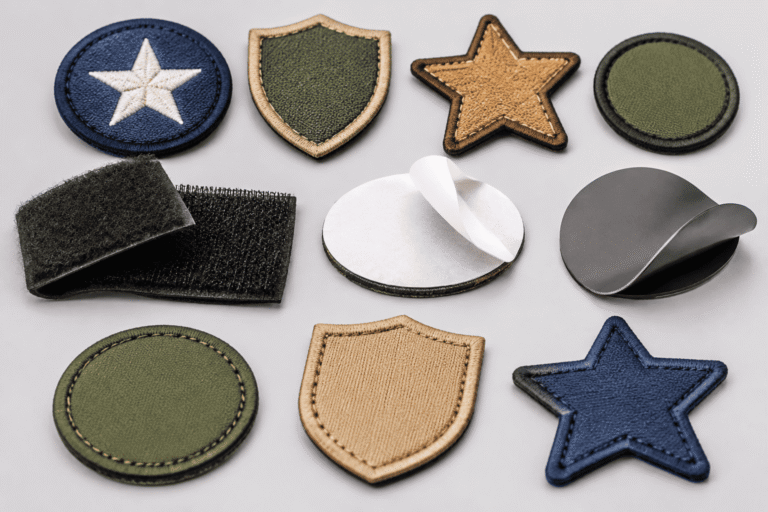
The core difference is permanent vs. removable. Iron on patches bond permanently to fabric using heat-activated adhesive — ideal for fixed branding on compatible textiles. Hook and loop patches attach to a sewn-in loop panel and can be swapped on and off repeatedly — essential when patches need to change. Your decision should be driven by removability needs, base fabric type, and the cost of getting it wrong at volume.
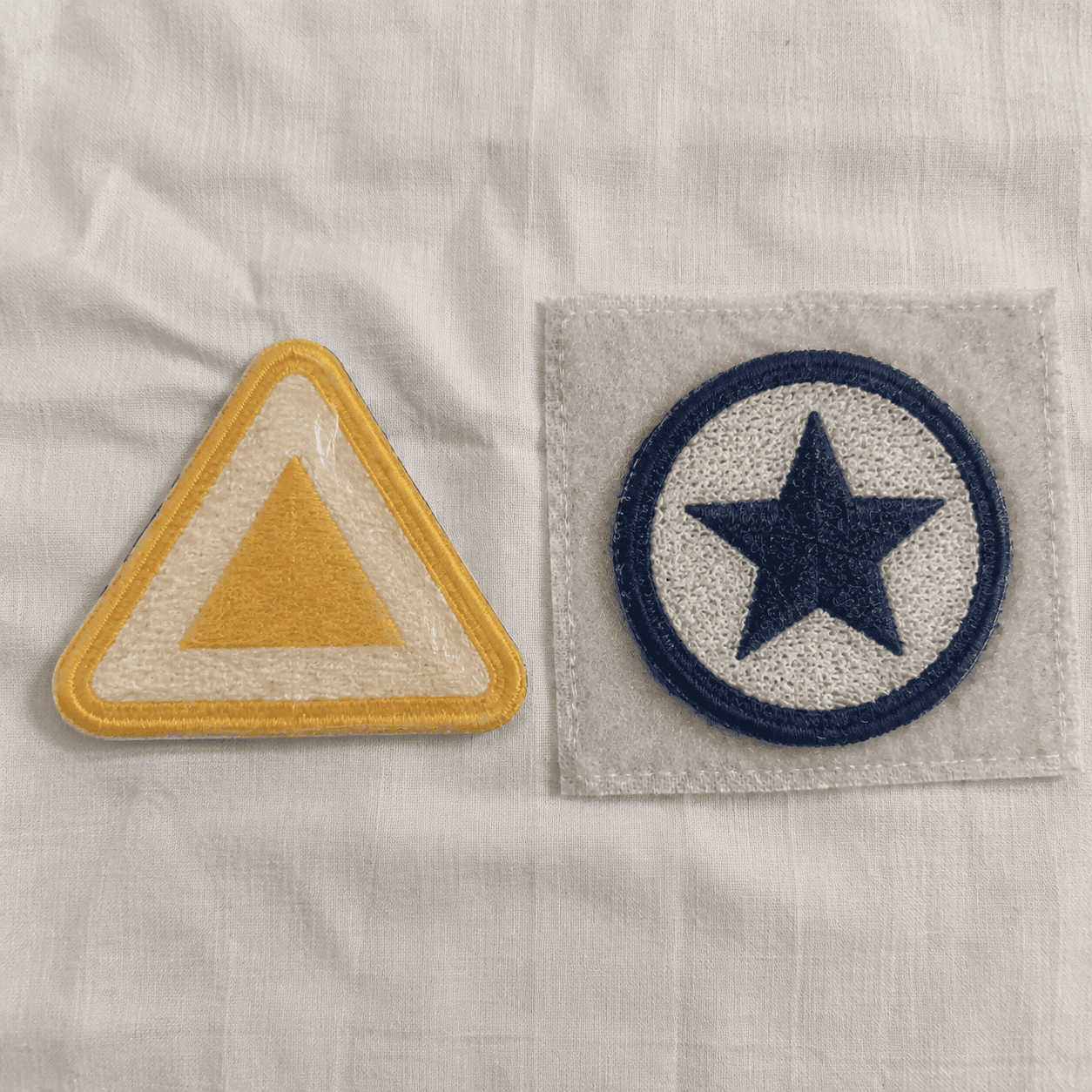
That sounds straightforward, right? But in practice, the details trip up even experienced procurement teams. Let me walk you through the decision factors that actually matter when you're placing a bulk order.
Do Your Patches Need To Be Removable?
This is the very first question I ask every client, and it's surprising how often it gets overlooked until production is already underway.
If your patches need to be swapped — think employee name tapes1, event badges, rotating team logos, or seasonal branding — hook and loop is your only real option. Iron on creates a permanent bond. Trying to remove an iron on patch damages the fabric underneath2. There's no clean way around it.
When iron on makes sense
Iron on patches work perfectly when the patch stays put for the life of the garment:
- Brand logo patches on retail apparel
- Size or care labels applied during production
- Decorative patches on jackets, jeans, or bags
Once heat-sealed, the bond is strong and clean3. No extra hardware, no loop panel, no added bulk. For permanent placement, it's the most streamlined option.
When hook and loop is the right call
A common pattern I see is buyers dismissing hook and loop because they associate it with military or tactical gear. That's outdated thinking. Hook and loop solves real problems for:
- Corporate uniforms where employee names rotate
- Sports teams swapping player numbers or sponsor logos
- Outdoor clubs and events with changing event patches
- Children's garments where name labels need updating
Quick rule: If the patch changes, choose hook and loop. If it stays forever, choose iron on.
What Fabric Are You Attaching The Patch To?
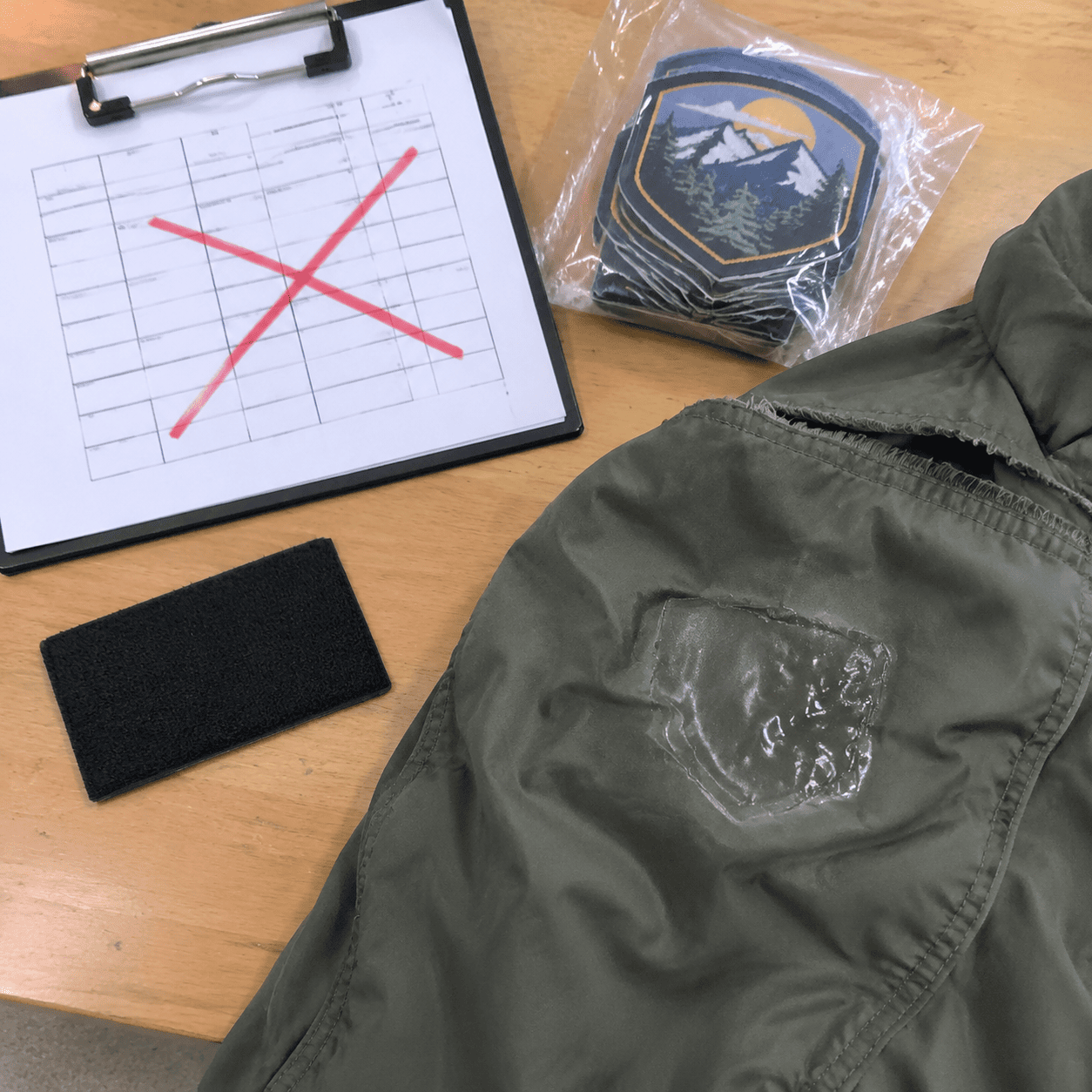
This is where most bulk-order failures happen. And I want to be direct: it's not a patch quality issue — it's a fabric compatibility issue.
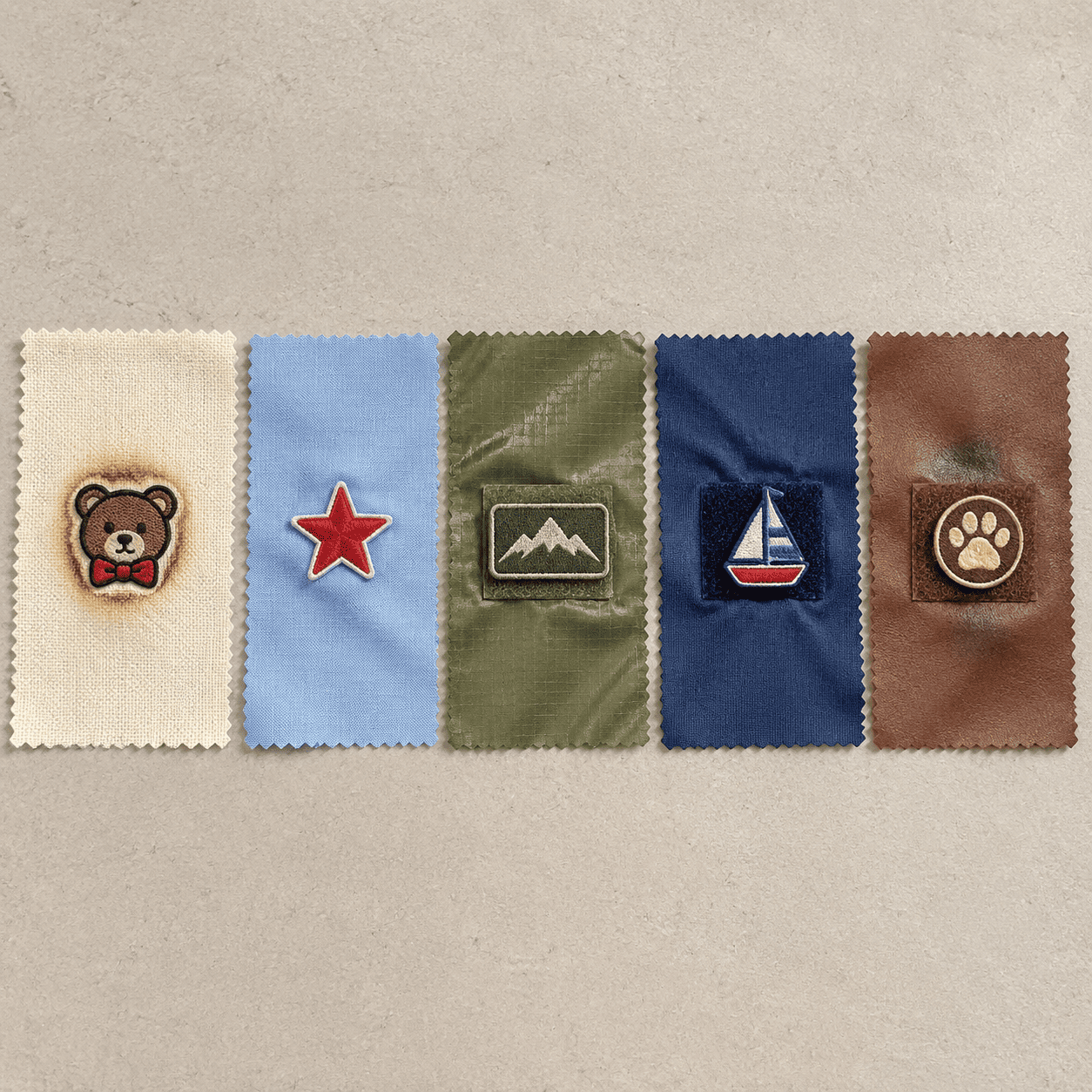
Iron on adhesive needs heat to activate, typically around 150–180°C4. That works great on cotton and cotton-blend wovens. But it creates serious problems on heat-sensitive materials.
Fabric compatibility at a glance
| Fabric Type | Iron On | Hook And Loop |
|---|---|---|
| Cotton / cotton blends | ✅ Works well | ✅ Works well |
| Polyester blends5 | ⚠️ Test first | ✅ Works well |
| Nylon / ripstop | ❌ Risk of damage | ✅ Works well |
| Waterproof membranes | ❌ Destroys coating | ✅ Works well |
| Stretch knits6 | ⚠️ May peel over time | ✅ Works well |
| Leather / faux leather7 | ❌ Heat damage | ✅ Works well |
In our experience advising DTC brands and garment factories, nylon and waterproof fabrics cause the most trouble. Buyers assume iron on works on everything. It doesn't. The heat either warps the fabric or melts the waterproof membrane entirely.
The hidden planning step for hook and loop
Here's something most comparison articles skip: hook and loop patches require a loop-side panel sewn into the garment. That means your garment factory needs to know about this before they cut and sew. It changes the construction plan.
If you decide on hook and loop after garments are already made, you're looking at rework — opening seams, adding panels, re-sewing. I always tell clients: decide your backing type before garment production begins, not after.
What Happens When You Choose Wrong At Volume?
Let me be honest — the patch itself is rarely the expensive part. A single embroidered patch costs relatively little. But when you choose the wrong backing on a bulk order, the real costs stack up fast:
- Re-manufacturing the patches with the correct backing
- Re-processing garments (especially if iron on damaged the fabric)
- Missed delivery windows that push past your selling season
I've seen multiple clients come to us mid-season asking for rush re-orders because their original backing choice didn't work on their fabric. The patches were fine. The specification was wrong.
How to avoid this
- Send us your base fabric details (or a swatch) before confirming backing type
- Request samples applied to your actual garment material — not just standalone patch samples
- Confirm removability requirements with your end customer before locking specs
- Align with your garment factory on construction changes if choosing hook and loop
A 3–7 day sampling phase can save you weeks of rework8. We offer free samples specifically for this reason.
Frequently Asked Questions
Can I use iron on patches on nylon jackets?
In most cases, no. Nylon is heat-sensitive and can warp or melt under the temperatures iron on adhesive requires9. For nylon garments, hook and loop or sew-on backing is a much safer choice. Always test on your actual fabric first.
Are hook and loop patches only for military or tactical use?
Not at all. While hook and loop is popular in tactical gear10, it's widely used for corporate uniforms, sports teams, event badges, and children's clothing — anywhere patches need to be swapped regularly.
What's the minimum order quantity for custom patches with specific backing?
At our facility, we offer flexible MOQs for both iron on and hook and loop patches. We recommend reaching out with your specs so we can provide an accurate quote based on your design complexity and backing type.
How long does sampling take for custom patches?
Our standard sampling turnaround is 3–7 days. We strongly recommend testing the patch applied to your actual garment fabric before confirming a bulk order.
Conclusion
The choice between iron on patches and hook and loop patches isn't about which is "better." It's about whether your patch needs to be permanent or removable, whether your fabric can handle heat, and whether your garment construction plan accounts for loop panels. Getting this decision right before production protects your budget, your timeline, and your season.
If you're planning a bulk patch order and want to make sure the backing matches your application, reach out to our team for a free consultation and sample. We'll help you spec it correctly the first time.
"Hook And Loop Name Patch", https://www.amazon.com/hook-loop-name-patch/s?k=hook+and+loop+name+patch. Industries such as hospitality, healthcare, and food service commonly use hook-and-loop name tape systems on shared or pooled uniforms, allowing individual identification patches to be swapped without garment modification. Evidence role: case_reference; source type: institution. Supports: Hook and loop name tape systems are standard practice in industries where uniforms are shared or reassigned between employees. Scope note: Specific adoption rates vary by industry and organization; some sectors prefer embroidered or printed name identification instead. ↩
"Is there a way to remove the glue from iron on patches?", https://www.reddit.com/r/sewing/comments/9jk2op/is_there_a_way_to_remove_the_glue_from_iron_on/. Heat-activated thermoplastic adhesives form a mechanical and chemical bond with textile fibers upon cooling; forced removal can pull surface fibers, leave adhesive residue, or cause visible fabric distortion, particularly on woven substrates. Evidence role: mechanism; source type: research. Supports: Removal of heat-bonded adhesive patches from fabric typically results in adhesive residue, fiber damage, or surface discoloration. Scope note: The degree of damage depends on adhesive type, fabric construction, and removal method; some fabrics may tolerate removal better than others. ↩
"What is Peel Testing?",
. Peel adhesion testing of thermoplastic adhesive films on cotton and cotton-blend wovens, conducted per ASTM D1876 or similar standards, typically demonstrates bond strengths sufficient to withstand repeated laundering when application parameters (temperature, pressure, dwell time) are correctly followed. Evidence role: general_support; source type: research. Supports: Heat-activated adhesive films can achieve strong peel and shear bond strength on compatible woven fabrics when applied at correct temperature and pressure. Scope note: Bond strength results are highly dependent on application conditions and fabric type; field performance may differ from laboratory peel test results. ↩"Can you heat press Iron-on patches?", https://www.dutchlabelshop.com/en_us/blog/heat-press-iron-on-patches/. Heat-activated adhesive films commonly used in textile bonding, such as ethylene-vinyl acetate (EVA) and polyamide-based hot-melt adhesives, typically require activation temperatures in the range of 130–180°C depending on formulation and substrate. Evidence role: mechanism; source type: research. Supports: The activation temperature range for heat-activated adhesive films used in textile patch applications. Scope note: Exact activation temperatures vary by adhesive formulation and manufacturer; the cited range is representative rather than universal. ↩
"Polyester", https://en.wikipedia.org/wiki/Polyester. Polyethylene terephthalate (PET) fibers, the most common polyester in textiles, have a glass transition temperature of approximately 67–81°C and a melting point of approximately 260°C, but fabric surface glazing and hand-feel changes can occur at sustained temperatures above 150°C. Evidence role: mechanism; source type: encyclopedia. Supports: Polyester fibers have thermal properties that may cause glazing or distortion at temperatures used for iron-on adhesive activation. Scope note: Polyester blend behavior depends on the blend ratio, fabric weight, and heat exposure duration; many polyester blends tolerate brief heat-press applications without visible damage. ↩
"How Iron on Hem Tape Bonds to Cloth and Why It Fails", https://wavemaxlaundry.com/temple-tx-olaf-dr/blog/iron-on-hem-tape-bond/. Studies on adhesive bonding in elastic textiles indicate that cyclic strain from stretch-and-recovery movements generates shear stress at the adhesive-fabric interface, leading to progressive bond failure in rigid adhesive systems not designed for high-elongation substrates. Evidence role: mechanism; source type: research. Supports: Repeated stretching and recovery cycles in knit fabrics with elastane content can cause delamination of rigid heat-bonded adhesive layers over time. Scope note: Bond durability on stretch knits varies with adhesive formulation, patch rigidity, and the degree of fabric elongation in use. ↩
"Leather Care Science: Temperature's Impact on Luxury", https://www.selvane.co/blogs/knowledge/how-temperature-affects-leather-storage-wear-guidelines?srsltid=AYCX9vJeEMK0gyZa_SyLQkE7Br6CVdT9qdgWCC3SUiTOP7QYHew6EvK3. Genuine leather begins to shrink and harden at sustained temperatures above 80–100°C due to collagen denaturation, while PU and PVC-based faux leathers can soften, blister, or delaminate at temperatures above 120–160°C, making both materials incompatible with standard heat-press adhesive application. Evidence role: mechanism; source type: research. Supports: Leather and synthetic leather materials are susceptible to heat damage at temperatures required for iron-on adhesive activation. Scope note: Heat tolerance varies by leather type, tanning method, and faux leather formulation; some specialty materials may have higher thermal resistance. ↩
"ISO 2859-1", https://chemistry.unt.edu/~tgolden/courses/iso2859-1.pdf. Industry quality management frameworks, including those aligned with ISO 2859 sampling procedures and AQL-based inspection protocols, emphasize pre-production sample approval as a critical step to identify material compatibility issues and specification errors before committing to full-scale manufacturing. Evidence role: expert_consensus; source type: institution. Supports: Pre-production sampling and approval is a recognized best practice in textile and garment manufacturing to prevent costly bulk production errors. Scope note: The specific 3–7 day timeline cited is manufacturer-dependent and may not reflect all production contexts. ↩
"Nylon", https://en.wikipedia.org/wiki/Nylon. Nylon 6 has a melting point of approximately 220°C and nylon 6,6 approximately 264°C, but both begin to soften and deform at temperatures well below their melting points, making them susceptible to damage during heat-press applications at 150–180°C. Evidence role: mechanism; source type: encyclopedia. Supports: Nylon fibers have melting points that can be reached or approached by iron-on adhesive activation temperatures, risking fabric damage. Scope note: Softening behavior depends on fiber blend, fabric weight, and duration of heat exposure, not solely on peak temperature. ↩
"Army Combat Uniform", https://en.wikipedia.org/wiki/Army_Combat_Uniform. Hook-and-loop fasteners, commercially known as Velcro, were adopted by NASA and the U.S. military beginning in the 1960s and have since become standard in military uniforms for attaching removable insignia, name tapes, and unit patches. Evidence role: historical_context; source type: encyclopedia. Supports: Hook and loop fasteners have been widely adopted by military organizations for uniform patches, equipment attachment, and gear modularity. ↩
0 Comments
Ask a question or share your garment accessories sourcing experience.