
Custom Patch Backing Options: Complete Buyer’s Guide
Choosing the right custom patch backing options can feel overwhelming — until you realize a wrong pick doesn't just disappoint, it triggers batch returns, costly rework, and missed shipping windows. I've watched buyers lose entire production runs because they treated backing as a simple checkbox. It's not. It's a decision that lives or dies on your specific fabric, use case, and wash expectations.
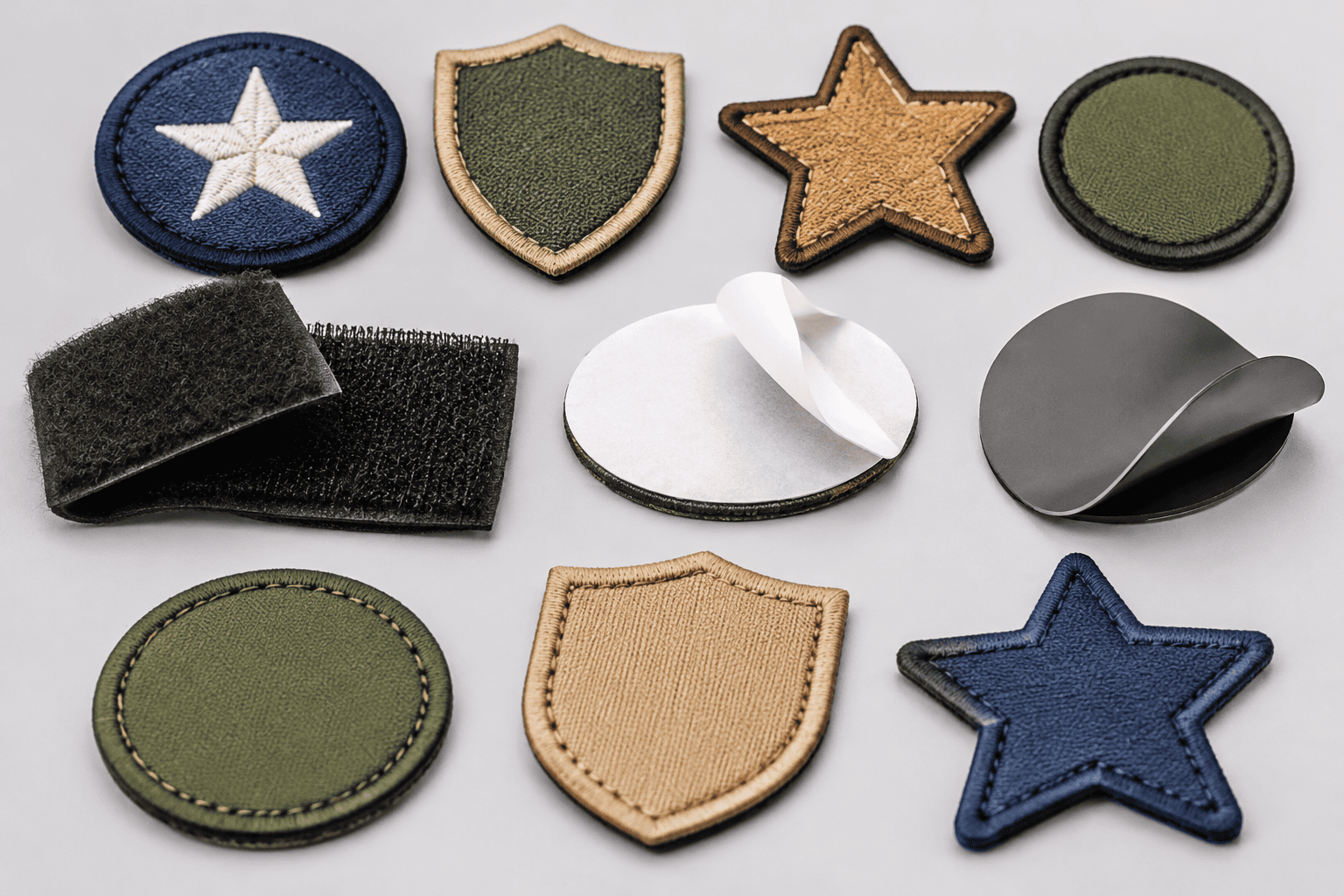
The best custom patch backing depends on matching three things: your fabric type, how the patch will be attached, and how often the finished garment gets washed. Iron-on works for rigid wovens; sew-on survives everything; peel-and-stick suits temporary use; and hook-and-loop (Velcro) offers swappability. Skipping a sample test on your actual fabric is the single biggest mistake buyers make.
Below, I'll walk you through real decision scenarios — not a boring glossary — so you can match the right backing to your next order with confidence.
Which backing works for your fabric type?
Not all fabrics behave the same under heat, thread, or adhesive. Picking backing without considering your base material is like choosing tires without knowing the car.
The single most important variable is fabric stretch and composition. A standard iron-on backing on a stretch-polyester hoodie will start peeling after 5–10 wash cycles1 — that's a real failure mode we've seen cause full batch returns.
Rigid wovens (denim, canvas, twill)
These are the easiest fabrics to work with. Iron-on (heat-seal) backing bonds well here because the fabric doesn't stretch and pull the adhesive apart. Sew-on also works perfectly. For workwear brands using heavy twill, iron-on plus a few tack stitches at the corners gives you the strongest hold.
Stretch knits (jersey, spandex blends, performance fabrics)
This is where things go wrong fast. Standard iron-on adhesive cannot flex with stretchy material. After a few washes, the bond cracks and lifts. We typically advise one of two routes:
- Sew-on backing — the thread moves with the fabric2
- Specialty heat-seal film designed for stretch (always request a wash test sample first)
Lightweight or sheer fabrics
Heat can scorch thin fabrics. Adhesive can bleed through.3 Sew-on is your safest bet. If sewing isn't possible, a low-temperature adhesive backing exists4, but you must test it on your exact material.
| Fabric Type | Best Backing | Avoid |
|---|---|---|
| Denim / Canvas | Iron-on, Sew-on | — |
| Stretch Knit | Sew-on, Specialty heat-seal | Standard iron-on |
| Nylon Shell (jackets) | Sew-on, Hook-and-loop | Peel-and-stick |
| Lightweight / Sheer | Sew-on, Low-temp adhesive | Standard iron-on |
Is iron-on backing really as easy as it sounds?
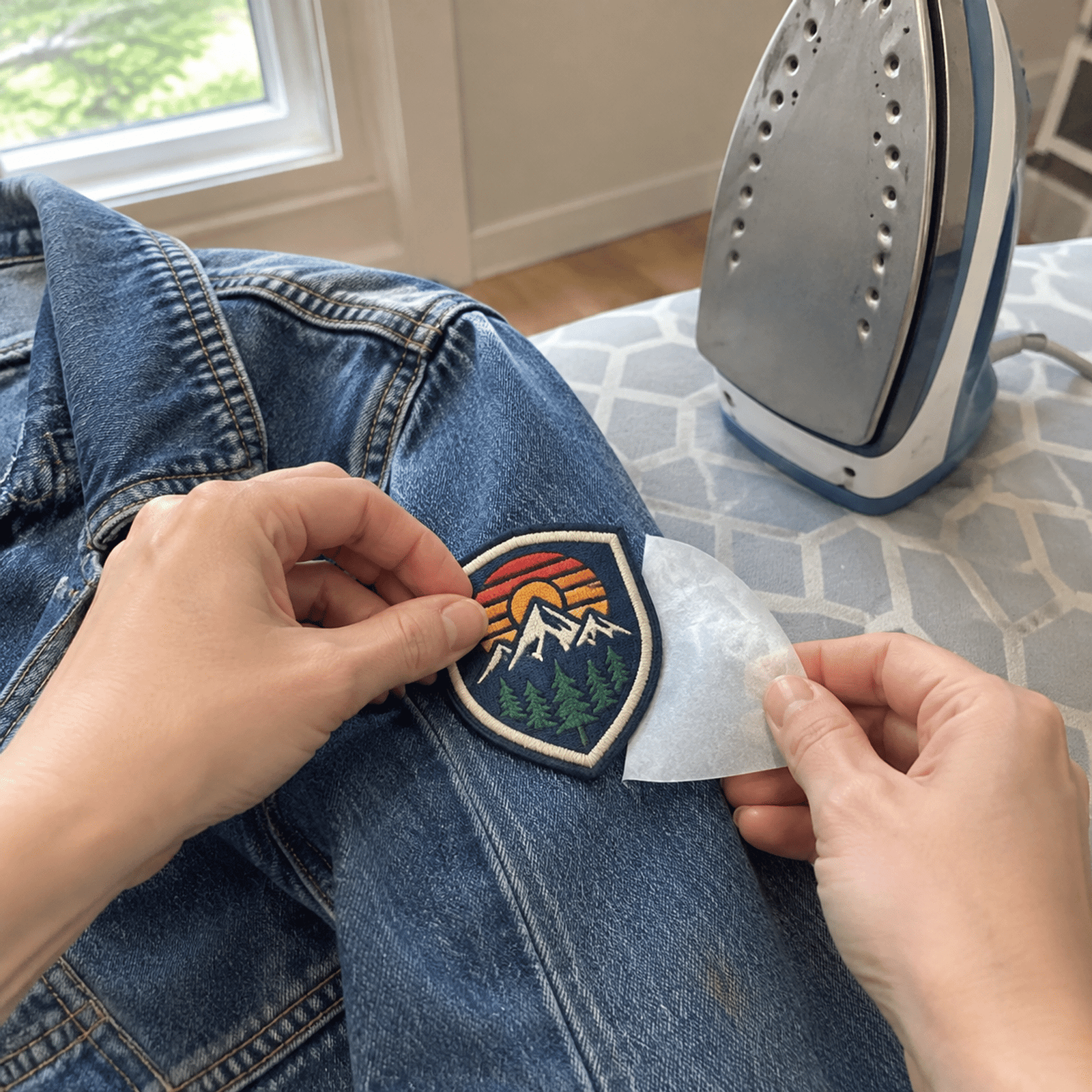
Iron-on is the most popular request we receive — and also the most misunderstood. Buyers assume all iron-on backings are identical. They're not. Different adhesive formulations activate at different temperatures and bond differently to different fibers.
The key variables are temperature, pressure, and dwell time. Get any one wrong, and the patch either won't stick or will damage the fabric. Our production norm is 150–170°C for 10–15 seconds with firm pressure5 — but this shifts with fabric weight and adhesive type.
When iron-on works great
- Mass-produced garments on rigid wovens where you have a heat press (not a home iron)
- Uniforms and workwear that don't get washed daily
- Orders where you want a clean, no-thread look on the front
When iron-on fails
- Stretch fabrics (delamination after washing)
- Fabrics that can't handle heat (some synthetics, vinyl6)
- Items washed frequently at high temperatures
Pro tip: If a client sends us a polyester-spandex blend design, we always flag that standard iron-on is insufficient. This one conversation saves thousands in rework costs.
When should you choose sew-on, peel-and-stick, or hook-and-loop?
Each backing type does a specific job. Forget industry stereotypes — Velcro isn't just for military7, and adhesive isn't just for promo giveaways.
Think about the job you need done: permanent bond, removable swap, no-sew speed, or maximum wash durability. Match the job to the backing.
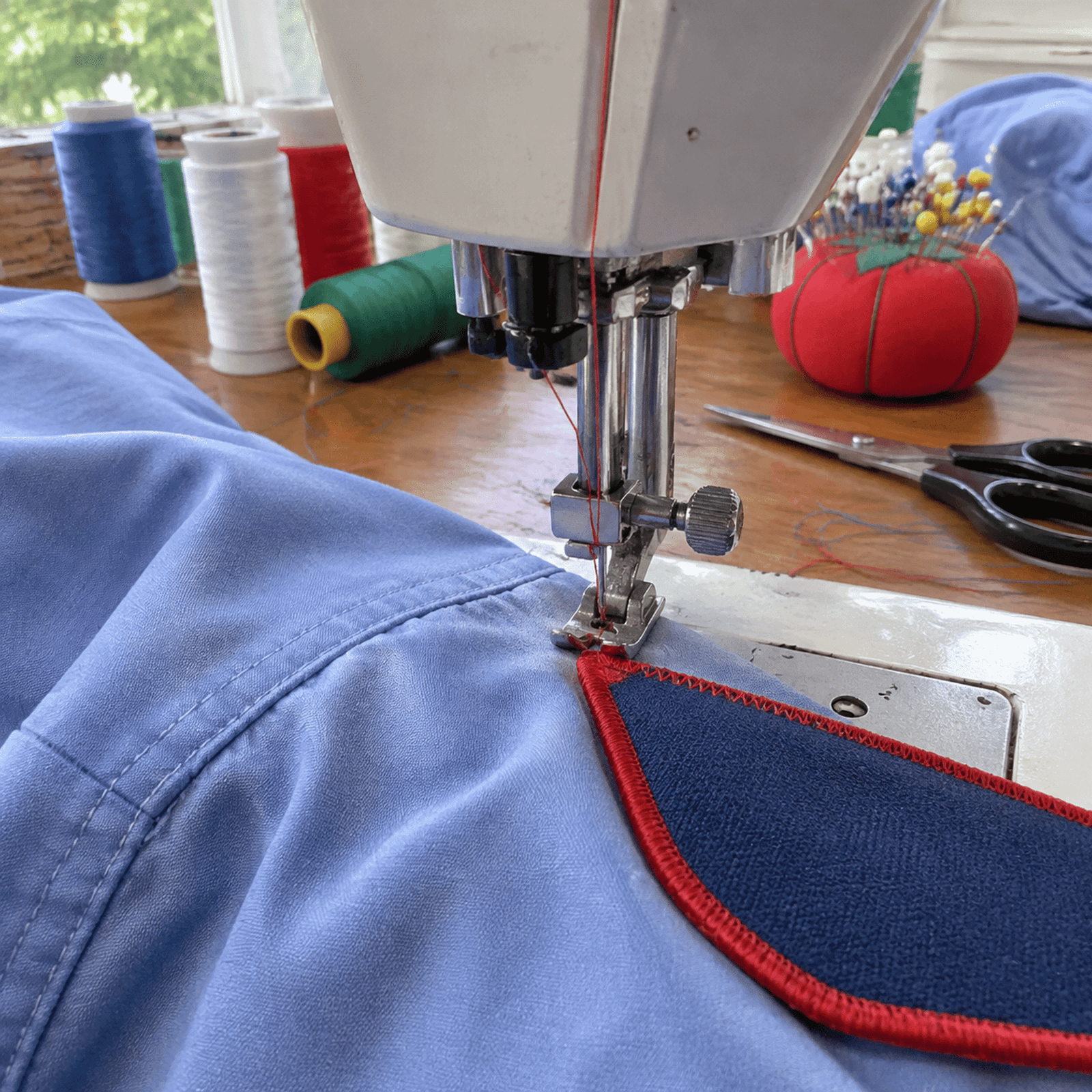
Sew-on backing
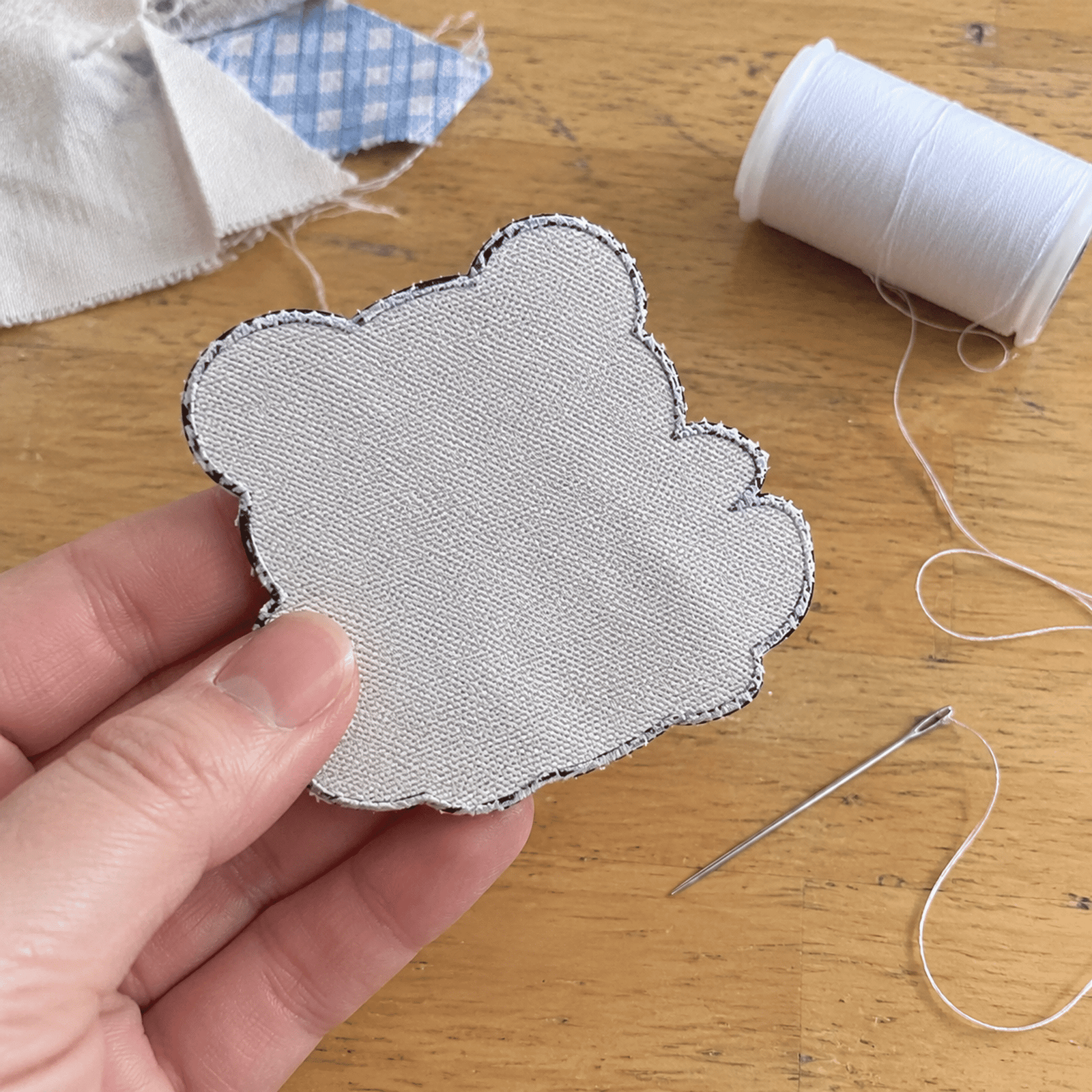
The most durable option, period. It survives industrial washing, heavy wear, and extreme temperatures8. The downside? It requires sewing equipment and adds labor time.
Best for: Premium apparel, stretch fabrics, items washed 50+ times9, children's clothing.
Peel-and-stick (self-adhesive)
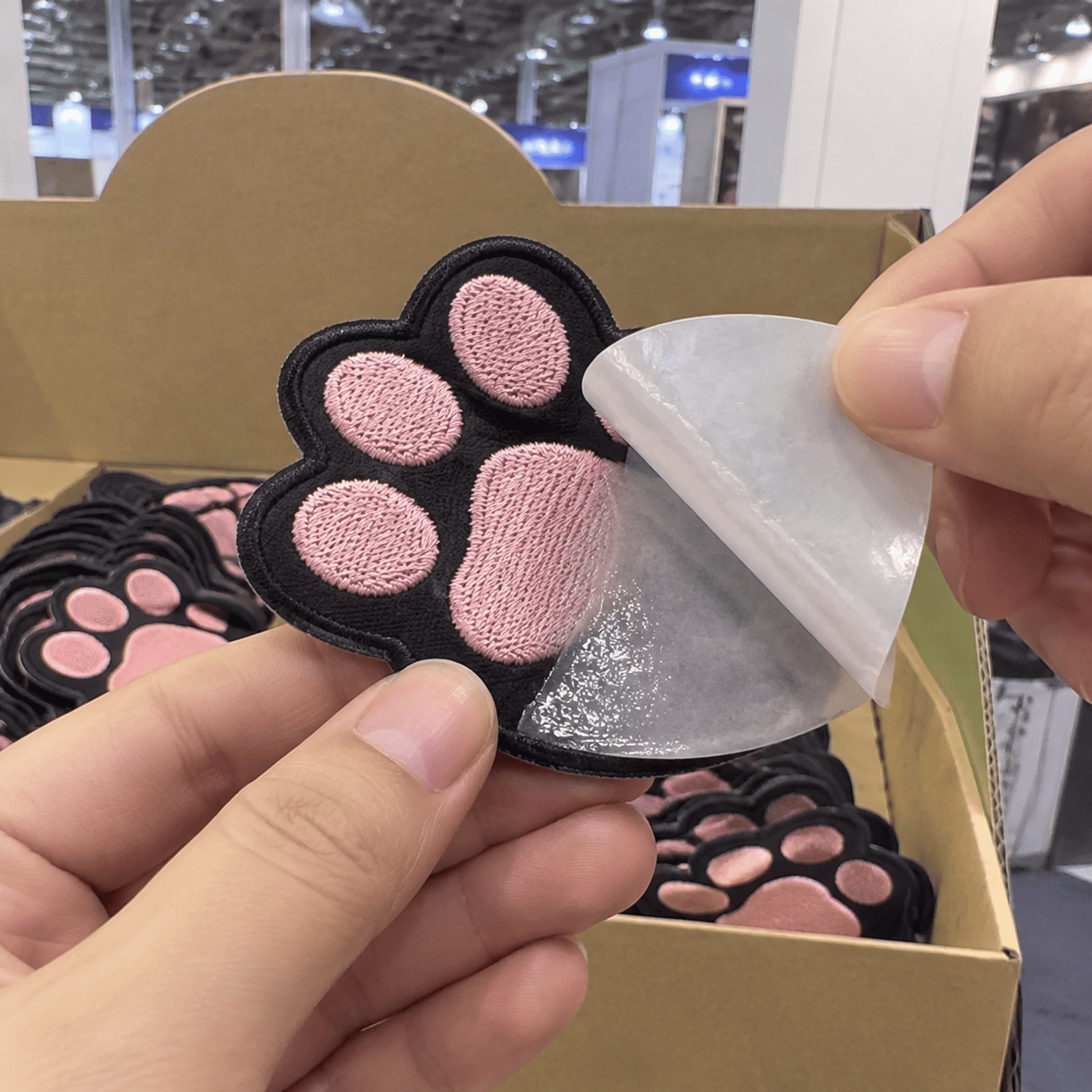
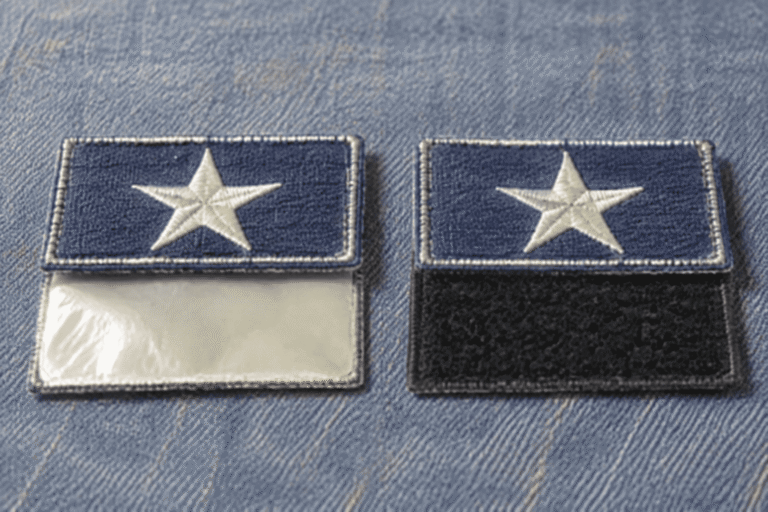
A temporary or semi-permanent solution. Great for events, packaging, retail displays, or positioning patches before sewing. Not designed to survive repeated washing.
Best for: Trade shows, promotional items, one-time-use applications, pre-positioning before sew-down.
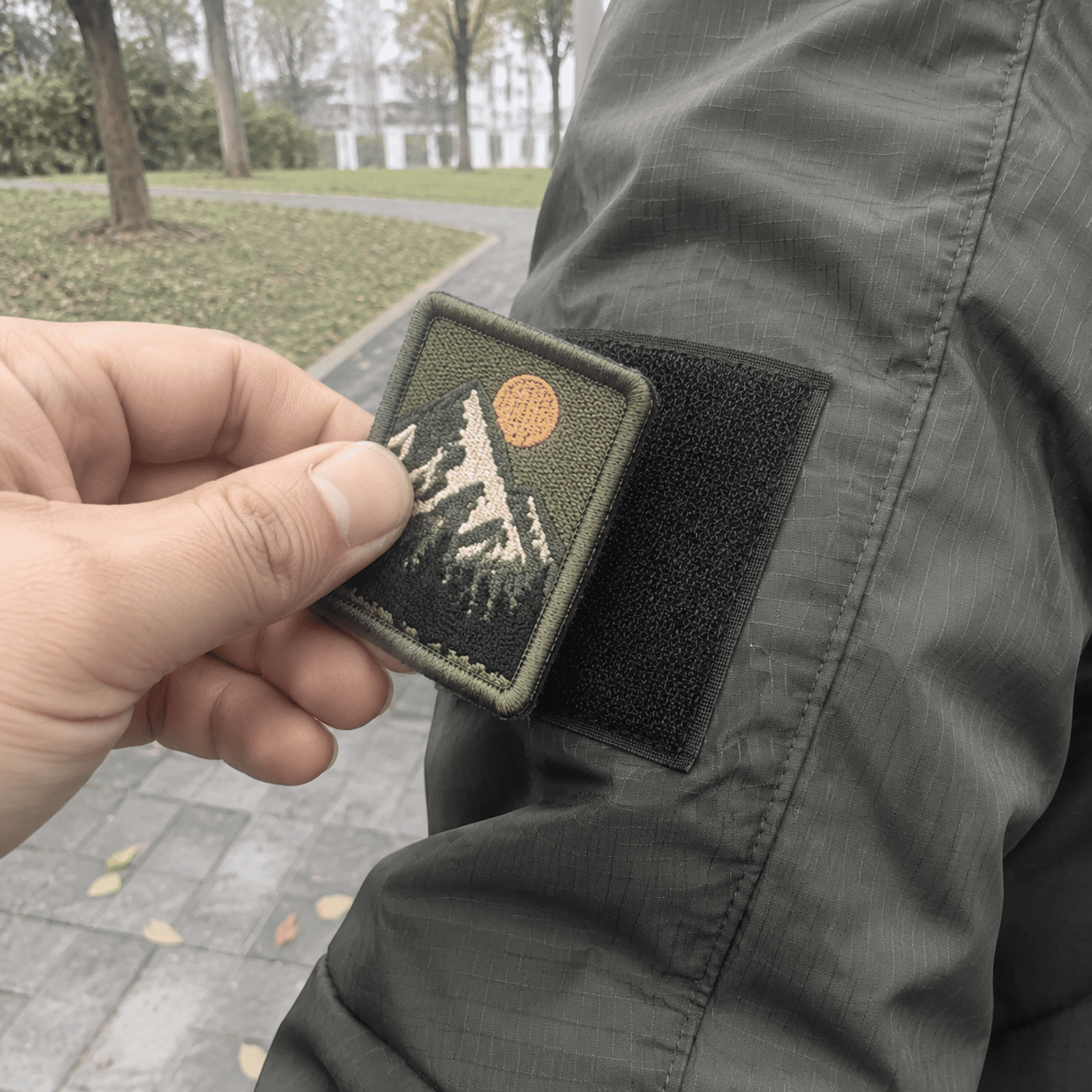
Hook-and-loop (Velcro)
Allows patches to be swapped on and off. Increasingly popular with DTC brands offering customizable jackets and bags10 — not just tactical gear.
Best for: Interchangeable designs, team sports uniforms, tactical/outdoor gear, brands selling patches as accessories.
| Backing Type | Durability | Wash Resistance | Application Speed | Swappable? |
|---|---|---|---|---|
| Iron-on | Medium | Medium | Fast | No |
| Sew-on | High | High | Slow | No |
| Peel-and-stick | Low | Low | Fastest | No |
| Hook-and-loop | High | High | Fast | Yes |
How do you avoid costly backing mistakes?
Here's the honest truth: the cheapest backing per unit is often the most expensive choice overall11. I've seen buyers save $0.02 per patch on backing, then spend thousands on rework, re-pressing, QC rejections, and missed shipping windows.
The real metric isn't unit price — it's cost per successfully attached patch through end-of-life.
Request a sample test — it's free risk elimination
This is the single most actionable advice in this entire article. Before you commit to bulk, ask your supplier for samples and test them on your actual fabric. Wash them. Stretch them. Iron them. Most buyers skip this step. Don't.
We offer free samples and can turn around test patches in 3–7 days. A one-week test can prevent a one-month delay.
Communicate your full use case
Don't just say "I need iron-on patches." Tell your supplier:
- What fabric the patch goes on (send a swatch if possible)
- How the garment will be used (daily wear, athletic, workwear)
- Wash frequency and method (machine wash cold? Industrial laundry?)
- Who applies the patch (factory heat press? End consumer at home?)
The more context we have, the better we can advise.
Frequently Asked Questions
Can I use iron-on backing on stretch fabric?
Standard iron-on adhesive will likely delaminate on stretch fabrics within 5–10 washes. We recommend sew-on backing or specialty stretch-compatible heat-seal film. Always request a wash test sample before committing to a bulk order.
Is peel-and-stick backing machine washable?
Generally, no. Peel-and-stick is designed for temporary or semi-permanent use12. If your patches need to survive regular washing, choose sew-on or a quality iron-on backing matched to your fabric type.
How do I choose between iron-on and sew-on?
It depends on three things: your fabric (rigid vs. stretch), wash frequency (occasional vs. daily), and who applies the patch (factory vs. end consumer). Rigid fabric + factory application + moderate washing = iron-on works. Everything else, lean toward sew-on.
Does hook-and-loop backing add significant cost?
Yes, it's pricier per unit than iron-on or sew-on. But if your brand sells interchangeable patches as products, the added revenue far outweighs the cost increase. Evaluate it as a product feature, not just a production expense.
Conclusion
Choosing the right custom patch backing options comes down to one framework: match your fabric, your end use, and your wash expectations — then test before you commit. Don't let a $0.02 per-unit saving turn into a $2,000 rework bill. Iron-on isn't universal. Sew-on isn't outdated. Hook-and-loop isn't just for the military. Each backing does a specific job — your job is to match it correctly.
If you're planning a patch order and unsure which backing fits your product, reach out to our team. We provide free samples, fast prototyping in 3–7 days, and honest recommendations based on eight years of production experience. Let's get it right the first time.
"Tensile Bond Tester - Technologies - MCTC - Concrete", https://www.fhwa.dot.gov/pavement/concrete/tensile.cfm. Textile adhesion studies using standardized wash-durability protocols (e.g., AATCC TM 135 or ISO 6330) have documented significant bond-strength loss for thermoplastic adhesive films applied to elastane-blend knits within the first ten laundering cycles. Evidence role: statistic; source type: research. Supports: That heat-seal adhesive bonds on stretch fabrics degrade significantly within a small number of wash cycles. Scope note: Exact cycle counts vary by adhesive formulation, fabric blend ratio, and laundering conditions, so the 5–10 cycle figure is illustrative rather than universally precise. ↩
"Examination of Alternative Fabric Joining Techniques ...", https://commons.emich.edu/cgi/viewcontent.cgi?article=1049&context=mcnair. Textile engineering literature explains that lockstitch and chainstitch seams accommodate biaxial fabric extension through thread-loop geometry changes, distributing strain across multiple needle penetrations rather than concentrating stress at a rigid bond interface (see, e.g., Carr & Latham, 'Technology of Clothing Manufacture'). Evidence role: mechanism; source type: education. Supports: That sewn seams accommodate fabric stretch through thread loop deformation, maintaining attachment integrity where rigid adhesive bonds would fail. Scope note: The degree of stretch accommodation depends on stitch type, thread elasticity, and stitch density, so sew-on is not universally immune to failure on highly elastic substrates. ↩
"How to Avoid the Dreaded Scorch Mark",
. Research on fusible interlining application has documented that low-GSM fabrics are prone to adhesive strike-through (migration of molten adhesive to the face side) and thermal yellowing or scorching when press temperatures exceed the fabric's safe ironing threshold (see Cooklin, 'Fusing Technology for Production'). Evidence role: mechanism; source type: research. Supports: That thin and sheer fabrics are susceptible to thermal degradation and adhesive strike-through when subjected to standard heat-press conditions. Scope note: Specific scorch and bleed-through thresholds depend on fiber content, fabric construction, and adhesive deposit weight, so generalizations require qualification. ↩"Nonwoven Fusible Fabric PA Hotmelt Adhesive Film", https://www.schem.net/nonwoven-fusible-fabric-pa-hotmelt-adhesive-film_p167.html. Fusible interlining and adhesive film manufacturers offer low-temperature variants activating at approximately 90–120°C, formulated with low-melting-point polyamide or polyurethane resins specifically designed for delicate and heat-sensitive fabrics (see technical literature from suppliers such as Freudenberg or Bemis). Evidence role: definition; source type: research. Supports: That thermoplastic adhesive films with activation temperatures significantly below standard (e.g., 90–120°C) are commercially available for heat-sensitive textile substrates. Scope note: Lower activation temperatures generally correlate with reduced bond strength and wash durability, so these products involve trade-offs not fully addressed in the article. ↩
"Heat Sealing Guidelines", https://www.dupont.com/packaging-materials-and-solutions/heat-sealing-guidelines.html. Technical data sheets from major heat-seal adhesive film manufacturers (e.g., Bemis, Framis Italia) commonly specify activation temperatures between 130°C and 175°C with press times of 8–20 seconds, consistent with the 150–170°C / 10–15 second range cited. Evidence role: general_support; source type: research. Supports: That typical heat-seal adhesive films used for textile patches activate in the 150–170°C range with dwell times of 10–15 seconds under firm pressure. Scope note: Parameters vary by adhesive chemistry (polyamide, polyester, polyurethane) and substrate, so no single range is universally applicable. ↩
"Nylon", https://en.wikipedia.org/wiki/Nylon. Standard textile references report that PVC-based vinyl softens at approximately 80–100°C and many polyester and nylon fibers have glass transition or melting temperatures (e.g., nylon 6 melts at ~220°C but distorts under sustained pressure at lower temperatures) that can be exceeded by heat-press settings of 150–170°C. Evidence role: definition; source type: encyclopedia. Supports: That common synthetic fibers and vinyl materials have melting or softening points at or below typical heat-press temperatures used for iron-on patches. Scope note: Actual heat tolerance varies by specific polymer grade, fabric construction, and exposure duration, so blanket statements about 'synthetics' require material-specific verification. ↩
"George de Mestral", https://en.wikipedia.org/wiki/George_de_Mestral. Hook-and-loop fasteners, commercialized by Velcro SA in the 1950s, were adopted by NASA and subsequently by military organizations worldwide for securing equipment and interchangeable unit identification patches, cementing the material's association with tactical and military applications (see Wikipedia, 'Hook-and-loop fastener'). Evidence role: historical_context; source type: encyclopedia. Supports: That hook-and-loop fasteners became strongly associated with military applications after widespread adoption by armed forces for equipment and uniform patches. Scope note: The historical association is well-documented, but the claim that the stereotype is fading in favor of broader commercial use is an industry observation rather than a formally measured trend. ↩
"Iron On Patches for Clothes vs. Sew On Patches: Which Is ...", https://newyorkcustomlabels.com/blog/post/iron-on-patches-for-clothes-vs-sew-on-patches-which-is-better. Standards such as ISO 15797 (industrial laundering procedures for testing workwear) are commonly used to validate sewn badge attachment, and textile testing literature generally confirms that mechanically stitched attachments retain integrity through more wash-and-dry cycles than thermoplastic adhesive bonds alone. Evidence role: expert_consensus; source type: research. Supports: That sewn patch attachments consistently outperform adhesive-only bonds in industrial laundering and abrasion durability tests. Scope note: Performance depends on thread type, stitch density, and seam allowance; poorly executed sewing can also fail, so the superiority claim assumes competent application. ↩
"Durability of Water-Repellent Finishes to Accelerated ...", https://digitalcommons.uri.edu/cgi/viewcontent.cgi?article=1788&context=theses. Industrial laundering standards such as ISO 15797 and specifications from organizations like ASTM (e.g., ASTM D5034 for textile breaking strength after laundering) commonly test attachment durability through 50 or more wash-and-dry cycles, establishing this as a recognized benchmark for high-durability applications. Evidence role: statistic; source type: institution. Supports: That industry durability standards for workwear and uniform emblems typically require survival through 50 or more wash cycles. Scope note: The 50-cycle figure is a common testing threshold rather than a universal pass/fail criterion; actual requirements vary by end-use specification and buyer standards. ↩
"Embroidered Badges and Patches Market Size and Trends ...", https://www.techsciresearch.com/report/embroidered-badges-and-patches-market/23261.html. Industry reports on mass customization in fashion (e.g., McKinsey 'State of Fashion' series; Deloitte consumer personalization surveys) document rising consumer demand for modular and customizable product features, which aligns with the reported growth of swappable patch systems in DTC apparel. Evidence role: general_support; source type: research. Supports: That the direct-to-consumer apparel segment has seen growing adoption of interchangeable hook-and-loop patch systems as a product customization feature. Scope note: Broad customization trend data does not isolate hook-and-loop patches specifically, so the claim relies on inference from the wider personalization movement. ↩
"The Hidden Costs Behind Cheap Clothing: Addressing Fast ...", https://scholarship.law.vanderbilt.edu/cgi/viewcontent.cgi?article=1599&context=jetlaw. Quality management literature, including Juran's concept of the 'cost of poor quality' (COPQ), demonstrates that failure costs (rework, scrap, returns, warranty claims) routinely exceed the savings from lower-cost inputs, a principle widely validated in apparel and textile manufacturing contexts. Evidence role: general_support; source type: research. Supports: That lowest unit-price procurement decisions in manufacturing frequently lead to higher total costs when quality failures, rework, and delays are factored in. Scope note: The principle is well-established in general manufacturing but specific quantification for patch backing failures is anecdotal rather than formally studied. ↩
"The Textile Industry: Innovations & Applications w/Pressure ...", https://gdiadhesives.com/blog/the-textile-industry-innovations-applications-w-pressure-sensitive-adhesives/. Pressure-sensitive adhesives rely on viscoelastic tack rather than chemical or thermal bonding to the substrate; exposure to aqueous laundering conditions causes plasticization and mechanical disruption of the adhesive layer, resulting in rapid bond failure as documented in adhesive science literature (see Benedek & Feldstein, 'Handbook of Pressure-Sensitive Adhesives and Products'). Evidence role: mechanism; source type: research. Supports: That pressure-sensitive adhesives (PSAs) used in peel-and-stick textile applications lose bond strength when exposed to water, detergent, and mechanical agitation in laundering. Scope note: Some specialty wash-resistant PSA formulations exist for specific industrial applications, so the categorical statement may not apply to all self-adhesive products. ↩
0 Comments
Ask a question or share your garment accessories sourcing experience.