


Garment Label Material Cost Guide: Budget Options vs Premium Materials
Choosing the right garment label material can feel overwhelming — especially when you're launching your first line and every dollar counts. Pick something too cheap, and you risk returns and a damaged brand image. Over-spec your labels, and you blow through your budget before your first restock. The sweet spot? Matching your label material to your actual product needs.
There's no single "budget" or "premium" label material that works for everyone. The real question isn't "which is cheapest?" but "which material delivers the right look, feel, and durability at a sustainable cost for YOUR product and order volume?" A lower-cost material can be the perfect choice for one brand and a costly mistake for another.

Let's break down what actually drives label costs, which materials fit which products, and how to avoid the traps I see buyers fall into every week.
What really makes up garment label material cost?
Most buyers focus on the per-piece price. That's only part of the story.
Your real landed cost is a combination of raw material type, production process complexity, minimum order quantities (MOQ), tooling or setup fees, and finishing details. A "cheap" material with a high setup fee and low MOQ can actually cost more per piece than a "premium" material ordered at scale.
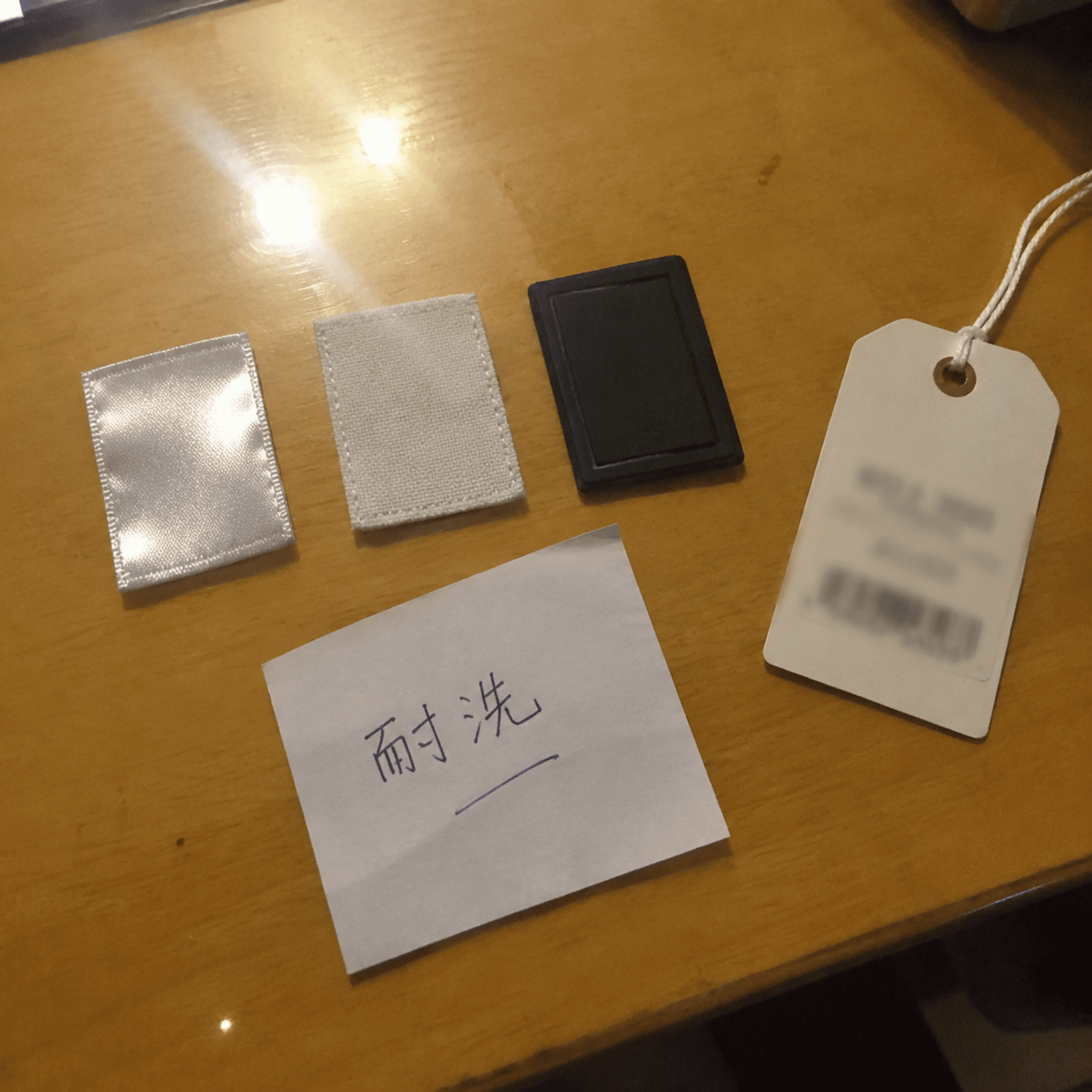
The hidden cost drivers
Here's what moves the needle on your final price:
- Raw material type: Polyester satin is on the lower end. Genuine leather and high-density damask sit higher.1 But the gap narrows fast at larger volumes.
- Process complexity: A simple heat-transfer label needs minimal setup. A woven damask label requires loom programming2. Rubber or PVC patches need a custom mold — and that mold fee gets amortized across your order3.
- MOQ thresholds: Lower quantities mean higher per-unit costs4. A material that looks expensive at 500 pieces may become very competitive at 5,000.
- Finishing options: Folded edges, laser-cut borders, special coatings — each adds a small cost that compounds.
A common pattern I see in first-time orders: a buyer picks satin labels because the unit price looks low, then adds center-fold, custom colors, and a small quantity — and the final per-piece cost lands higher than a woven label would have been at the same volume.
Takeaway: Always ask for quotes on at least two material types at your expected volume. Compare landed costs, not list prices.
Which label material fits which product category?
This is where most costly mistakes happen. The wrong material on the wrong product creates problems no price savings can fix.
A satin label on activewear curls and fades after a few washes5. A rubber patch on delicate womenswear feels clunky. Material-to-product fit matters more than cost tier — a well-chosen mid-range material will outperform a premium one used in the wrong context every time.
Quick-reference fit matrix
| Material | Best Fit | Poor Fit | Relative Cost |
|---|---|---|---|
| Polyester satin | Basics, everyday casual | Activewear (curls with heat/sweat) | Lower tier |
| Cotton labels | Kidswear, organic lines | High-wash-frequency items | Lower to mid tier |
| Damask woven | Premium womenswear, tailored pieces | Budget basics (over-spec) | Mid to premium tier |
| TPU / Heat-transfer | Activewear, swimwear, athleisure | Heritage or luxury branding | Lower to mid tier |
| Genuine leather patches | Denim, premium outerwear | Fast fashion, high-volume basics | Premium tier |
| Rubber / PVC patches | Streetwear, bags, outdoor gear | Delicate fabrics, sensitive skin items | Mid tier (plus mold fee) |
I've seen a startup DTC brand spec genuine leather patches for a $25 t-shirt line. The labels looked beautiful — but the cost per patch at their 300-piece order made the whole margin unsustainable. They switched to a textured woven label that communicated a similar quality feel at a fraction of the cost. That's not a compromise. That's smart brand-building.
What functional tradeoffs should buyers actually care about?
Price gets all the attention. But wash durability, skin comfort, print resolution, and edge behavior are what determine whether your label choice creates hidden costs down the road.
A label that fades, curls, or irritates skin after a few washes generates returns, negative reviews, and brand damage — costs that far exceed any savings on material. Evaluate durability and hand-feel alongside price, not after the fact.
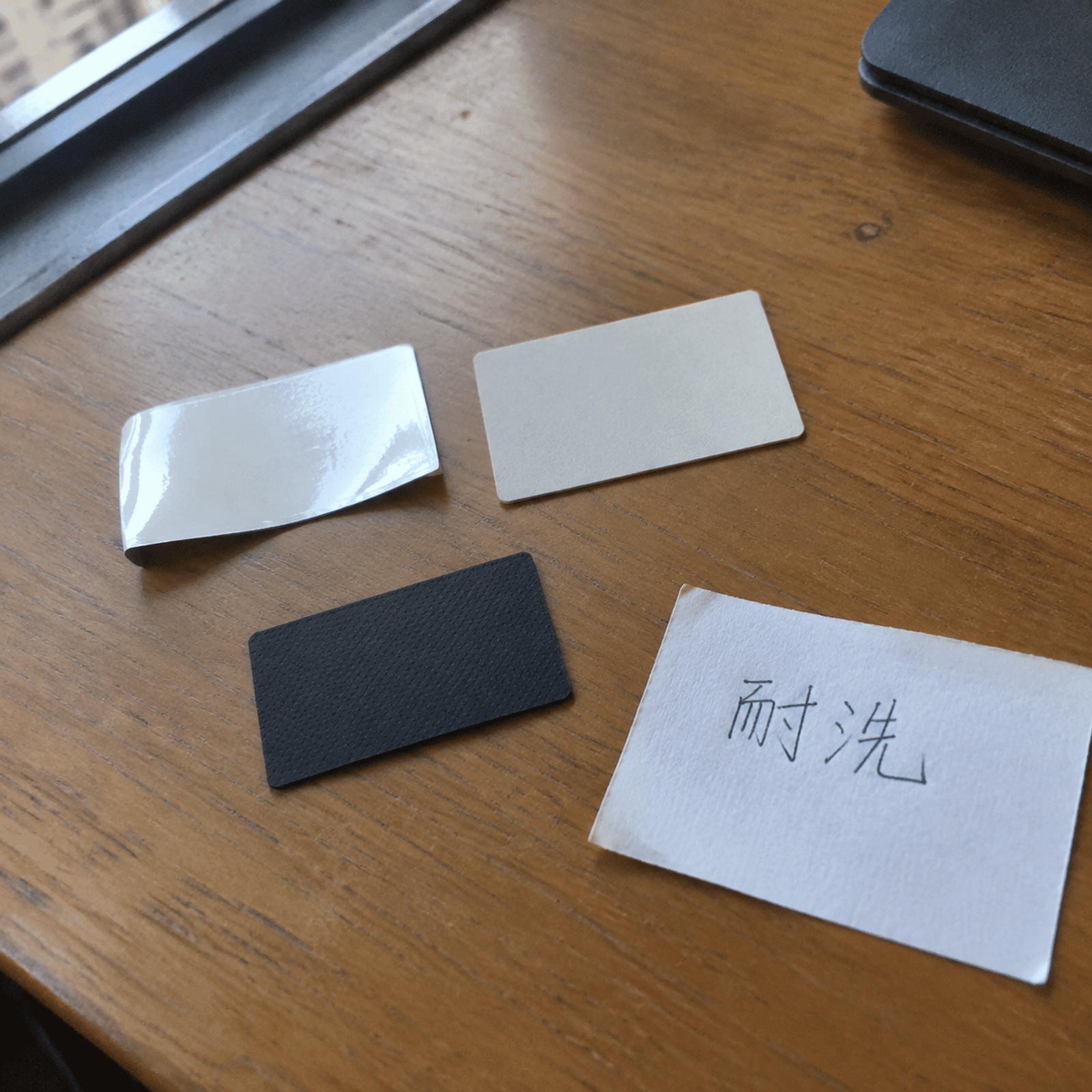
What to evaluate beyond price
- Wash durability: Heat-transfer (TPU) labels generally handle frequent washing and high heat well6. Satin labels can fray or curl over time. Woven labels hold up excellently. Ask your supplier for wash-test data if durability is critical.
- Skin-friendliness: For kidswear or next-to-skin garments, this is non-negotiable. Cotton and heat-transfer labels tend to be softest7. If compliance matters, look for suppliers with certifications like OEKO-TEX® STANDARD 1008 as a starting point — then verify documentation independently.
- Print resolution: Need fine text or detailed logos? Damask weave and heat-transfer give you the sharpest results9. Satin works for simpler designs but loses clarity on intricate artwork.
- Edge curl: Satin labels are prone to curling, especially with heat exposure10. Woven and heat-transfer labels resist this much better.
In our experience helping brands choose label materials, the buyers who test a sample through 10–15 home washes before placing a bulk order almost never have regret11. The ones who skip this step? They're the ones calling us about re-orders in a different material three months later.
Frequently Asked Questions
Is polyester satin always a budget choice?
Not necessarily. Satin is a lower-cost base material, but adding custom colors, special folds, and small order quantities can push the per-piece cost close to woven labels. It's affordable at scale for simple designs — evaluate it against your specific needs.
Should a new DTC brand start with premium label materials?
Not always. Right-sizing your label to your product's price point and order volume is smarter than over-specifying. A well-chosen mid-range woven label can communicate quality effectively without straining your margins during early growth stages.
Do rubber or PVC labels cost more because of the mold?
The upfront mold fee does add cost, especially on first orders. However, the mold is reusable for future runs, so the cost per piece drops significantly on reorders12. Factor in your reorder plan when evaluating total cost.
How can I compare label material costs accurately?
Request quotes for at least two material types at your actual expected order quantity. Compare the total landed cost — including setup fees, tooling, and finishing — not just the per-piece price listed on a catalog.
Conclusion
The garment label material cost question is never just about price — it's about matching material to your product category, your brand positioning, your wash requirements, and your order volume. Budget materials aren't inherently bad, and premium materials aren't automatically the right call. Use the fit matrix above, test samples before committing, and always compare total landed costs rather than unit prices alone. If you're navigating your first label material decision and want a second opinion on what fits your product, feel free to reach out to our team — we're happy to share what we've seen work across thousands of orders.
"Threading Your Way Through the Labeling Requirements ...", https://www.ftc.gov/business-guidance/resources/threading-your-way-through-labeling-requirements-under-textile-wool-acts. Industry sourcing guides and textile trade publications generally rank polyester satin among the most economical label substrates, with woven damask and genuine leather commanding higher per-unit costs due to material and production complexity. Evidence role: general_support; source type: research. Supports: The relative cost positioning of polyester satin, woven damask, and leather as garment label materials. Scope note: Exact pricing varies significantly by supplier region, order volume, and finishing specifications, so general cost tiers may not reflect all market conditions. ↩
"The story of the Jacquard loom | Science and Industry Museum", https://www.scienceandindustrymuseum.org.uk/objects-and-stories/jacquard-loom. Damask and jacquard woven labels are produced on electronically controlled jacquard looms where each design requires individual pattern programming to control warp thread selection, a setup process that contributes to higher initial production costs compared to simpler weave structures. Evidence role: mechanism; source type: education. Supports: That woven damask labels are produced on jacquard looms requiring digital pattern programming, which constitutes a setup process that adds to production time and cost. Scope note: Modern computerized jacquard looms have reduced programming time significantly compared to historical methods, so the cost impact varies by supplier and equipment generation. ↩
"Custom PVC Patches, No Minimum | From 5 Pieces", https://www.pandapatches.com/custom-patches/pvc. PVC and rubber label production utilizes injection or compression molding processes requiring custom-made molds, with tooling costs typically treated as a one-time setup fee that is amortized across the initial and subsequent production runs, as noted in manufacturing sourcing literature. Evidence role: general_support; source type: research. Supports: That PVC and rubber garment patches require custom steel or silicone molds as part of the production process, with tooling fees that represent a fixed upfront cost spread across the order quantity. Scope note: Mold costs vary widely depending on design complexity, mold material, and supplier location, so specific amortization impact depends on individual order circumstances. ↩
"Scale Apparel Production Without Losing Quality", https://argusapparel.com/blog/scale-apparel-production-without-losing-quality/. Manufacturing economics principles confirm that fixed production setup costs—including tooling, programming, and plate preparation—are amortized across total output, resulting in significantly higher per-unit costs at low order quantities, a dynamic well-documented in textile accessory and label production. Evidence role: mechanism; source type: education. Supports: That fixed setup costs in garment label production (such as plate-making, loom programming, and mold tooling) are distributed across order quantity, causing per-unit costs to decrease as volume increases. Scope note: The magnitude of cost reduction varies by material type and production method; some processes like digital printing show flatter cost curves at lower volumes. ↩
"How to Test the Durability of Your Clothing Labels", https://clothing-labels.co.uk/how-to-test-the-durability-of-your-clothing-labels/. Textile performance studies indicate that satin-weave polyester labels can exhibit edge curling and print degradation when subjected to repeated high-temperature laundering cycles, particularly when exposed to mechanical agitation and heat drying. Evidence role: mechanism; source type: research. Supports: That polyester satin labels are susceptible to edge curling and print fading under repeated washing and heat exposure conditions typical of activewear use. Scope note: Performance outcomes depend on specific satin weave density, ink type, and laundering protocols, so results may vary from the general claim. ↩
"Heat Transfer Label Material Selection Guide: Comparing ...", https://www.illumeinternational.com/en/heat-transfer-label-materials/. Thermoplastic polyurethane films used in heat-transfer labeling exhibit high resistance to abrasion, flexing, and chemical exposure from detergents, contributing to their durability through repeated wash cycles as documented in textile engineering literature. Evidence role: mechanism; source type: research. Supports: That thermoplastic polyurethane (TPU) heat-transfer labels demonstrate strong resistance to degradation under repeated industrial and domestic laundering cycles. Scope note: Wash durability performance depends on application temperature, pressure, substrate compatibility, and specific TPU formulation, so generalized claims may not hold across all use cases. ↩
"Don't Miss These Opportunities Presented by Clothing Labels", https://lifestylemonitor.cottoninc.com/dont-miss-these-opportunities-presented-by-clothing-labels/. Consumer comfort research and dermatological guidance suggest that printed heat-transfer labels and soft cotton fabric labels reduce mechanical skin irritation compared to woven synthetic labels, which is why tagless labeling has become standard in many next-to-skin garment categories. Evidence role: expert_consensus; source type: research. Supports: That cotton labels and tagless heat-transfer prints are generally considered among the most skin-friendly garment labeling options, particularly for sensitive skin applications. Scope note: Perceived softness is subjective and influenced by label size, placement, and individual skin sensitivity, so material alone does not guarantee comfort. ↩
"Oeko-Tex", https://en.wikipedia.org/wiki/Oeko-Tex. OEKO-TEX® STANDARD 100 is an independent testing and certification system for textile raw materials, intermediate, and end products at all stages of production, which tests for harmful substances including those regulated by law and those known to be harmful to health (OEKO-TEX® Association). Evidence role: definition; source type: institution. Supports: That OEKO-TEX® STANDARD 100 is a recognized independent testing and certification system for textile products, verifying they are free from harmful levels of regulated substances. Scope note: The certification addresses chemical safety rather than overall skin comfort or mechanical softness, so it is a necessary but not sufficient indicator of skin-friendliness. ↩
"Damask Woven Labels, Custom Clothing Tags for Fine Detail", https://www.siennapacific.com/clothing-labels/custom-woven-labels/damask/?srsltid=AYCX9vKPIiZZN52muIDR_Z1iWgNA-X8zXb9LbcNCEipLdRa71W1euJya. Damask weaving employs a higher warp and weft thread count per centimeter than taffeta weaves, enabling finer detail reproduction in text and logo elements on woven garment labels, as described in textile manufacturing references. Evidence role: mechanism; source type: research. Supports: That damask weaving techniques achieve higher thread density and finer detail reproduction compared to standard taffeta or satin weaves in garment labels. Scope note: Achievable resolution also depends on yarn denier, loom capability, and design complexity, so damask is not universally superior for all label applications. ↩
"Why does fabric curl at the edges? ...", https://www.instagram.com/filouraa/reel/Dd6nH0qJZGH/?hl=fr. Textile engineering literature explains that satin weave fabrics exhibit differential surface tension between face and back due to long warp or weft floats, which can cause edge curling when cut edges are exposed to heat or moisture, a phenomenon relevant to satin garment labels. Evidence role: mechanism; source type: research. Supports: That the satin weave structure, with its long float yarns and asymmetric surface tension, predisposes cut edges to curling when subjected to heat or moisture. Scope note: Edge finishing techniques such as ultrasonic cutting or fold-and-stitch can mitigate curling, so the issue is not inherent to all satin label applications. ↩
"Deep dive: Standards to measure textile durability", https://ecostandard.org/resources/report-deep-dive-standards-to-measure-textile-durability/. International textile testing standards such as ISO 6330 (domestic washing and drying procedures for textile testing) prescribe repeated laundering cycles to assess dimensional stability, appearance retention, and component durability, providing a framework that supports the practice of pre-bulk wash testing for garment labels. Evidence role: general_support; source type: institution. Supports: That standardized textile wash durability testing protocols, such as ISO 6330 and AATCC test methods, use repeated domestic laundering cycles to evaluate fabric and component performance over time. Scope note: Home washing conditions are not standardized and may not replicate the controlled parameters of ISO or AATCC test methods, so results serve as practical indicators rather than certified performance data. ↩
"Injection Mold Life Expectancy", https://www.vem-tooling.com/mold-life-expectancy/. Manufacturing references indicate that steel molds used in PVC and rubber molding processes can typically withstand tens of thousands to hundreds of thousands of production cycles before requiring replacement, making the initial tooling investment recoverable across multiple reorder runs. Evidence role: general_support; source type: research. Supports: That steel and silicone molds used in PVC and rubber patch production have multi-use lifespans spanning thousands to hundreds of thousands of cycles, enabling significant per-unit cost reduction on reorders. Scope note: Mold longevity depends on mold material, design complexity, and production conditions; silicone molds have shorter lifespans than hardened steel molds. ↩
0 Comments
Ask a question or share your garment accessories sourcing experience.