

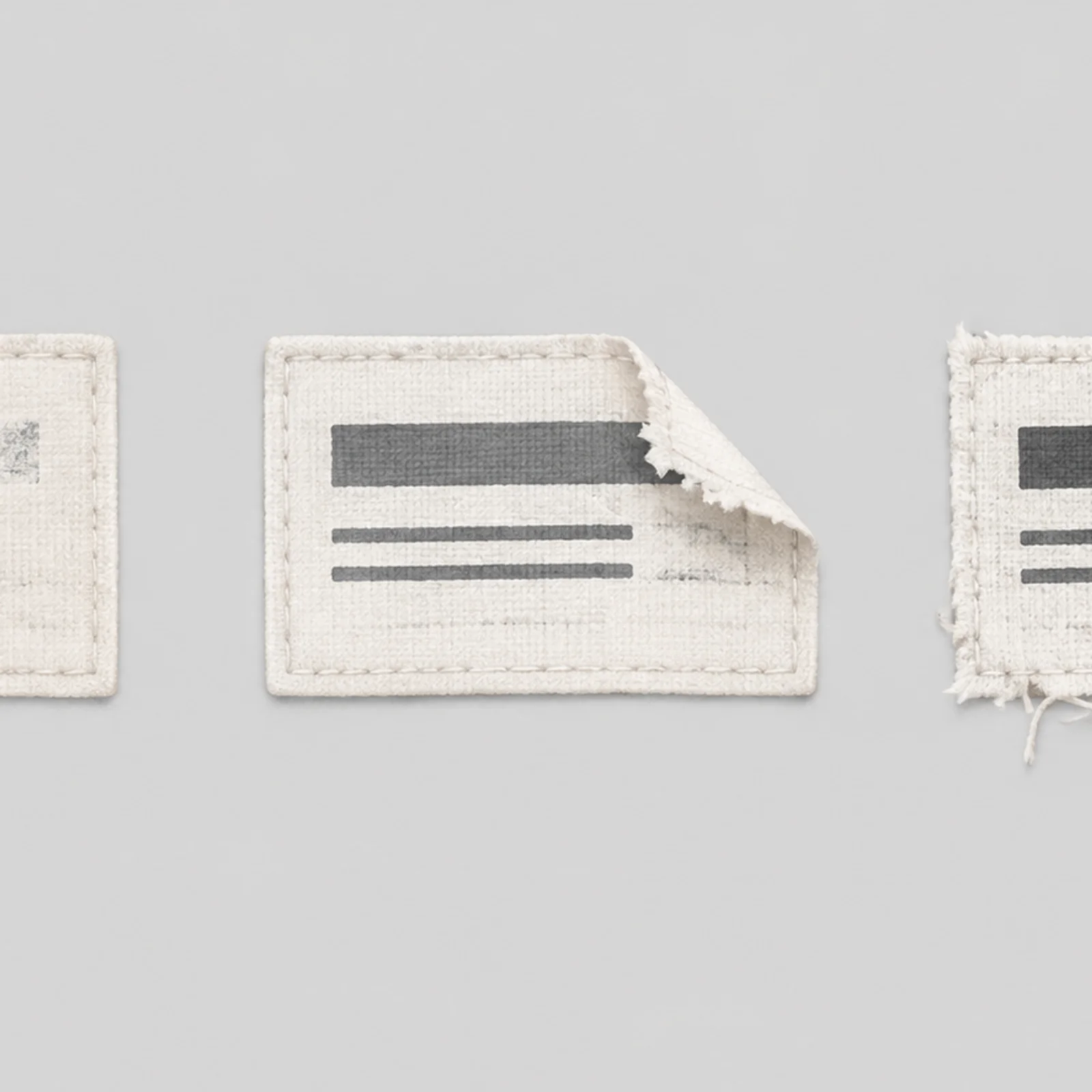
Common Garment Label Material Problems: Fading, Peeling and Fraying Fixes
When garment label material problems show up—colors washing out, prints lifting off, edges unraveling—the knee-jerk reaction is to blame cheap ink or weak glue. But after years of diagnosing these failures for brands across 30+ countries1, I can tell you: the real culprit is almost always a mismatch between the material, the process, and the end-use environment.
Fading, peeling, and fraying are three distinct failures with three distinct root causes. Fading is driven by substrate choice, not ink quality. Peeling results from coating-fabric incompatibility, not weak adhesive. Fraying comes from the wrong edge-finishing method. Fixing any of them starts with diagnosing the correct variable—ideally before you place your order.
Each problem has a specific trigger, and each trigger has a specific fix. Let me walk you through what actually goes wrong—and what to confirm with your supplier so it doesn't happen to your next production run.
Why Do Garment Labels Fade After Washing?
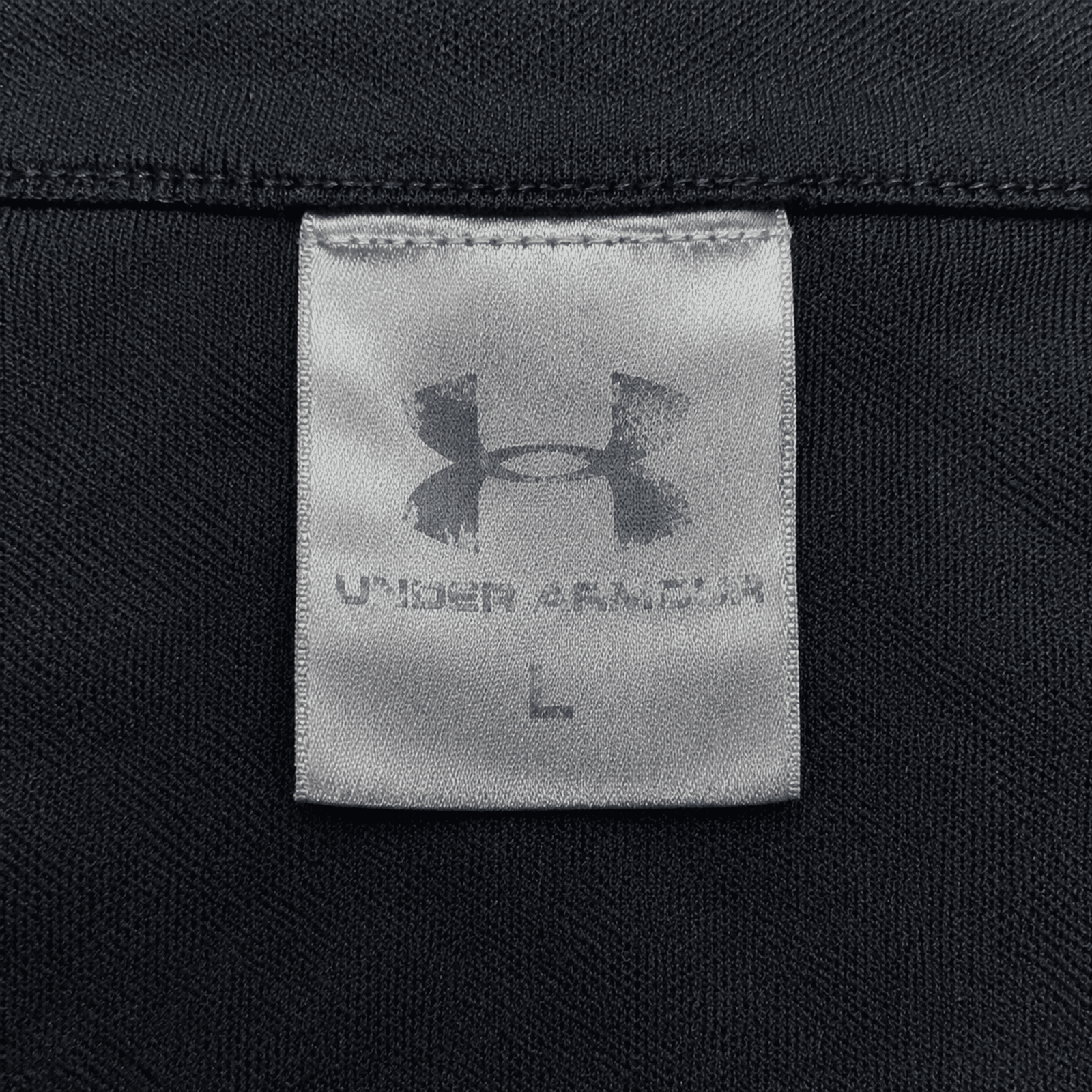
Most buyers assume fading means the printer used bad ink. Nine times out of ten, that's wrong. The base fabric determines how well dye bonds to the label—and how long that bond survives repeated washing.
Label fading is primarily a substrate problem. Satin labels hold dye differently than damask or cotton. If you pick a base material that doesn't match your garment's wash environment, no amount of premium ink will save you.
Substrate Is the Real Variable
Here's what I see over and over: a DTC brand launching athleisure specifies satin labels because they look sleek. The garments get washed in hot water every few days. Within a handful of cycles, the print fades. The brand blames the ink. But satin's smooth polyester surface offers less fiber surface area for dye to grip compared to damask weave2.
| Substrate | Dye Retention | Best For |
|---|---|---|
| Damask (woven polyester) | High | Frequent-wash garments, activewear |
| Satin | Moderate | Lightweight apparel, low-wash items |
| Cotton | Variable | Organic/natural branding, gentle wash |
Key takeaway: Match the substrate to the wash intensity. If your product will face frequent hot-water washing, damask woven labels outperform satin every time.
For reference, industry wash-fastness standards like AATCC 613 simulate accelerated laundering. Ask your supplier whether samples have been tested against a recognized standard—and verify the results yourself.
Why Do Heat-Transfer Labels and Patches Peel Off?
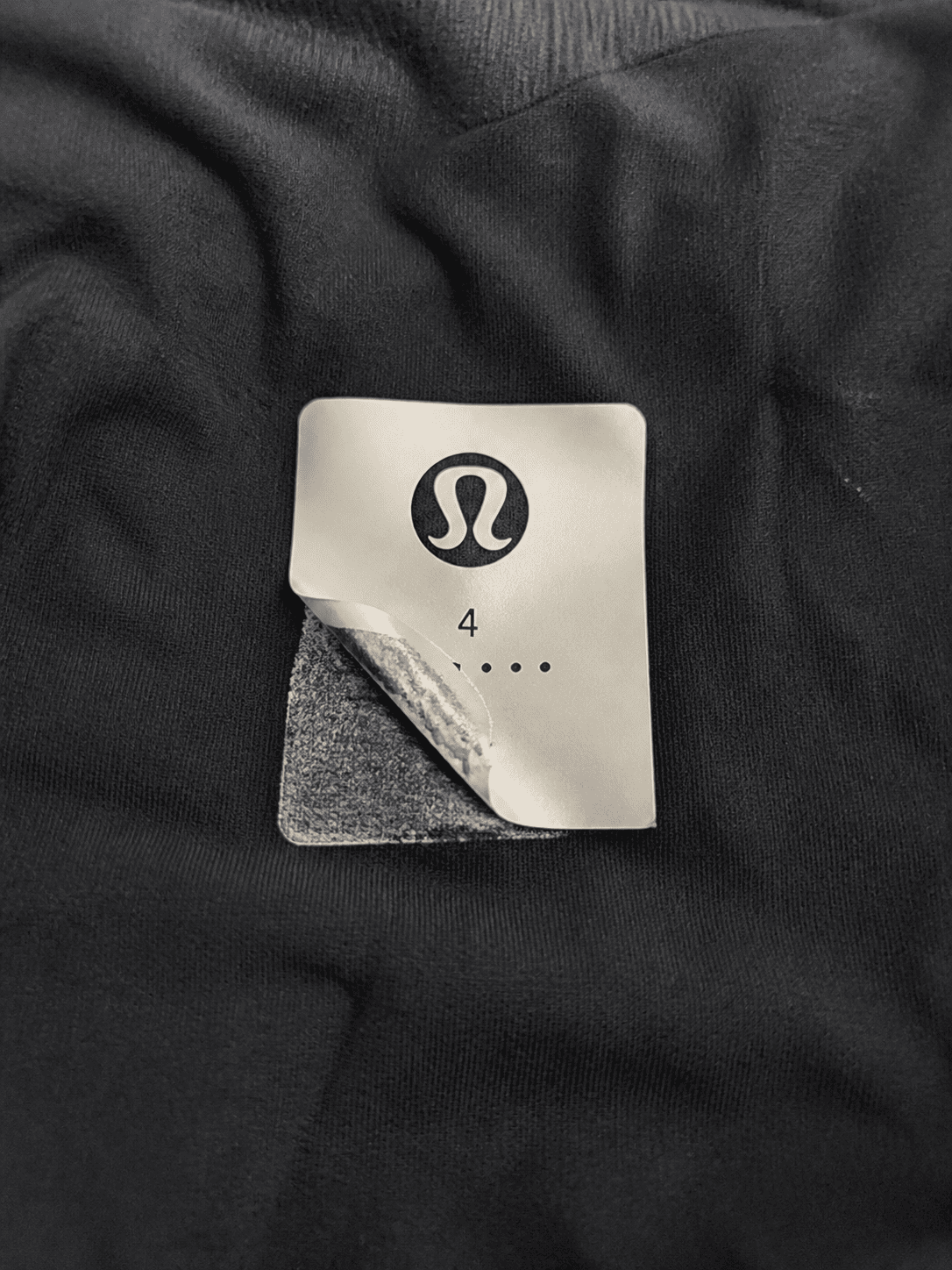
Peeling is the complaint I hear most from Amazon sellers and fast-fashion brands. The label or PVC patch looked perfect out of the factory, then started lifting after a few washes or wears. The instinct? "Use stronger glue." But stronger adhesive on the wrong fabric just delays the failure.
Peeling is a compatibility problem. The adhesive or coating must be matched to the garment fabric's composition. A heat-transfer adhesive designed for 100% cotton will fail on a polyester-spandex blend4—regardless of how aggressively you press it.
Match the Coating to the Fabric
Before specifying a heat-transfer label or rubber patch, confirm the garment fabric composition first. This is the step most buyers skip. Here's a quick guide:
- 100% cotton → Standard TPU-based heat-transfer adhesive5 works well
- Polyester blends → Requires a modified adhesive with a different activation temperature
- Nylon / technical fabrics6 → Needs specialty coatings; standard options often delaminate
Temperature and pressure matter too. Even the correct adhesive fails if the heat-press settings are off. Always request a test press on the actual garment fabric during sampling—not just on a swatch.
Expensive labels peel just as easily as cheap ones when the specs are mismatched. Price is not a quality proxy here.
Is It Fraying or Pilling—And Why Does It Matter?
Clients often tell me "the edges are falling apart" without distinguishing between fraying and pilling. But these are completely different failures requiring completely different fixes.
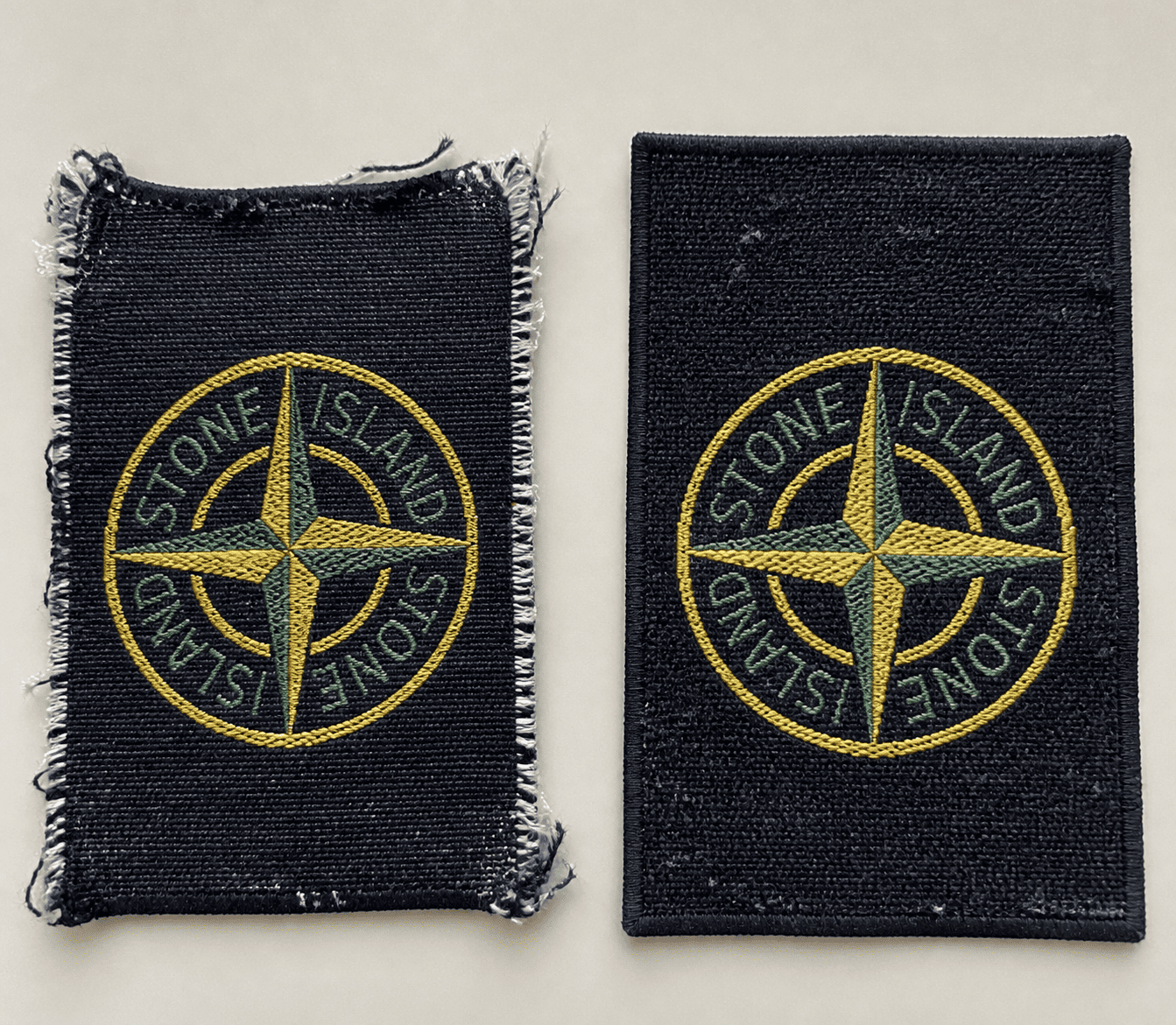
Fraying means warp and weft threads are unraveling at the label edge7—it's an edge-treatment problem. Pilling means tiny fiber balls forming on the label surface—it's a fiber-quality issue. Mixing them up leads to the wrong fix.
Edge Treatment Options for Fraying
| Method | Works Best On | Limitation |
|---|---|---|
| Ultrasonic cut8 | Polyester, nylon synthetics | Less effective on cotton blends |
| Laser cut9 | 100% synthetic wovens | Can scorch cotton-blend edges |
| Fold-and-sew | All fiber types | Adds slight bulk to the label |
| Heat cut | Basic synthetics | Lower precision than laser |
For pilling, the fix is upstream: choose a tighter weave density or a higher-grade fiber10. No edge treatment will solve a surface-fiber problem.
What Should You Confirm Before Ordering?
The most effective way to prevent garment label material problems is catching mismatches at the sampling stage, not after 10,000 pieces ship.
Before approving any label order, confirm these five variables with your supplier: base substrate, edge-finish method, adhesive/coating type (if applicable), garment fabric composition, and the wash-test standard used for validation.
Here's my recommended pre-order checklist:
- Base material — Does it match your garment's wash frequency and temperature?
- Edge finishing — Is the method compatible with the label's fiber type?
- Coating/adhesive — Has it been tested on your actual garment fabric, not just a generic swatch?
- Wash-test reference — Has the supplier tested against a recognized standard (e.g., AATCC 61, ISO 10511)?
- Sample on actual garment — Never approve based on a standalone sample alone.
In our experience, brands that confirm these five points at the quoting stage eliminate the vast majority of post-production complaints.
Frequently Asked Questions
Do more expensive labels avoid fading and peeling?
Not necessarily. A premium label with the wrong substrate or mismatched adhesive fails just like a budget one. The fix is correct material-process specification, not a higher price point.
Can one label type work for all garment fabrics?
Rarely. Different fabrics require different adhesives, coatings, and edge treatments. Always match the label specification to the specific garment fabric composition.
How many wash cycles should I test before approving?
Request at least the equivalent of 20–25 home laundry cycles12 at the temperature your end consumer will actually use. Industry standards like AATCC 61 offer accelerated test protocols for reference.
Is laser cutting always the best edge finish?
Laser cutting works excellently on 100% synthetic wovens but can scorch or leave rough edges on cotton-blend labels. Fold-and-sew remains the most universally reliable method across fiber types.
Conclusion
Most garment label material problems—fading, peeling, fraying—aren't random quality failures. They're predictable outcomes of material-process mismatches that can be caught before production begins. Match your substrate to the wash environment, verify adhesive compatibility with your actual garment fabric, and specify the correct edge treatment for the fiber type. If you're selecting or re-selecting label materials and want to get the specs right the first time, reach out to our team for a free consultation and sample evaluation—we'll help you diagnose the right combination for your specific product.
"Premium Woven Label Manufacturer & Supplier", https://m.junmay.com/product/woven-printed-labels/woven-label. The global garment accessories and labeling industry is characterized by manufacturers, predominantly based in Asia, supplying apparel brands and retailers across international markets spanning multiple continents. Evidence role: general_support; source type: other. Supports: The garment label industry serves a global supply chain with manufacturers routinely supplying brands across dozens of countries. Scope note: This supports the plausibility of the claim but cannot verify the specific number of countries served by the author's company. ↩
"Weave structures of polyester fabric affect the tensile strength ...", https://pmc.ncbi.nlm.nih.gov/articles/PMC11756394/. Textile research has established that fabric construction, including weave type and thread density, significantly affects dye uptake and fastness properties, with tighter and more textured weaves generally providing greater surface area for dye-fiber interaction. Evidence role: mechanism; source type: research. Supports: Weave structure and fabric surface area influence dye uptake and retention in polyester textiles. Scope note: Most published research addresses apparel fabrics broadly rather than garment label substrates specifically. ↩
"TM061 Test Method for Colorfastness to Laundering", https://members.aatcc.org/store/tm61/495/. AATCC Test Method 61, published by the American Association of Textile Chemists and Colorists, provides accelerated laundering procedures to evaluate colorfastness of textiles to repeated home laundering, using controlled detergent, temperature, and abrasion conditions. Evidence role: definition; source type: institution. Supports: AATCC 61 is a standardized test method for evaluating colorfastness to laundering through accelerated wash cycles. Scope note: The standard defines test conditions but does not prescribe pass/fail thresholds specific to garment labels. ↩
"Best fabric for heat transfer vinyl (2026 Edition)", https://www.htvront.com/blogs/basics/best-fabric-for-heat-transfer-vinyl?srsltid=AYCX9vK4bGBI6a1OYtmoSbaY_rlW6WOHwALJW3KaM7PjV1cV-8S4n8-l. Adhesive bonding in heat-transfer applications depends on the surface energy and thermal properties of the substrate fabric; polyester and spandex blends have lower surface energy than cotton, which can prevent adequate wetting and adhesion by adhesives formulated for cellulosic fibers. Evidence role: mechanism; source type: research. Supports: Adhesive formulations optimized for one fiber type may not achieve adequate bonding on different fiber compositions due to differences in surface energy and thermal behavior. Scope note: Specific failure modes depend on the exact adhesive chemistry and press parameters, not solely on fabric composition. ↩
"Custom TPU Heat Transfer Film Supplier", https://www.derflex.com/tpu-transfer-film.html. Thermoplastic polyurethane (TPU) films are widely used in heat-transfer labeling due to their ability to penetrate natural fiber structures like cotton upon activation, forming a mechanical bond that withstands moderate laundering conditions. Evidence role: mechanism; source type: research. Supports: Thermoplastic polyurethane (TPU) adhesives form effective bonds with cotton fibers under heat-press conditions. Scope note: Bond durability varies with specific TPU formulation, press parameters, and cotton fabric construction. ↩
"Preventing Delamination in Silicone-on-Fabric Labels", https://chieflabels.com/blog/preventing-silicone-fabric-delamination/. Polyamide (nylon) fabrics and technical textiles often feature low surface energy, DWR coatings, or surface finishes that impede adhesive wetting and bonding, requiring specialty adhesive formulations or surface pre-treatments to achieve durable heat-transfer label adhesion. Evidence role: mechanism; source type: research. Supports: Nylon and technical fabrics present adhesion challenges for standard heat-transfer adhesives due to their surface chemistry and finish treatments. Scope note: The specific adhesive failure mode varies with the type of technical fabric and any applied surface treatments. ↩
"How to prevent weave from unraveling when cutting", https://www.facebook.com/groups/151314337083952/posts/1265836622298379/. In woven textiles, fraying occurs at cut or unsealed edges where warp and weft yarns, no longer constrained by the interlacing pattern, work free under mechanical stress such as washing or abrasion. Evidence role: definition; source type: encyclopedia. Supports: Fraying in woven textiles occurs when yarns at cut edges are no longer held in place by the interlacing structure and progressively unravel. ↩
"Ultrasonic Fabric Cut & Seal Machine", https://vietsonic.vn/en/ultrasonic-products/ultrasonic-cutting-machine-vietsonic/ultrasonic-fabric-cutting-sealing-machine/. Ultrasonic cutting uses high-frequency vibrations to generate localized heat that melts and seals thermoplastic fiber edges such as polyester and nylon, preventing fraying; natural fibers like cotton lack the thermoplastic properties required for this sealing mechanism. Evidence role: mechanism; source type: research. Supports: Ultrasonic cutting seals synthetic fiber edges through localized melting but is ineffective on natural fibers that do not thermally fuse. Scope note: Performance on blended fabrics depends on the synthetic-to-natural fiber ratio, which is not precisely defined in most sources. ↩
"Laser Cutting Fabric? : r/lasercutting", https://www.reddit.com/r/lasercutting/comments/xqm2ry/laser_cutting_fabric/. Research on laser cutting of textiles demonstrates that CO2 lasers effectively seal thermoplastic synthetic fiber edges through localized melting, while cellulosic fibers such as cotton undergo thermal decomposition and charring rather than sealing, resulting in discolored or weakened edges. Evidence role: mechanism; source type: research. Supports: Laser cutting produces clean sealed edges on synthetic textiles but can cause thermal damage to cellulosic fibers. Scope note: Outcomes depend on laser power, speed, and fabric blend ratio, which vary across manufacturing setups. ↩
"The Influence of Finishing on the Pilling Resistance of Linen ...", https://pmc.ncbi.nlm.nih.gov/articles/PMC8619160/. Textile research has demonstrated that pilling propensity is influenced by fabric tightness and fiber tenacity; tighter weave constructions restrict fiber migration to the surface, while higher-quality fibers with greater strength resist the formation and retention of pills. Evidence role: mechanism; source type: paper. Supports: Higher weave density and superior fiber quality reduce pilling propensity in woven textiles. Scope note: Most pilling research focuses on apparel fabrics rather than narrow woven labels specifically. ↩
"ISO 105-C02:1989 - Textiles — Tests for colour fastness", https://www.iso.org/standard/3803.html. ISO 105 is a multi-part international standard published by the International Organization for Standardization covering methods for determining the colorfastness of textiles, with Part C06 specifically addressing colorfastness to domestic and commercial laundering. Evidence role: definition; source type: institution. Supports: ISO 105 is an international standard series for testing colorfastness of textiles, including resistance to washing. Scope note: The ISO 105 series encompasses numerous test conditions; the specific part and conditions relevant to garment labels should be specified. ↩
"Care Labeling of Textile Wearing Apparel & Certain Piece ...", https://www.ftc.gov/legal-library/browse/rules/care-labeling-textile-wearing-apparel-certain-piece-goods-text. Various retail and brand compliance programs require care labels and branding labels to remain legible and intact through a minimum number of laundering cycles, with 20–25 cycles commonly referenced in buyer specifications, though specific requirements vary by retailer and product category. Evidence role: general_support; source type: institution. Supports: Industry and regulatory frameworks specify minimum wash-cycle durability expectations for garment labels. Scope note: No single universal standard mandates exactly 20–25 cycles; this figure reflects common industry practice rather than a regulatory requirement. ↩

0 Comments
Ask a question or share your garment accessories sourcing experience.