

Wash Resistance Test for Different Clothing Label Materials
Choosing the right clothing label material sounds simple — until your customer pulls a faded, curling label out of the dryer and tags your brand as "cheap." A wash resistance test separates label materials that last from those that fall apart after a few cycles. The problem is most buyers never test before they commit to bulk.
A wash resistance test evaluates how well a clothing label holds up to repeated laundering — checking for ink fading, text legibility, edge curling, and substrate damage. Different label materials (woven, printed, heat transfer) degrade through completely different mechanisms, so there's no one-size-fits-all answer. The right choice depends on your garment type, expected wash frequency, and brand positioning.
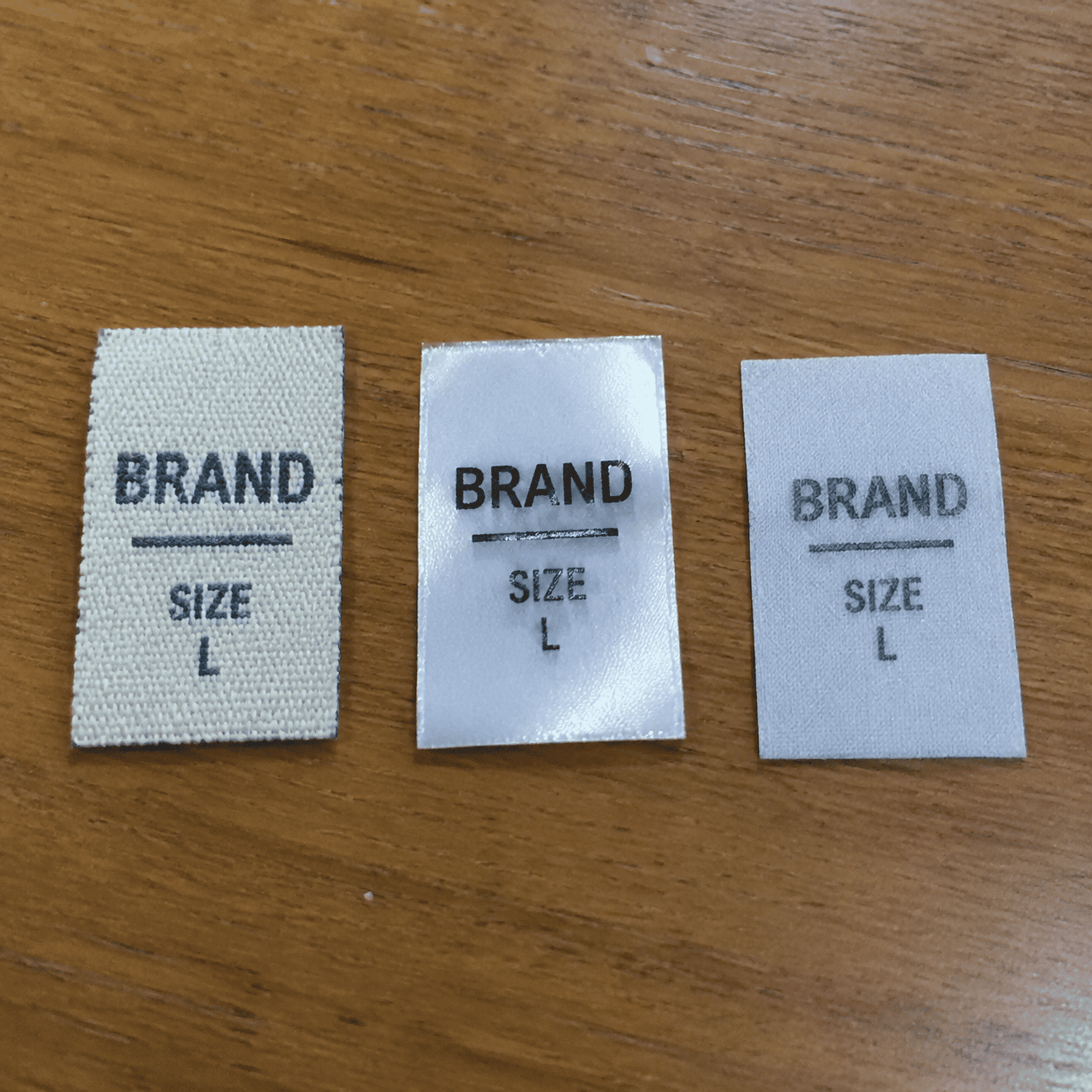
Below, I'll walk you through how different label materials actually perform after washing, the common failure modes I see every week, and a practical framework to help you pick the right material before you place that order. Let's get into it.
Why Do Woven Labels and Printed Labels Fail Differently After Washing?
This is the single most common sourcing mistake I see: treating woven labels and printed labels as interchangeable. They're not. They break down in completely different ways.
Woven labels embed text and graphics into the fabric structure itself — the design is part of the weave. Printed labels (heat transfer, screen print) apply ink onto a surface. Because of this structural difference, woven labels resist wash-related fading far better, while printed labels are more vulnerable to surface wear, cracking, and ink loss over time.
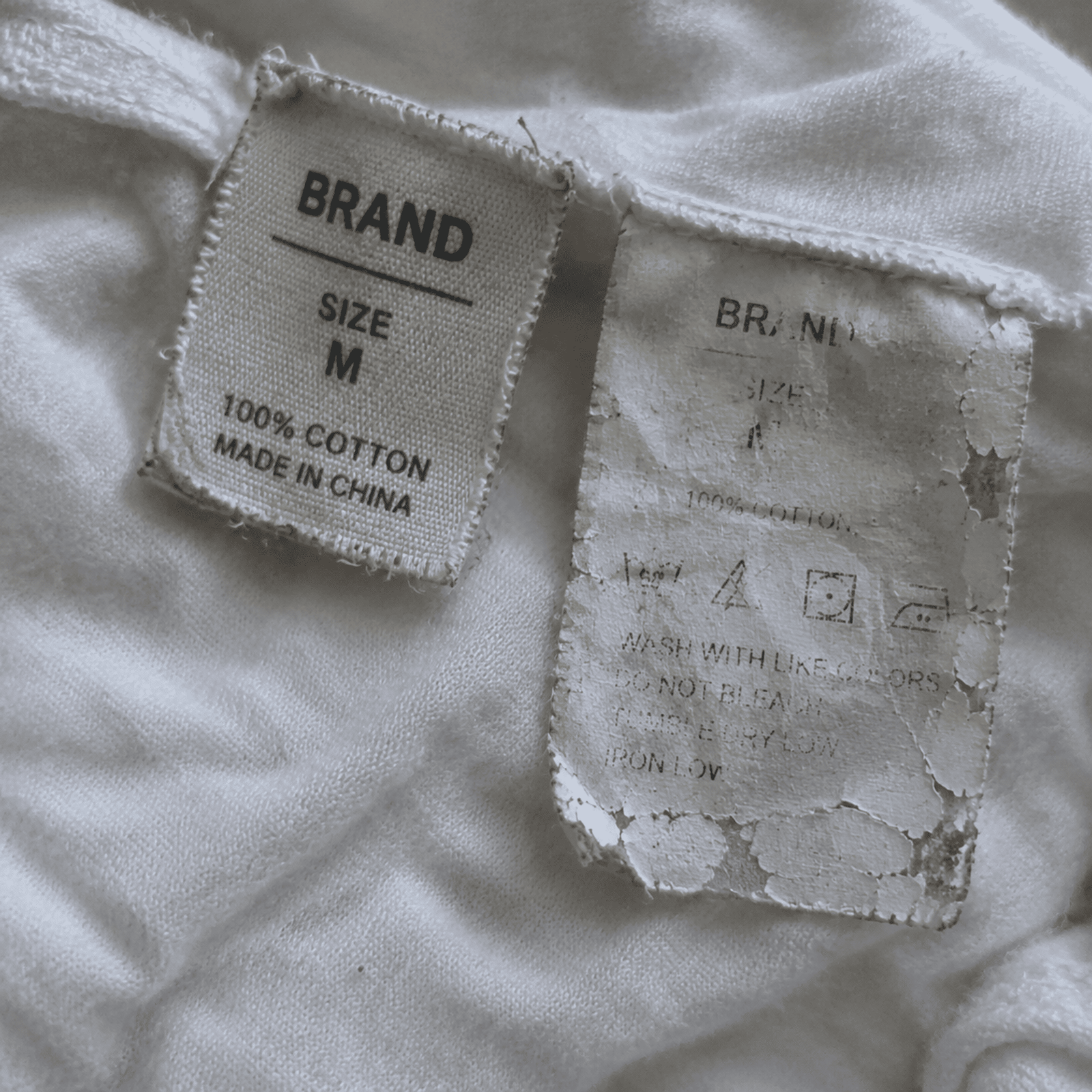
How Woven Labels Handle Washing
Woven labels use dyed yarns interlaced during manufacturing1. The color and text are built into the fabric, not sitting on top of it. This means:
- Fading is minimal because the dye is locked within the yarn fibers2
- Text stays legible even after dozens of washes
- Edge curling can occur if the label isn't properly heat-cut or folded
- Substrate shrinkage is possible with low-quality base yarns
In our pre-production sampling process, we routinely compare wash results across label types before confirming material for a client's order. Woven labels consistently hold up better in terms of color retention and text clarity — especially for garments that see frequent laundering like basics, activewear, and children's clothing3.
How Printed Labels Handle Washing
Printed labels — whether heat transfer or screen-printed — rely on ink adhesion to a substrate surface. That bond is inherently weaker than yarn-level integration. Common failure modes include:
- Ink fading or ghosting after repeated hot water cycles
- Cracking on heat-transfer prints4, especially with dryer heat
- Text becoming illegible as ink wears away from the contact surface
- Substrate warping when the base material reacts to heat and moisture
Does this mean printed labels are bad? Not at all. They're excellent for short-run projects, complex full-color designs, and cost-sensitive orders. But if your garment will be washed 30+ times, you need to go in with realistic expectations.
| Factor | Woven Labels | Printed / Heat Transfer Labels |
|---|---|---|
| Color Durability | High — dye is within yarn | Moderate — ink sits on surface |
| Text Legibility | Excellent over time | Degrades with wash cycles |
| Common Failure | Edge curling, minor shrinkage | Cracking, fading, peeling |
| Best For | Everyday wear, high-wash items | Limited editions, low-wash items |
| Unit Cost | Higher | Lower |
Does Passing a Lab Wash Test Guarantee Real-World Performance?
Here's something that surprises many buyers: a label that passes a standard wash test can still fail in actual consumer use5. The gap between lab conditions and real life is bigger than you think.
Standard wash resistance tests like AATCC 61 or ISO 105-C066 use controlled temperature, detergent concentration, and cycle counts. Real consumers use hot dryers, bleach, overloaded machines, and commercial laundry services. A "pass" on a lab report tells you the label met a minimum threshold — not that it will survive your customer's actual laundry habits.
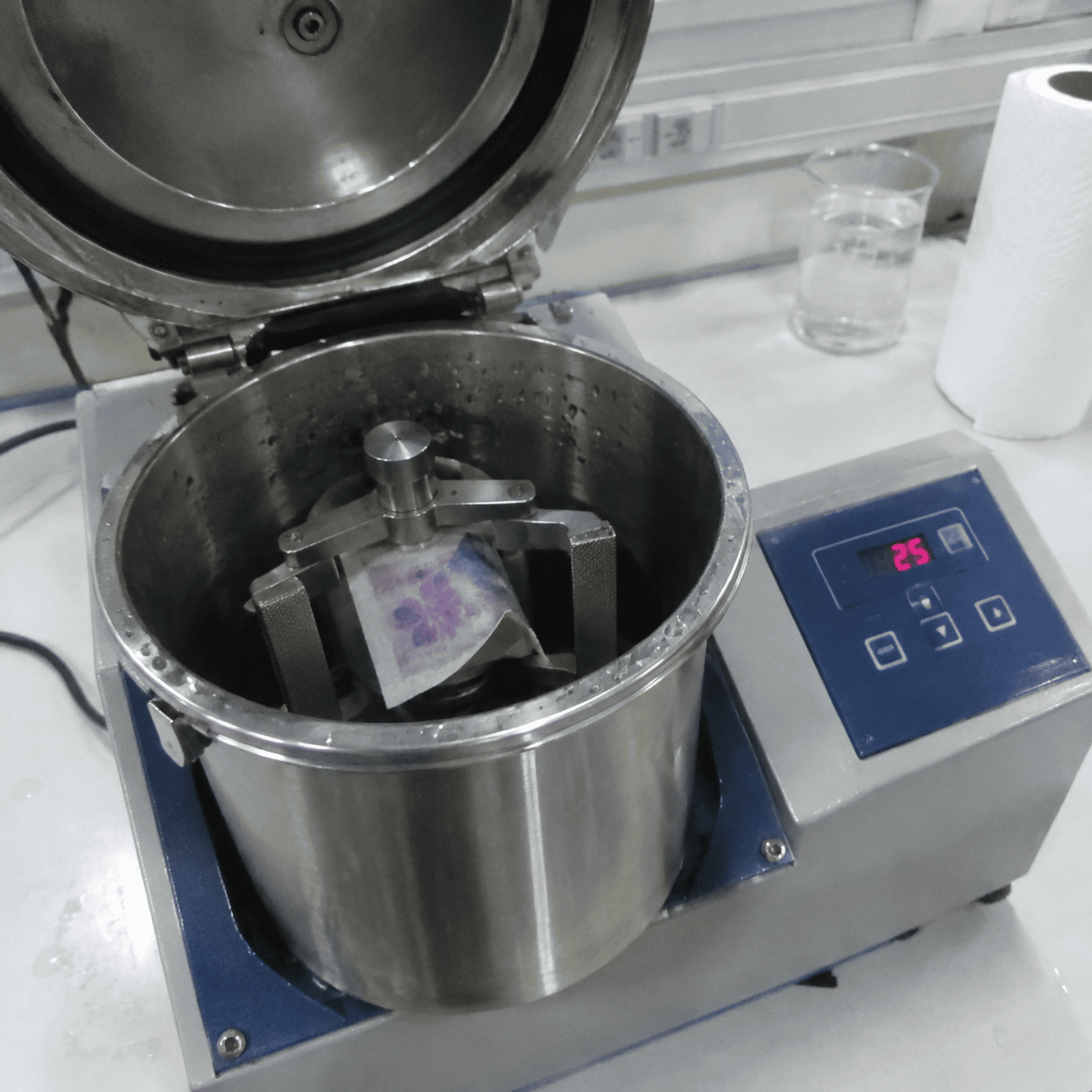
What Lab Tests Actually Promise
When clients reference AATCC or ISO standards, they're usually asking whether a label meets a baseline durability benchmark. These tests are useful for:
- Comparing two materials under identical conditions
- Meeting compliance requirements for retail buyers or importers
- Catching obviously defective materials before production
But they don't simulate a parent throwing kids' clothes into a hot wash three times a week7. They don't account for commercial laundry machines in hospitality or workwear. Based on our production experience across thousands of label orders, I always tell clients: the lab test is the starting line, not the finish line.
Scenarios Where Lab Results Fall Short
Workwear and uniforms: Commercial laundering uses higher temperatures and harsher chemicals than any standard test simulates8. Heat transfer labels in this category frequently crack and peel within months.
Children's clothing: Parents wash these garments aggressively and often. A label that survives 25 standard cycles might look unreadable after 15 real-world washes with bleach additives.
Athleisure and activewear: Frequent washing plus dryer heat creates a double stress on ink-based labels. Woven labels significantly outlast printed alternatives here.
My recommendation? Always request a pre-production wash sample in conditions that mimic your end customer's actual behavior. We do this routinely for clients, and it has caught problems that a standard test report would have missed.
How Should You Choose Label Material Based on End-Use Scenario?
This is where I see the biggest disconnect. Buyers often pick label materials based on how they look in a sample kit or how much they cost per piece. But the real question is: what will this label go through after the garment is sold?
Match your label material to the garment's end-use scenario — not just its appearance. A children's wear brand washing garments 50+ times needs woven labels. A limited-edition streetwear drop with 5–10 expected washes can use printed labels effectively. The decision matrix should weigh garment category, expected wash cycles, and brand positioning together.

A Practical Decision Matrix
| Garment Category | Expected Wash Cycles | Brand Positioning | Recommended Label Type |
|---|---|---|---|
| Children's wear | 50+ | Mid to premium | Woven labels |
| Workwear / Uniforms | 50+ (commercial laundry) | Functional | Woven labels (high-density weave) |
| Everyday basics (tees, underwear) | 30–50 | Any | Woven labels |
| Athleisure / Activewear | 30–50 | Mid to premium | Woven labels or high-grade heat transfer |
| Streetwear (limited drops) | 5–15 | Premium / hype | Printed or heat transfer (fine for low wash) |
| Outerwear / Jackets | 5–15 | Premium | Woven or leather/PVC patches |
| Promotional / event apparel | 1–5 | Budget | Printed labels (cost-effective choice) |
The Cost-vs-Durability Honest Conversation
I won't pretend woven labels and printed labels cost the same — they don't. Printed labels are genuinely cheaper per unit, and for the right application, they're a smart choice. If you're producing a promotional run of 500 tees for a one-time event, spending more on woven labels doesn't make financial sense.
But here's the false economy I see repeatedly: a DTC brand launches everyday basics with heat transfer labels to save $0.02 per piece. Six months later, they're dealing with customer complaints, negative reviews mentioning "cheap labels," and returns9. The cost of those returns and that brand damage far exceeds what they saved on label material.
My rule of thumb: if your customer will wash the garment more than 20 times, invest in woven. Below 20 expected washes, printed can work — but request wash samples first.
Frequently Asked Questions
How many wash cycles should a clothing label survive?
It depends on the garment. Children's wear and basics should target 50+ cycles. Streetwear or occasion-wear may only need 10–15. Always match label durability expectations to how your end customer will actually use and launder the garment.
Can heat transfer labels be made more wash-resistant?
Yes — higher-grade transfer films and proper application temperature improve durability10. But even premium heat transfers generally degrade faster than woven labels under aggressive laundering. They're best suited for low-to-moderate wash frequency garments.
What's the most common label failure after washing?
From what we see in client feedback, ink fading and text illegibility on printed labels are the most frequent complaints. For woven labels, edge curling from improper finishing is the top issue — but it's preventable with correct heat-cutting during production.
Should I request wash test samples before placing a bulk order?
Absolutely. We recommend every buyer request pre-production wash samples tested under conditions that match your garment's real-world use. This one step prevents the majority of post-production label complaints we encounter.
Are OEKO-TEX certified labels more wash-resistant?
OEKO-TEX® STANDARD 100 certifies that materials are free from harmful substances — it's a safety certification, not a durability certification. However, labels produced under quality-controlled, certified processes tend to use better base materials, which can indirectly support better wash performance. Always verify certifications directly with the issuing body.
Conclusion
A wash resistance test isn't just a lab formality — it's the most practical way to protect your brand reputation, reduce returns, and choose label materials with confidence. Woven labels outperform printed labels in high-wash scenarios, but printed labels remain a valid choice for the right applications. The key is matching material to end-use reality, not appearance or price alone.
At Guangzhou Zhunming Accessories, we help brands navigate exactly this decision every day. If you're evaluating clothing label materials and want pre-production wash samples before committing, reach out to our team — we'll match the right material to your specific garment and laundering scenario so you can order with confidence.
"Dyeing and Colorfastness in Fabrics", https://ir.library.oregonstate.edu/downloads/pc289j22n. Textile engineering literature confirms that yarn-dyed woven fabrics retain color more effectively than surface-printed substrates because the dye is locked within the fiber matrix during yarn production, reducing susceptibility to surface abrasion and wash-induced fading (e.g., Kadolph, Textiles, 11th ed.). Evidence role: mechanism; source type: education. Supports: Woven labels are produced using pre-dyed yarns interlaced on jacquard looms, embedding color within the yarn structure rather than applying it to a surface.. Scope note: General textile science principles are applied here; direct comparative studies specifically on clothing label formats may be limited. ↩
"Dyeing", https://en.wikipedia.org/wiki/Dyeing. Textile chemistry literature explains that yarn dyeing achieves deeper dye penetration into fiber structures compared to surface application methods, resulting in stronger dye-fiber bonds and greater resistance to color loss during laundering (see Broadbent, Basic Principles of Textile Coloration, Society of Dyers and Colourists). Evidence role: mechanism; source type: education. Supports: Yarn-dyed textiles exhibit superior colorfastness because dye molecules penetrate and bond within the fiber structure, making them less susceptible to surface abrasion and wash extraction.. Scope note: The principle applies broadly to textile coloration; specific performance differences between woven labels and printed labels may also depend on substrate composition and dye class used. ↩
"Laundry Hygiene and Odor Control: State of the Science - PMC", https://pmc.ncbi.nlm.nih.gov/articles/PMC8231443/. Household laundering surveys consistently identify undergarments, t-shirts, children's clothing, and activewear as the most frequently washed garment categories, with these items often laundered after a single wear due to hygiene expectations and soil accumulation patterns. Evidence role: statistic; source type: research. Supports: Basics (t-shirts, underwear), activewear, and children's clothing are among the most frequently laundered garment categories.. Scope note: Laundering frequency data is self-reported and varies by geography and cultural norms; the relative ranking of categories may differ across studies. ↩
"How to prevent heat transfer vinyl from peeling off after ...", https://www.facebook.com/groups/1281587978954495/posts/1851462571967030/. Research on heat transfer printing durability indicates that thermoplastic ink films are susceptible to cracking and delamination under repeated thermal stress, as differential expansion rates between the transfer layer and textile substrate weaken adhesion over successive laundering and drying cycles. Evidence role: mechanism; source type: research. Supports: Heat transfer labels degrade through cracking and delamination when exposed to repeated thermal cycling in dryers, due to differential thermal expansion between the ink/film layer and the substrate.. Scope note: Most published research addresses heat transfer printing on garment fabrics rather than specifically on label substrates, though the degradation mechanism is analogous. ↩
"Threading Your Way Through the Labeling Requirements ...", https://www.ftc.gov/business-guidance/resources/threading-your-way-through-labeling-requirements-under-textile-wool-acts. Textile testing literature acknowledges that standardized laundering tests (e.g., AATCC 61, ISO 105-C06) are designed for comparative material evaluation under controlled conditions and may not fully predict performance under the variable and often more aggressive conditions of actual consumer laundering, including variations in water temperature, detergent type, machine loading, and drying methods (see AATCC Technical Manual commentary; Saville, Physical Testing of Textiles, Woodhead Publishing). Evidence role: expert_consensus; source type: research. Supports: Standardized laboratory wash tests do not fully replicate the variability and severity of real-world consumer laundering conditions, creating a recognized gap in predictive validity.. Scope note: The gap is widely acknowledged in principle, but its magnitude varies by material type and specific consumer behavior; quantified comparisons are limited in published literature. ↩
"AATCC 61 Color fastness to Laundering", https://darongtester.com/aatcc-61-colorfastness-to-washing/. AATCC Test Method 61 evaluates colorfastness to laundering under controlled conditions simulating multiple home launderings, while ISO 105-C06 specifies analogous procedures used internationally; both standards define fixed temperature, detergent concentration, and cycle parameters (AATCC Technical Manual; ISO 105-C06:2010). Evidence role: definition; source type: institution. Supports: AATCC Test Method 61 and ISO 105-C06 define standardized procedures for evaluating colorfastness to laundering, including specified temperature, detergent type, and mechanical agitation parameters.. Scope note: These standards describe test methodology rather than directly comparing woven versus printed label performance. ↩
"Laundry Hygiene and Odor Control: State of the Science - PMC", https://pmc.ncbi.nlm.nih.gov/articles/PMC8231443/. Consumer behavior surveys on household laundering practices indicate that children's clothing is among the most frequently washed garment categories, with parents reporting wash frequencies of 2–4 times per week for everyday children's items, substantially exceeding typical adult garment laundering rates. Evidence role: statistic; source type: research. Supports: Children's garments are laundered significantly more frequently than adult clothing, often multiple times per week.. Scope note: Wash frequency data varies by region, household size, and survey methodology; specific figures should be verified against the cited source's sample population. ↩
"WaterSense at Work Section 3.5: Laundry Equipment", https://www.epa.gov/system/files/documents/2023-06/ws-commercial-watersense-at-work_Section_3.5_Laundry_Equipment.pdf. Industry guidelines from organizations such as the Textile Rental Services Association (TRSA) and ISO 15797 (industrial laundering procedures) document that commercial wash processes routinely employ temperatures and chemical concentrations exceeding those in home-laundering test standards like AATCC 61 or ISO 105-C06. Evidence role: general_support; source type: institution. Supports: Commercial and industrial laundering processes typically operate at higher temperatures (up to 85°C or above) and use stronger chemical concentrations than those specified in standard home-laundering test methods.. Scope note: Specific parameters vary by facility and garment type; the comparison is directional rather than universally quantified. ↩
"Apparel and Labeling", https://www.ftc.gov/news-events/topics/tools-consumers/apparel-labeling. Consumer behavior research in fashion retail suggests that tactile and visual quality cues, including garment labels and tags, influence perceived product quality and brand evaluation, with degraded or low-quality labels potentially triggering negative quality inferences. Evidence role: general_support; source type: research. Supports: Consumers associate label quality with overall garment quality, and poor label durability can negatively affect brand perception and purchase intent.. Scope note: Direct studies quantifying return rates specifically attributable to label degradation are scarce; the evidence is more robust for general quality perception effects. ↩
"Reactive Printing and Wash Fastness of Inherent Flame ... - PMC", https://pmc.ncbi.nlm.nih.gov/articles/PMC9323461/. Studies on heat transfer printing parameters demonstrate that film composition (e.g., polyurethane versus PVC-based films) and application temperature/pressure significantly influence adhesion bond strength and subsequent resistance to laundering-induced degradation. Evidence role: mechanism; source type: research. Supports: Transfer film composition and application temperature are key variables affecting the adhesion strength and wash durability of heat transfer labels.. Scope note: Performance varies widely across film manufacturers and substrate combinations; general principles hold but specific durability claims require testing with the actual materials in question. ↩

0 Comments
Ask a question or share your garment accessories sourcing experience.