
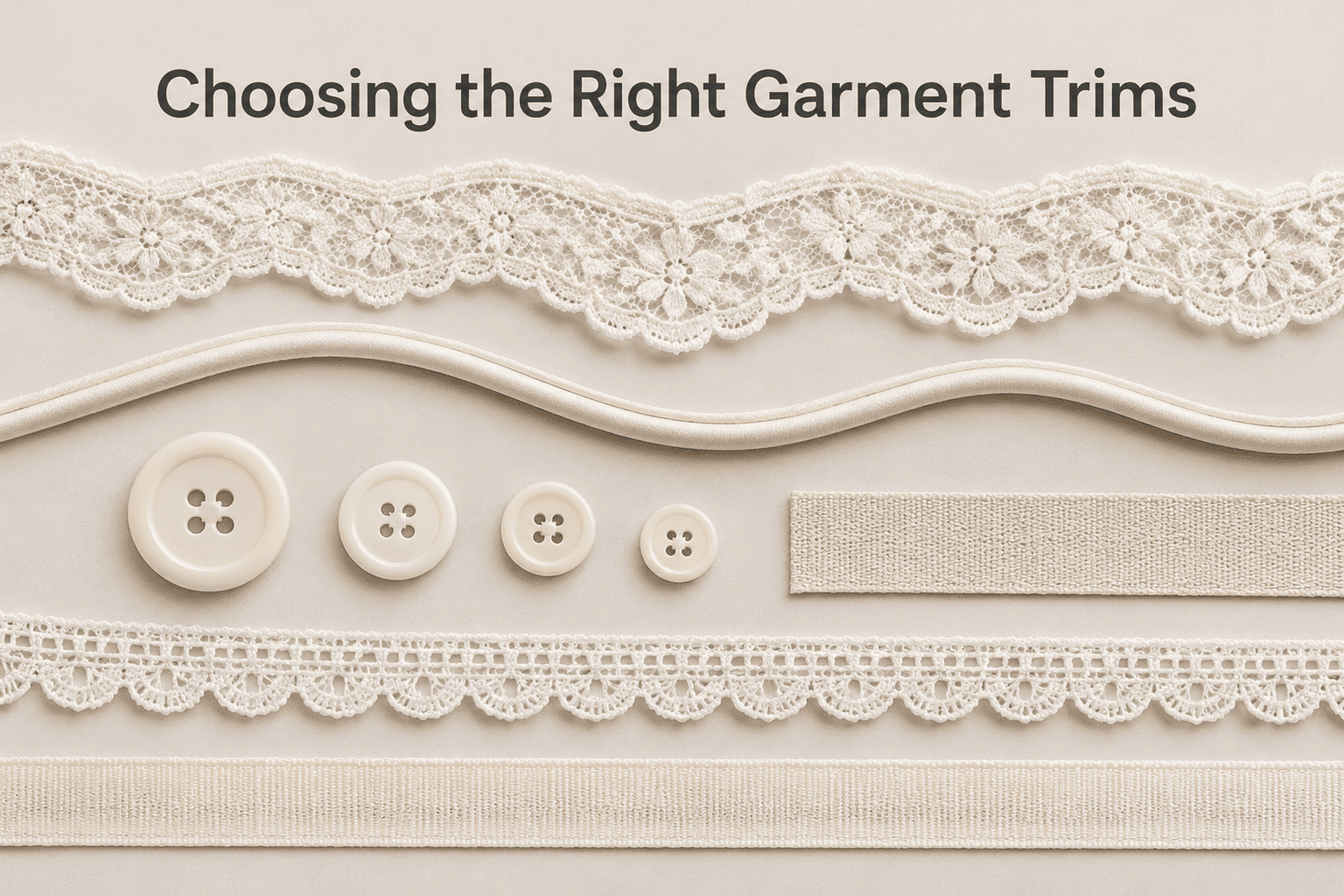
Choosing the Right Garment Trims: A Complete Guide for Fashion Brands
Choosing the right garment trims can feel overwhelming when you're launching a new clothing line. You've finalized your fabric, nailed your silhouettes—and then discover that labels, hang tags, zippers, and patches each involve dozens of material, process, and compliance decisions. Make the wrong call here, and you risk delayed launches, inconsistent branding, and wasted budget.
Garment trims are the small components attached to or packaged with a finished garment—woven labels, hang tags, buttons, zippers, drawstrings, patches, and more. Choosing them well means matching each trim's material and manufacturing process to your brand positioning, garment type, care requirements, and launch timeline. This guide walks you through the decision framework professional buyers use so you can get it right on your first order.

Below, I'll break down how trims shape brand perception, which material-process combinations suit which garments, how to plan your procurement timeline, and exactly what information your supplier needs from you before quoting. Whether you're a DTC founder, an emerging designer, or an Amazon apparel seller placing your first trim order, this framework will save you rounds of re-sampling and weeks of lost time.
Why Do Garment Trims Matter More Than Most Brands Realize?
New brands pour weeks into fabric selection and tech packs but treat trims as an afterthought—something to fill in at the last minute. The problem? Your customer notices trims the moment they pick up the garment. A scratchy, poorly printed neck label or a flimsy hang tag instantly undercuts the quality story your fabric and design are trying to tell.
Trims are not decorations. They are brand touchpoints—every label, tag, and zipper pull is a tactile interaction between your customer and your brand identity. Getting them right signals professionalism; getting them wrong signals carelessness, regardless of how premium your fabric is.
Trims Shape Perceived Value More Than Fabric Does
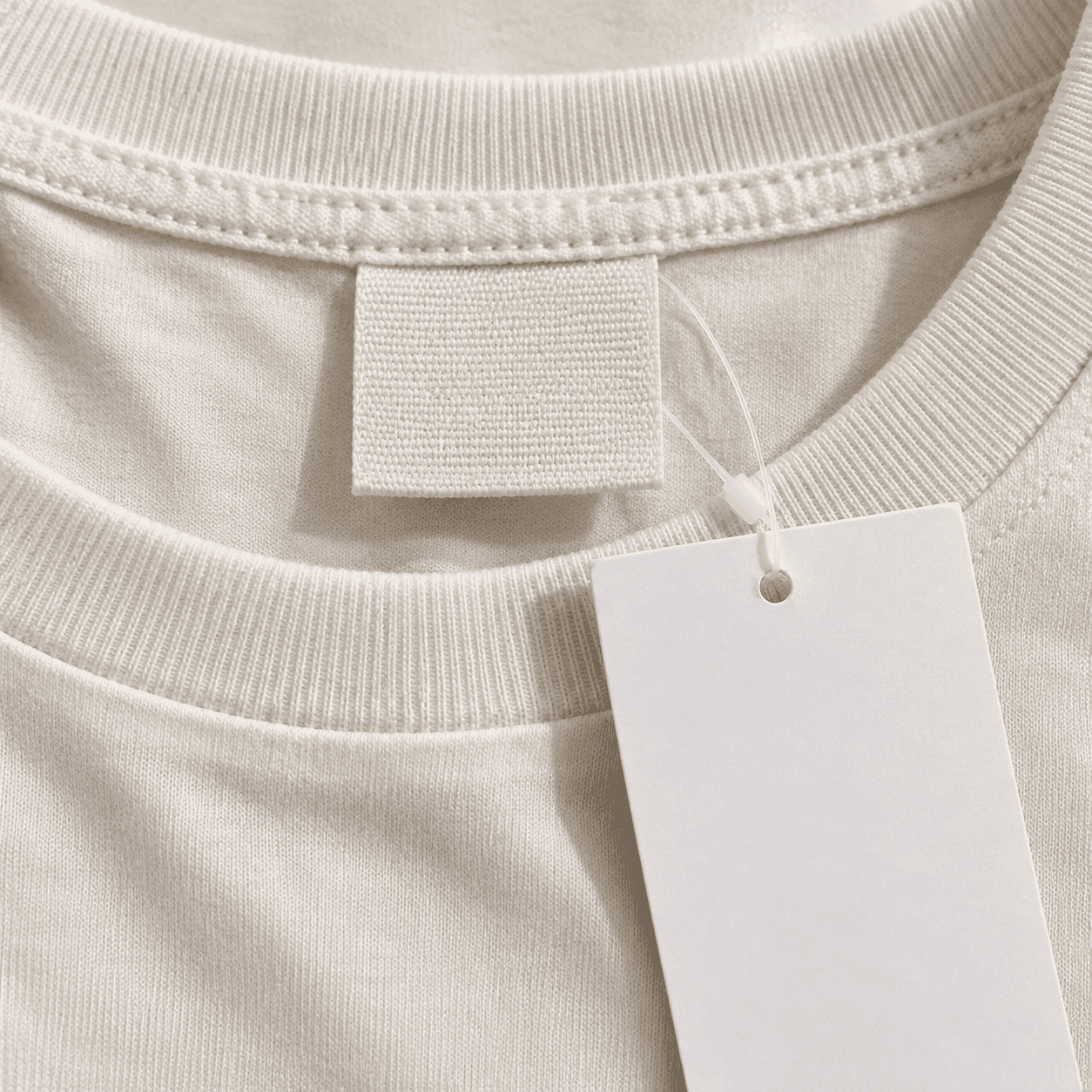
Here's a counterintuitive truth I've learned from years of advising new brands: consumers judge garment quality by trims more often than by fabric1. Most shoppers can't identify a 40s cotton from a 60s cotton by touch. But they absolutely notice the difference between a crisp, densely woven damask label and a thin, blurry printed one.
In our experience, a streetwear brand launching on Shopify came to us after their first production run received customer reviews calling the product "cheap feeling"—despite using premium French terry. The culprit? A low-resolution heat-transfer neck label that curled after two washes and a hang tag printed on thin card stock. When they upgraded to a high-density woven label and a 350gsm coated hang tag with spot UV, customer perception shifted dramatically. Same fabric. Same cut. Different trims.
This happens because trims are what customers physically handle:
- Neck labels touch skin and get read during try-on
- Hang tags are the first thing a buyer holds in retail or unboxing
- Zipper pulls and buttons are touched every time the garment is worn
- Embroidered patches catch the eye and invite closer inspection
Key takeaway: Budget allocation for garment trims should reflect their outsized impact on brand perception. A common pattern we see in first orders is brands allocating less than 2% of their garment cost to trims2—then wondering why the finished product doesn't feel "premium." Raising that to 5–8% often transforms the entire perceived tier of the product.
The Cost of Treating Trims as Commodities
When brands evaluate trims on price alone, they often discover hidden costs downstream:
| Decision | Short-Term Saving | Hidden Cost |
|---|---|---|
| Cheapest woven label supplier | $0.02/pc saved | Inconsistent color across batches; re-orders needed |
| Skipping sample approval | 5 days saved | Wrong size/color discovered at bulk delivery |
| Generic (non-custom) hang tags | ~$0.05/pc saved | Brand looks indistinguishable from competitors |
| Lowest-cost metal buttons | $0.03/pc saved | Tarnishing after 3 washes; customer complaints |
The real cost isn't the trim itself—it's the timeline disruption and trust erosion when something goes wrong at scale.
Which Trim Types Suit Which Garments—And How Do You Decide?
Most online resources list trim types like a dictionary: "Woven labels are labels that are woven; printed labels are labels that are printed." That's not helpful when you're staring at a blank brief wondering what to order for your specific product. The better question is: What is the garment, how will it be washed, and what brand impression are you targeting?
The right garment trims for your product depend on a matrix of three factors: material, manufacturing process, and end-use conditions. Match all three, and your trims will last as long as your garment and reinforce your brand. Mismatch any one, and you'll discover the problem only after production—or worse, after your customer does.

Understanding the Core Label Types
Before diving into the decision matrix, let me clarify the main label categories—because confusion here is the single most common issue I see in first-time buyer briefs.
- Woven labels: The design is woven directly into the fabric of the label using threads on a loom. These are durable, have a premium hand feel, and survive industrial washing. "Damask" refers to a high-density weave that allows finer detail3.
- Printed labels: The design is printed (usually via screen or digital printing) onto a satin, cotton, or polyester ribbon. These are cost-effective and good for complex multi-color artwork, but ink can fade over many wash cycles.
- Heat-transfer labels (tagless labels): The design is printed onto a transfer film and then heat-pressed directly onto the garment fabric. There's no physical label—just ink on fabric. Popular for activewear and children's clothing where comfort is critical.
The Decision Matrix: Garment Type → Trim Recommendation
Rather than choosing trims from a catalog, work backward from your garment:
| Garment Type | Recommended Main Label | Why | Wash Consideration |
|---|---|---|---|
| Premium streetwear / fashion | High-density woven (damask) | Rich texture, fine detail, premium perception | Survives 50+ home washes |
| Activewear / athleisure | Heat-transfer label | No physical tag; won't irritate skin during movement | Must withstand stretch and moisture-wicking fabric care |
| Children's clothing | Heat-transfer or soft printed satin | Safety regulations often require tagless; soft hand feel | Frequent high-temp washing |
| Basic T-shirts / fast fashion | Printed satin label | Cost-effective at volume; acceptable durability | Moderate wash durability (30–40 cycles typical) |
| Outerwear / denim | Woven label + leather patch / PVC patch | Rugged look matches product positioning | Must survive heavy-duty care |
| Accessories (bags, hats) | Woven label, rubber/PVC patch, or metal label | Visible brand element; durability against abrasion | Spot cleaning only, so wash resistance less critical |
Beyond Labels: Matching Secondary Trims
Garment trims extend well beyond neck labels. Here's how to think about the supporting cast:
- Hang tags: Your silent salesperson. Card weight (typically 300–400gsm), finish (matte, glossy, spot UV, embossed), and attachment method (string, safety pin, plastic barb) all signal brand tier. A 250gsm uncoated tag says "budget." A 350gsm soft-touch laminated tag with foil stamping says "considered."
- Elastic bands and drawstrings: Functional trims that also carry branding. Jacquard-woven elastics with your logo are a detail-oriented touch common in premium underwear and activewear.
- Zippers and zipper pulls: YKK is the industry default for reliability4, but custom-molded zipper pulls in metal or silicone add significant brand identity to outerwear and bags.
- Buttons and snaps: Material choice (metal, corozo nut, polyester resin, horn) directly affects both garment positioning and care requirements. Metal snaps on baby clothing, for example, require nickel-free certification in many markets5.
- Embroidered patches: Ideal for brand logos, collection badges, or decorative elements. Thread density and backing type (iron-on, sew-on, Velcro) should be specified based on garment type and application method.
How Should You Plan Your Garment Trim Procurement Timeline?
The most painful mistake I see isn't choosing the wrong trim—it's starting the trim procurement process too late. Brands that finalize their fabric two months before launch often assume trims can be sourced in a week. They can't. And the cascading delays from missed trim deadlines are the number-one reason emerging brands miss their seasonal windows.
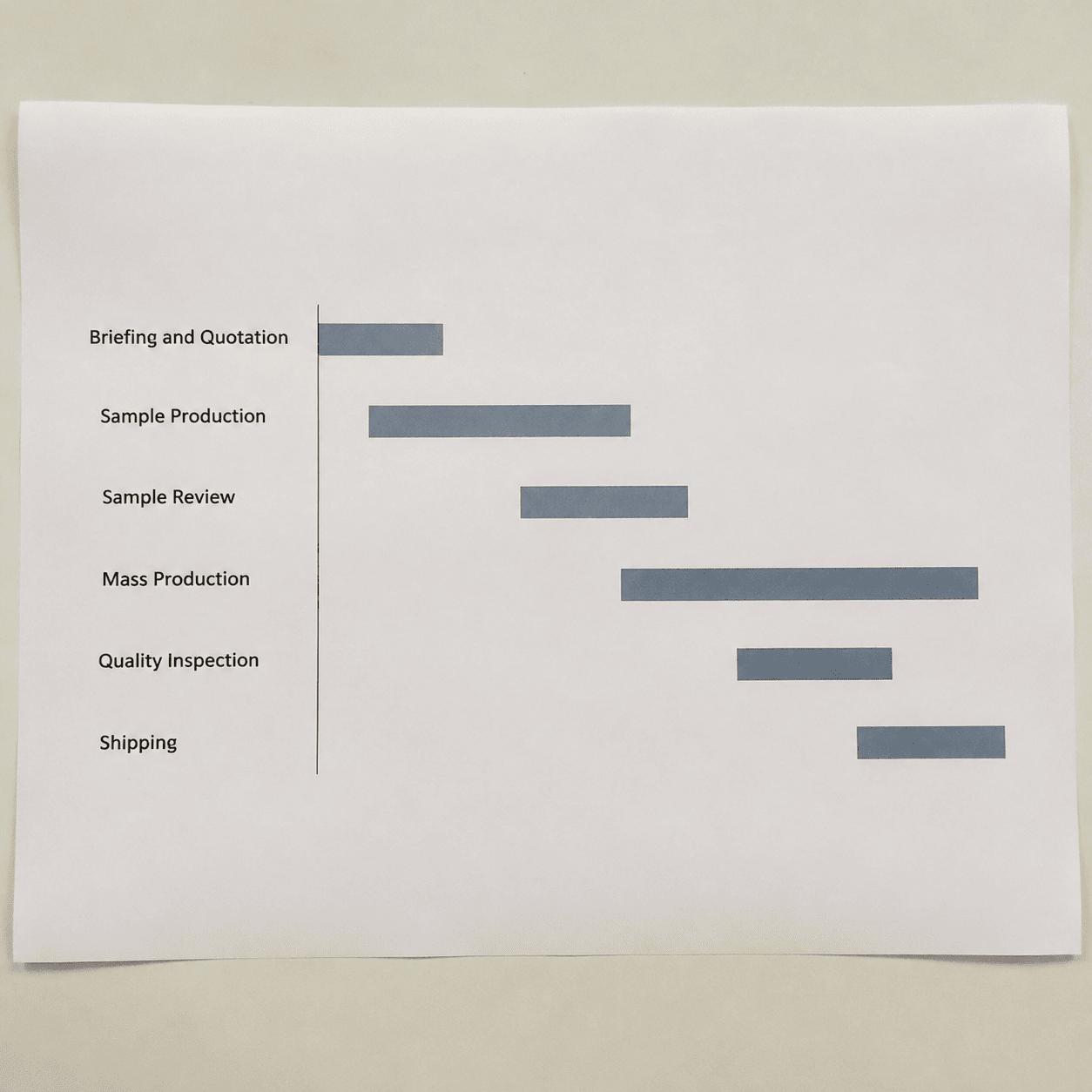
A realistic garment trim procurement timeline—from initial brief to bulk delivery—typically runs 4 to 8 weeks for custom trims. This includes briefing, sampling, revision, approval, production, and shipping. Understanding each phase lets you plan backward from your launch date and avoid the costly trap of rushed orders.
The Realistic First-Order Timeline
Here is what a typical first custom trim order looks like when working with an experienced supplier:
| Phase | Duration | What Happens |
|---|---|---|
| 1. Initial brief & quote | 1–2 days | You send your requirements; supplier confirms specs and pricing |
| 2. Sample production | 3–7 days | Supplier produces physical samples based on your brief |
| 3. Sample review & revision | 2–5 days | You review; if revisions are needed, add 3–5 days per round |
| 4. Sample approval | 1 day | You confirm the approved sample as the production standard |
| 5. Bulk production | 10–20 days | Varies by trim type, quantity, and complexity |
| 6. Quality inspection | 1–2 days | Final check before shipping |
| 7. Shipping | 3–7 days (express) / 25–35 days (sea freight) | Depends on destination and method |
Total realistic range: 4–8 weeks for the first order. Repeat orders with approved samples are faster—often 2–4 weeks—because the sampling phases are eliminated.
Where Timelines Go Wrong
In our experience advising new brands, timeline delays almost always trace back to one of three root causes:
-
Incomplete initial brief. If your brief is missing key information (we'll cover exactly what to include in the next section), the supplier will come back with clarifying questions. Each round of back-and-forth adds 1–3 days.
-
Unrealistic color expectations. Pantone matching on woven labels is limited by thread availability. A color that looks perfect on screen may require thread-dyeing, adding 5–7 days. Discuss color limitations before finalizing artwork.
-
Multiple sample revisions. Each revision cycle costs 3–7 days. Brands that send clear, complete briefs with physical or Pantone color references typically approve samples in one round. Brands that send a low-resolution JPEG and say "make it look premium" often need three or four rounds.
Pro tip: Build a 2-week buffer into your timeline for unexpected revisions. If you don't need it, you'll receive your trims early. If you do need it, you'll avoid the panic of expedited shipping fees—which can exceed the cost of the trims themselves.
What Should You Tell Your Supplier Before Asking for a Garment Trim Quote?
This is the section I wish every first-time buyer would read before sending their first inquiry email. A common pattern we see in first orders: brands send a message that says something like, "Hi, I need labels for my clothing brand. How much?" That's like asking a printer for a quote without specifying paper size, color, or quantity. The supplier can't give you an accurate price, so they'll either quote high to cover unknowns or quote low and surprise you later with upcharges.
A complete trim brief includes your garment type, trim specifications, artwork files, quantity range, compliance requirements, and target timeline. Sending this information upfront—rather than across five follow-up emails—saves an average of 5–10 business days in the quoting and sampling process and ensures your first quote is realistic.

The Complete Trim Brief Checklist
Here is the information a supplier needs to give you an accurate, first-round quote. I recommend copying this list and filling it out for each trim type before reaching out:
1. Garment Information
- Garment type (T-shirt, hoodie, jacket, etc.)
- Garment fabric composition (100% cotton, polyester blend, etc.)
- Target market (US, EU, etc.—affects compliance requirements)
- Price positioning (budget, mid-range, premium—helps the supplier recommend appropriate specs)
2. Trim Specifications
- Trim type (woven label, printed label, heat-transfer, hang tag, patch, etc.)
- Dimensions (width × height in mm or inches)
- Material preference, if any (satin, damask, cotton, polyester, cardstock weight)
- Fold type for labels (center fold, end fold, straight cut, Manhattan fold)
- Attachment method (sew-in, iron-on, heat-press)
- Color specifications (Pantone references strongly preferred; CMYK for printed items)
- Finish details for hang tags (lamination type, foil stamping, embossing, die-cut shape)
3. Artwork Files
- Vector format (AI, EPS, or PDF) at actual size
- Font outlines converted (to avoid substitution issues)
- Clearly marked color callouts with Pantone numbers
4. Quantity and Logistics
- Order quantity (even an estimated range helps)
- MOQ (minimum order quantity) flexibility needed?
- Delivery address and preferred shipping method
- Target delivery date
5. Compliance and Certification
- Care label content requirements for your market (FTC in the US, EU Regulation 1007/2011 in Europe6)
- Certification requirements (e.g., OEKO-TEX® Standard 1007 for skin-contact trims)
- Material restrictions (nickel-free, AZO-free dyes, etc.)
Why Compliance Matters in Trim Selection
Compliance is the area where I see the most dangerous knowledge gaps among first-time buyers. Your garment might be made from certified organic cotton, but if your woven label uses AZO dyes that are restricted in the EU8, your entire shipment can be stopped at customs.
Key compliance considerations for garment trims:
- OEKO-TEX® Standard 100: Tests for harmful substances in textiles, including trims. This is especially relevant for baby and children's clothing and for any skin-contact label. We hold this certification for our products, though I'd encourage any buyer to request and verify the certificate number directly—regardless of the supplier.
- CPSIA (US)9: Requires third-party testing for children's products. Trims containing lead or phthalates above limits will fail.
- REACH (EU)10: Restricts chemicals in products sold in Europe. Dyes, coatings, and metal components in trims must comply.
- California Proposition 6511: Requires warnings for products containing chemicals on the Prop 65 list. Some metal trims and PVC patches may be affected.
Important: Certifications should be verified through the issuing body's online database, not just taken at face value from a supplier's website. We've heard from buyers who previously worked with suppliers that presented falsified certificates—a risk that's unfortunately real in this industry. Always request the certificate and check its validity independently.
How Do You Evaluate a Garment Trim Supplier Before Committing?
Finding a supplier who offers low prices is easy. Finding one who delivers consistent quality, on time, with responsive communication is the actual challenge. First-time trim buyers often select suppliers based on a single sample—only to discover that bulk production looks nothing like the approved proof.
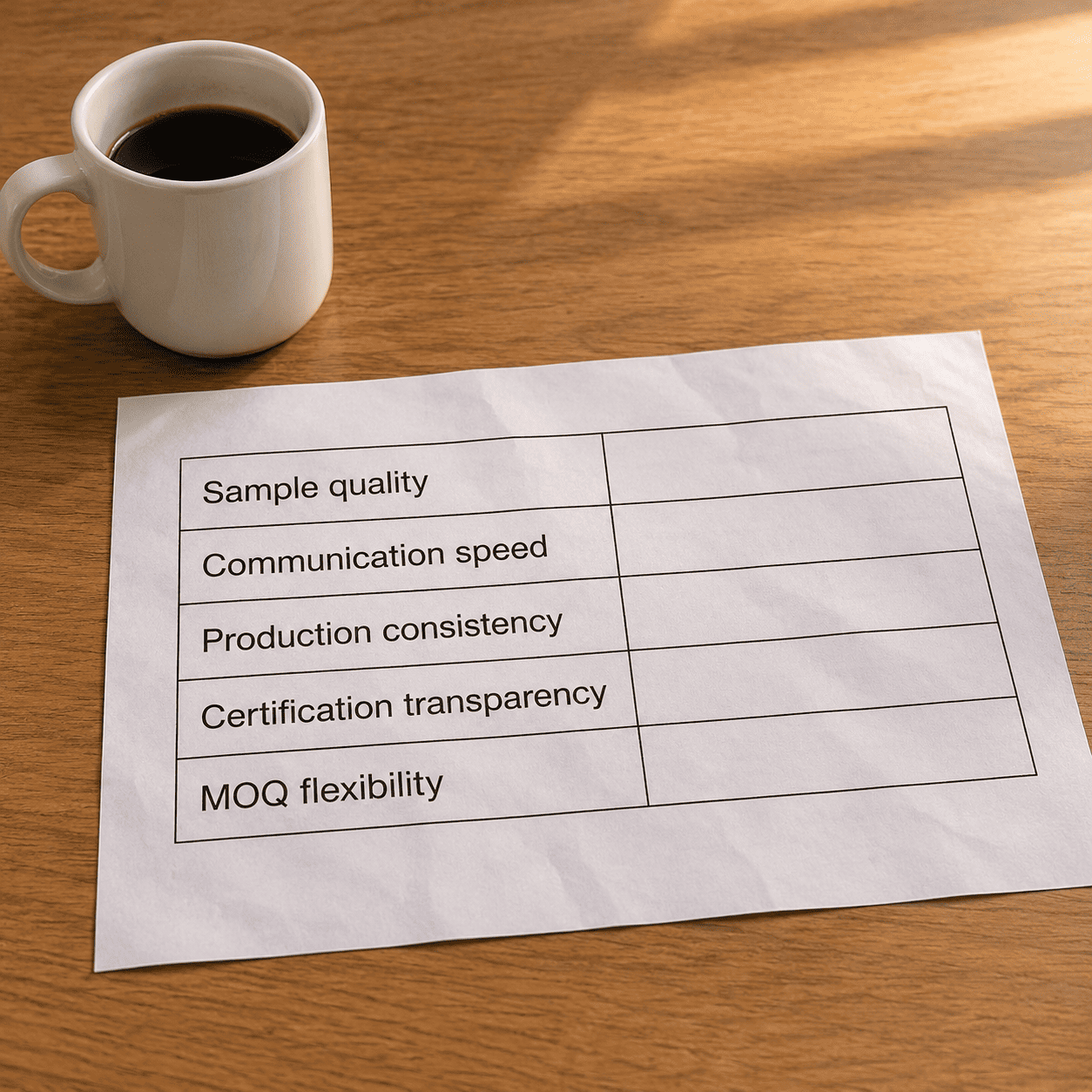
Evaluate garment trim suppliers across five dimensions: sample quality, communication responsiveness, production consistency, certification transparency, and flexibility on MOQs and customization. No single factor should dominate your decision—a supplier with beautiful samples but 5-day email response times will cost you more in lost time than a slightly pricier supplier who responds within hours.
The Five-Point Supplier Evaluation Framework
1. Sample Quality Request physical samples, not just digital proofs. Evaluate:
- Thread density and weave tightness on woven labels
- Color accuracy against your Pantone references
- Edge finish (clean cut vs. fraying)
- Hand feel (stiffness, softness, weight)
- Print resolution and ink adhesion on printed items
2. Communication Speed and Clarity This is the leading indicator of a good supplier relationship. Red flags include:
- Responses taking longer than 24 hours consistently
- Vague answers to specific technical questions
- Reluctance to provide material specifications in writing
A supplier who takes three days to answer an email during the quoting phase will take even longer when problems arise during production.
3. Production Consistency Ask the supplier:
- "Can I see samples from two different production batches of the same product?"
- "What is your quality control process for bulk orders?"
- "What is your defect rate, and what's your policy for defective units?"
Batch-to-batch color variation is the most common quality issue in woven labels. A reliable supplier will have a color tolerance standard (typically within Delta E 2.0 for critical colors)12 and will document it.
4. Certification Transparency As mentioned earlier, request actual certificates—not just logos on a website. Verify them independently. A trustworthy supplier will provide these proactively and welcome the verification.
5. MOQ Flexibility and Customization Capability New brands often need smaller initial quantities. Key questions:
- What is the MOQ per design? (Typical industry range: 100–1,000 pieces for woven labels)
- Is there a setup fee for quantities below MOQ?
- Can you produce OEM/ODM custom trims (custom molds, unique materials)?
- What is the turnaround for design changes on repeat orders?
| Evaluation Criteria | Green Flag | Red Flag |
|---|---|---|
| Sample turnaround | 3–5 days | 10+ days with no explanation |
| Communication | Same-day or next-day response | 3+ day gaps |
| Certification | Provides verifiable certificates proactively | "We have it but can't share it right now" |
| MOQ | Flexible; offers scaled pricing | Rigid minimums with no alternatives |
| Bulk vs. sample consistency | Invites comparison; offers batch samples | Discourages further sampling |
Frequently Asked Questions
What are the most common garment trims for a new clothing brand?
The essentials for most new brands are a main label (woven or printed, sewn into the neck or side seam), a care/content label (legally required in most markets), and a hang tag. Beyond these, brands commonly add patches, custom zipper pulls, or branded elastic depending on the garment type and brand positioning.
How much do custom garment trims cost?
Costs vary widely by type and quantity. Woven labels typically range from $0.03–$0.15 per piece at volume; hang tags from $0.05–$0.30 per piece depending on paper weight and finishing. Custom metal components (zipper pulls, buttons) range higher. Always request pricing at multiple quantity tiers, as unit cost drops significantly with volume.
What is MOQ, and why does it matter for trims?
MOQ stands for Minimum Order Quantity—the smallest number of units a supplier will produce per design. For woven labels, MOQs typically range from 100 to 1,000 pieces. Low MOQs are critical for new brands testing designs or launching limited runs. Suppliers with flexible MOQs let you iterate without overcommitting capital.
How do I ensure my labels won't fade or fall apart after washing?
Specify wash durability requirements in your brief based on your garment's care instructions. Woven labels are inherently more wash-resistant than printed ones. For printed labels, ask about ink type (pigment vs. dye-based) and curing method. For heat-transfer labels, confirm adhesion testing at the temperatures your garment will be washed at. Always request a wash test sample before approving bulk.
Do I need OEKO-TEX certification for my garment trims?
OEKO-TEX® Standard 100 certification is not legally mandatory in most markets, but it is increasingly expected by retailers and consumers, especially for children's clothing and skin-contact items. It certifies that the product has been tested for harmful substances. If your target retailers require it, confirm that your trim supplier holds a valid, current certificate—and verify it through the OEKO-TEX® online database.
Conclusion
Choosing the right garment trims is a brand-building and risk-management exercise—not a catalog shopping trip. The decisions you make about labels, hang tags, patches, and hardware directly shape how customers perceive your product, whether your launch stays on schedule, and how smoothly your supplier relationship operates over time.
Here's what to remember: match your trim's material and process to your garment's end-use conditions. Send your supplier a complete brief on the first email. Build a realistic timeline with buffer. Verify certifications independently. And evaluate suppliers on consistency and communication, not just price.
If you're preparing for your first trim order—or frustrated with the results of a previous one—I'd encourage you to reach out to our team at Guangzhou Zhunming. We specialize in helping DTC brands, designers, and Amazon sellers navigate exactly these decisions, with fast sampling (3–7 days), flexible MOQs, and the kind of responsive communication that keeps your launch on track. Send us your brief, and we'll get back to you with a detailed quote and material recommendations within 12 hours.
"PERCEIVED QUALITY OF APPAREL", https://dr.lib.iastate.edu/bitstreams/ddac01c6-c0f5-47a5-ac74-817e4d83d455/download. Research in consumer behavior and textile science has examined how extrinsic cues—including labeling, finishing details, and packaging—influence perceived garment quality, sometimes independently of fabric hand feel (see, e.g., studies on intrinsic vs. extrinsic quality cues in apparel evaluation). Evidence role: general_support; source type: paper. Supports: That non-fabric garment details such as labels, tags, and hardware significantly influence consumer quality perception. Scope note: Most studies examine extrinsic cues broadly rather than isolating trims specifically from other quality signals. ↩
"Clothing Production Cost Breakdown: Global Math (2026)", https://www.oneaimapparel.com/blog/clothing-production-cost-breakdown-global/. Industry analyses of apparel cost structures typically break down garment costs into fabric, labor, trims/accessories, and overhead, with trims generally representing a single-digit percentage of total cost-of-goods. Evidence role: statistic; source type: research. Supports: That trims and accessories typically represent a small but meaningful share of total garment cost in apparel manufacturing. Scope note: Published cost breakdowns vary significantly by garment category, market tier, and sourcing region, so fixed percentages may not be universally applicable. ↩
"Damask", https://en.wikipedia.org/wiki/Damask. Damask is a reversible figured fabric traditionally woven on a jacquard loom, in which the pattern is created by the interplay of warp-faced and weft-faced satin weave structures; in the garment label industry, 'damask' denotes a high-density weave that permits fine detail and smooth texture reproduction. Evidence role: definition; source type: encyclopedia. Supports: That damask is a figured fabric woven on a jacquard loom with a pattern created by contrasting weave structures, enabling high-detail designs in woven labels. Scope note: The term 'damask' in the woven label industry is used somewhat loosely compared to its traditional textile definition, which historically refers to specific silk or linen figured fabrics. ↩
"YKK", https://en.wikipedia.org/wiki/YKK. YKK Group, headquartered in Tokyo, Japan, is the world's largest manufacturer of zippers, reportedly producing approximately half of all zippers worldwide, and is widely considered the industry benchmark for fastener reliability in the global apparel sector. Evidence role: general_support; source type: encyclopedia. Supports: That YKK Group is the world's largest zipper manufacturer and is widely regarded as the industry standard for zipper reliability in apparel. Scope note: Exact market share figures vary by source and year; YKK's dominance may be less pronounced in certain regional or budget market segments. ↩
"Contact allergy to metals in adolescents: nickel release ...", https://pubmed.ncbi.nlm.nih.gov/22428585/. Under REACH Annex XVII, Entry 27, the European Union restricts the rate of nickel release from articles intended for direct and prolonged contact with skin—including metal buttons, snaps, and rivets on garments—to no more than 0.5 µg/cm²/week, a regulation particularly relevant for children's clothing hardware. Evidence role: mechanism; source type: government. Supports: That the EU restricts nickel release from metal components in prolonged skin contact, including garment hardware such as snaps and buttons, under REACH Annex XVII Entry 27. Scope note: Specific nickel limits and enforcement vary by jurisdiction; the EU regulation is the most widely cited but other markets may have different or less stringent requirements. ↩
"16 CFR Part 423 -- Care Labeling of Textile Wearing ...", https://www.ecfr.gov/current/title-16/chapter-I/subchapter-D/part-423. The US Federal Trade Commission's Care Labeling Rule (16 CFR Part 423) requires manufacturers to attach care instructions to most textile garments, while EU Regulation No 1007/2011 establishes rules on textile fibre names and related labelling of textile products sold in the European Union. Evidence role: definition; source type: government. Supports: That the US FTC Care Labeling Rule (16 CFR 423) and EU Regulation No 1007/2011 govern textile labelling requirements in their respective markets. ↩
"California Freshwater Harmful Algal Bloom Field Guide", https://mywaterquality.ca.gov/habs/resources/field-guide.html. OEKO-TEX Standard 100, administered by the International Association for Research and Testing in the Field of Textile and Leather Ecology, certifies that textile products have been tested for a range of harmful substances, with Product Class I applying the most stringent limits for articles intended for babies and infants. Evidence role: definition; source type: institution. Supports: That OEKO-TEX Standard 100 is an independent testing and certification system for textile products at all stages of production, with the strictest limits applied to products for babies (Product Class I). ↩
"Azo dyes in clothing textiles can be cleaved into a series of ...", https://pubmed.ncbi.nlm.nih.gov/28655654/. Under REACH Annex XVII, Entry 43, the European Union prohibits the use of azo dyes that may release any of 22 listed carcinogenic aromatic amines in concentrations above 30 mg/kg in textile and leather articles that come into direct and prolonged contact with human skin; non-compliant products are subject to market withdrawal and customs enforcement. Evidence role: general_support; source type: government. Supports: That the EU restricts the use of certain azo dyes that can release carcinogenic aromatic amines in textile products under REACH Annex XVII, Entry 43. ↩
"The Consumer Product Safety Improvement Act (CPSIA)", https://www.cpsc.gov/Regulations-Laws--Standards/Statutes/The-Consumer-Product-Safety-Improvement-Act. The Consumer Product Safety Improvement Act (CPSIA) of 2008, enforced by the U.S. Consumer Product Safety Commission, requires that children's products be tested by accredited third-party laboratories and certified to meet federal safety standards, including limits of 100 ppm total lead content in accessible components and restrictions on specific phthalates. Evidence role: general_support; source type: government. Supports: That the Consumer Product Safety Improvement Act of 2008 mandates third-party testing and certification for children's products and sets limits on lead content and phthalate concentrations. ↩
"EU REACH", https://www.trade.gov/eu-reach. REACH (Registration, Evaluation, Authorisation and Restriction of Chemicals), enacted as EC Regulation No 1907/2006 and administered by the European Chemicals Agency, requires that substances used in articles—including textile dyes, coatings, and metal alloys in garment trims—comply with restrictions listed in Annex XVII and do not contain Substances of Very High Concern above specified thresholds. Evidence role: definition; source type: government. Supports: That the EU REACH Regulation (EC No 1907/2006) governs the registration, evaluation, authorization, and restriction of chemicals, including those used in textile products and garment components sold in the European market. ↩
"Proposition 65 - OEHHA - CA.gov", https://oehha.ca.gov/proposition-65. California Proposition 65 (officially the Safe Drinking Water and Toxic Enforcement Act of 1986) requires businesses with ten or more employees to provide clear and reasonable warnings before knowingly exposing individuals to chemicals on the state's list of substances known to cause cancer or reproductive toxicity, which includes lead, cadmium, and certain phthalates that may be present in metal hardware and PVC-based garment trims. Evidence role: general_support; source type: government. Supports: That California's Safe Drinking Water and Toxic Enforcement Act of 1986 (Proposition 65) requires businesses to provide warnings when exposing individuals to listed chemicals, which can include lead, cadmium, and phthalates found in certain metal and PVC garment components. Scope note: Applicability depends on exposure levels and specific chemical concentrations; not all metal or PVC trims necessarily trigger Prop 65 warnings. ↩
"Color difference", https://en.wikipedia.org/wiki/Color_difference. In colorimetry, Delta E quantifies the perceptual difference between two colors in the CIELAB color space; a Delta E value of approximately 1.0 is considered the threshold of perceptibility to a trained observer, while values at or below 2.0 are widely used as acceptable tolerances in textile quality control applications. Evidence role: definition; source type: research. Supports: That Delta E (CIE76 or CIEDE2000) values of approximately 2.0 or below are generally considered acceptable color tolerances in textile and apparel quality control. Scope note: The specific Delta E formula (CIE76, CMC, or CIEDE2000) and acceptable thresholds can vary by industry segment, substrate, and buyer specification. ↩
0 Comments
Ask a question or share your garment accessories sourcing experience.