
How Trims Enhance a Garment and Elevate Sportswear Performance
When you think about what makes sportswear perform well, trims rarely come to mind first. They should. The elastic waistband that sags after ten washes, the neck label that chafes during a half-marathon, the zipper pull that corrodes from sweat — these small components quietly determine whether a customer repurchases or leaves a one-star review. Understanding how trims enhance a garment is the first step to eliminating preventable quality failures.
Garment trims are functional components — not decorative afterthoughts — that directly affect sportswear durability, comfort, and perceived quality. The right trims, matched to sport-specific stress profiles (stretch cycles, sweat exposure, wash frequency), protect brand reputation, reduce returns, and add measurable value. Choosing trims by unit price or appearance alone creates downstream performance failures that cost far more than the savings achieved.
Most sportswear brands invest significant energy selecting performance fabrics — moisture-wicking knits, four-way stretch textiles, bonded seam technologies. But the trims that hold, label, fasten, and brand those fabrics often receive only a few minutes of attention during the BOM review. In my experience supplying DTC activewear brands since 2016, I've seen this pattern create the same preventable failures over and over. Below, I'll break down exactly how trims carry hidden performance loads, shape brand perception, demand sport-specific specifications, and why the real cost of getting trims wrong shows up long after the purchase order is signed.
Why Do Trims Carry Hidden Performance Loads in Sportswear?
Every trim attached to a sportswear garment faces a surprisingly harsh operating environment. Sweat, repeated stretching, UV exposure, and frequent machine washing create a cumulative stress profile that most buyers underestimate during sourcing.
Elastic waistbands, drawcords, zippers, and hardware don't just sit passively on a garment — they absorb mechanical and chemical loads every time the garment is worn and laundered. When a trim's material specification doesn't match these loads, degradation becomes measurable within 15 to 30 wash cycles, well within a typical product's expected lifespan.

Elastic Bands and Drawcords: The Stretch-and-Recovery Problem
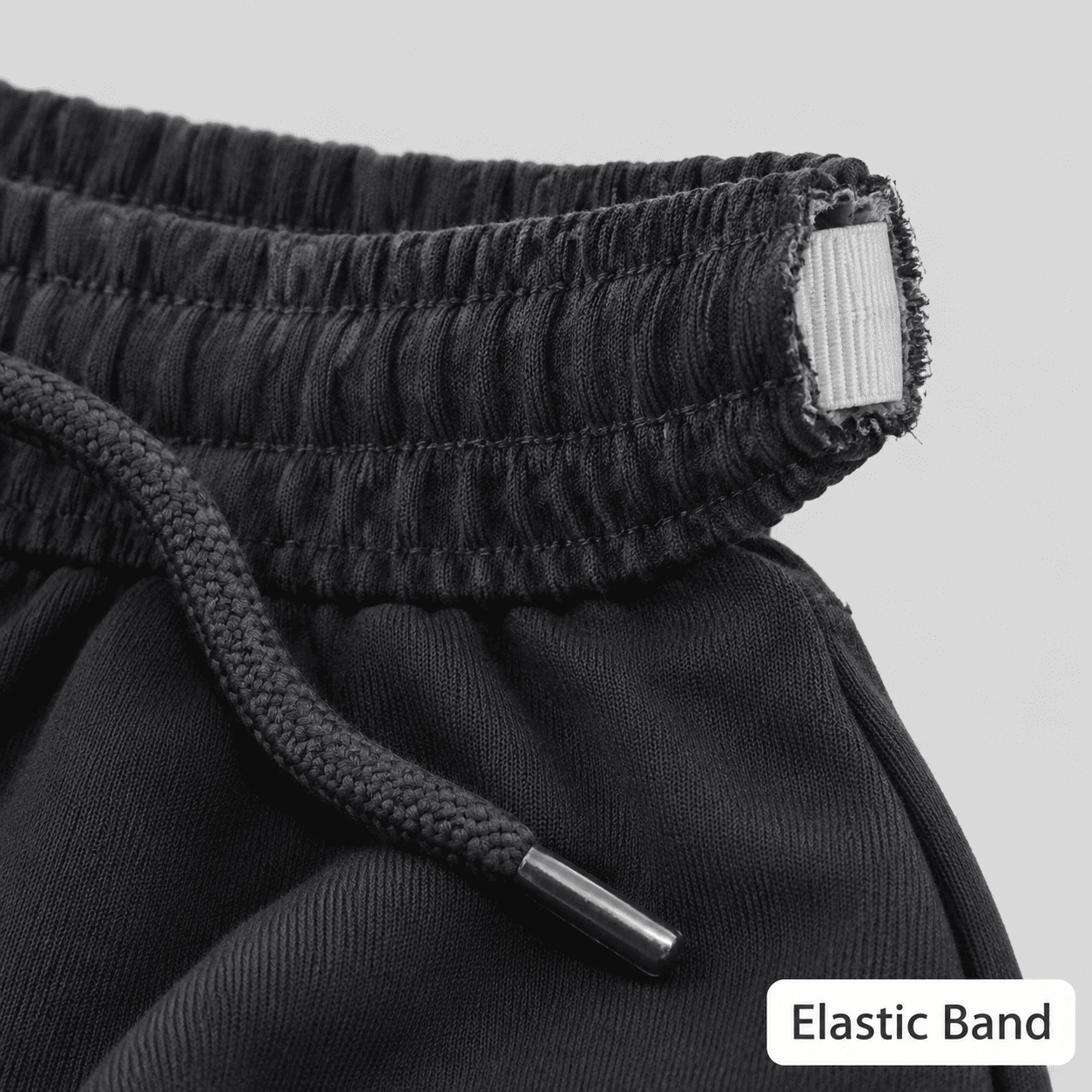
A common issue we see when clients spec elastic bands for leggings or running shorts is the assumption that all elastic performs the same. It doesn't. The difference between a polyester-wrapped rubber-core elastic and a knitted polyester elastic without rubber is dramatic under repeated use.
| Elastic Type | Typical Rebound Retention (30 washes) | Shrinkage Risk | Best Sportswear Use Case |
|---|---|---|---|
| Rubber-core (latex), polyester wrap | 85–92% (supplier-observed) | Low–moderate | High-stretch garments: leggings, compression wear |
| Knitted polyester (no rubber core) | 60–75% (supplier-observed) | Low | Light-duty: casual joggers, lounge shorts |
| Woven elastic, rubber-core | 80–88% (supplier-observed) | Moderate | Waistbands needing firm hold: running shorts, cycling |
| Silicone-grip elastic | 82–90% (supplier-observed) | Low | Garments needing non-slip hold: sports bras, cycling shorts |
Important note: The rebound retention figures above are based on our internal production observations across multiple client orders — they are not certified lab results. Actual performance varies by supplier formulation, yarn quality, and wash conditions. I always recommend buyers request wash-test samples before confirming bulk orders.
When a brand selects a cheaper knitted polyester elastic to save $0.02–$0.04 per meter, the waistband may feel fine out of the package. But after 20 machine washes at 40°C, the elastic loses significant rebound. The garment feels loose. The customer doesn't complain about "elastic quality" — they say the leggings "stretched out" or "don't fit anymore." That review lands on your product page, not your supplier's.
Drawcords face a similar hidden load. Cotton drawcords absorb sweat and wash water, shrinking unevenly over time and causing the drawcord channel to pucker. Polyester or nylon drawcords with wax tips resist shrinkage but can feel slippery, pulling out during use if the cord lock hardware isn't matched properly. Each combination needs to be evaluated as a system, not as individual line items.
Zippers and Hardware: Corrosion Under Sweat Exposure
Zippers on running jackets and gym hoodies are exposed to salt-laden perspiration1 repeatedly. Standard zinc alloy zipper pulls without proper plating can develop visible corrosion within a single athletic season. I've had clients come to us after receiving customer complaints about "green discoloration" around zipper areas on light-colored jackets — a classic sign of inadequate corrosion resistance.
For sweat-exposed applications, nickel-free plating2 or stainless steel hardware significantly extends trim life. The upfront cost difference is real — typically 15–25% more per unit — but compared to the cost of processing returns and managing negative reviews, the math favors better specification every time.
How Do "Invisible" Trims Shape Consumer Brand Perception?
Here's something that surprises many first-time sportswear brand owners: consumers rarely notice good trims, but they immediately notice bad ones. A label that itches, a zipper that catches skin, or a patch that cracks — these sensory failures register more sharply than fabric pilling because they feel personal.
Trim quality is a brand-trust variable, not simply a cost line to minimize. When a runner feels a woven label scratching against the back of their neck at mile three, the discomfort becomes inseparable from the brand experience. That single trim — which cost perhaps $0.03 — has just undermined the $45 retail price tag.
Labels: The Most Common Offender
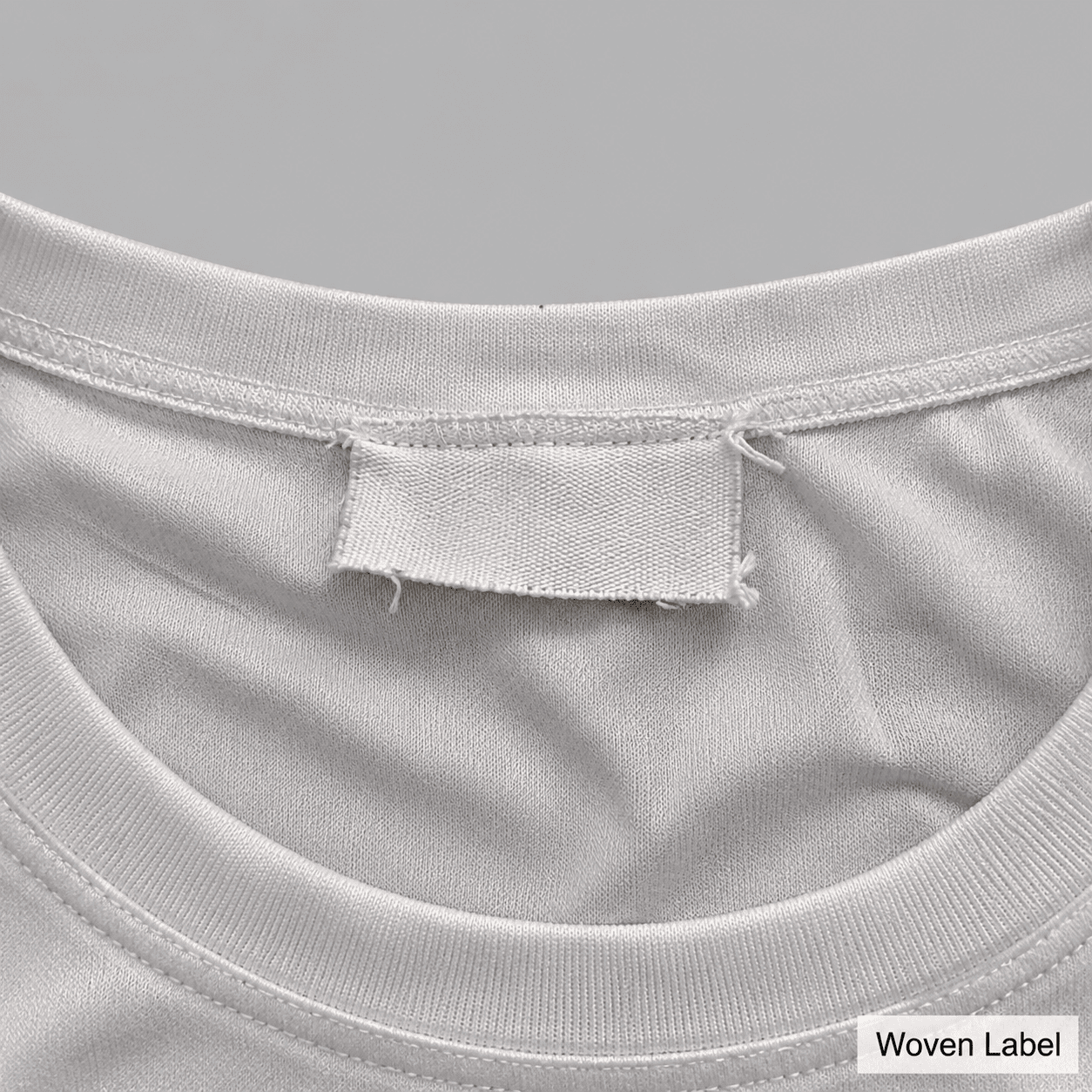
In our experience, woven labels and care labels are the number-one trim-related complaint trigger in sportswear. The failure modes differ by label type:
- Woven satin labels with unfinished edges: The cut edge frays after several washes, creating a rough surface against skin. Common in running tops and sports bras where labels contact high-friction body areas.
- Woven damask labels with stiff hand-feel: Higher-density weaves produce crisper print resolution but create a cardboard-like rigidity that irritates during dynamic movement. Problematic in yoga wear and base layers.
- Heat-transfer labels with poor adhesion formulation: The print fades or cracks after 15–20 washes, leaving a ghost image. The garment looks old before its time, degrading perceived quality.
The solution isn't always switching to heat-transfer labels (though that's often part of the answer for sportswear). It's matching the label type to the garment's body contact and wash profile.
| Label Type | Softness | Wash Durability | Cost | Best Sportswear Placement |
|---|---|---|---|---|
| Woven satin (folded edge) | Medium | 50+ washes | Low | Side seam, away from skin contact |
| Heat-transfer (screen print) | Very high (no edge) | 30–50 washes (varies by ink) | Medium | Neck area, inner waistband, any skin-contact zone |
| Woven damask (ultrasonic cut) | Medium–low | 50+ washes | Low–medium | Outer-facing branding tabs, hem flags |
| Printed TPU label | High | 40+ washes | Medium–high | High-flex zones, performance layering pieces |
Note: Wash durability ranges above reflect industry conventions and our supplier-observed performance, not ISO-certified results. Always request wash-fastness testing (e.g., ISO 105-C063) from your label supplier for confirmation.
Patches and Rubber Labels: When Branding Becomes a Comfort Problem
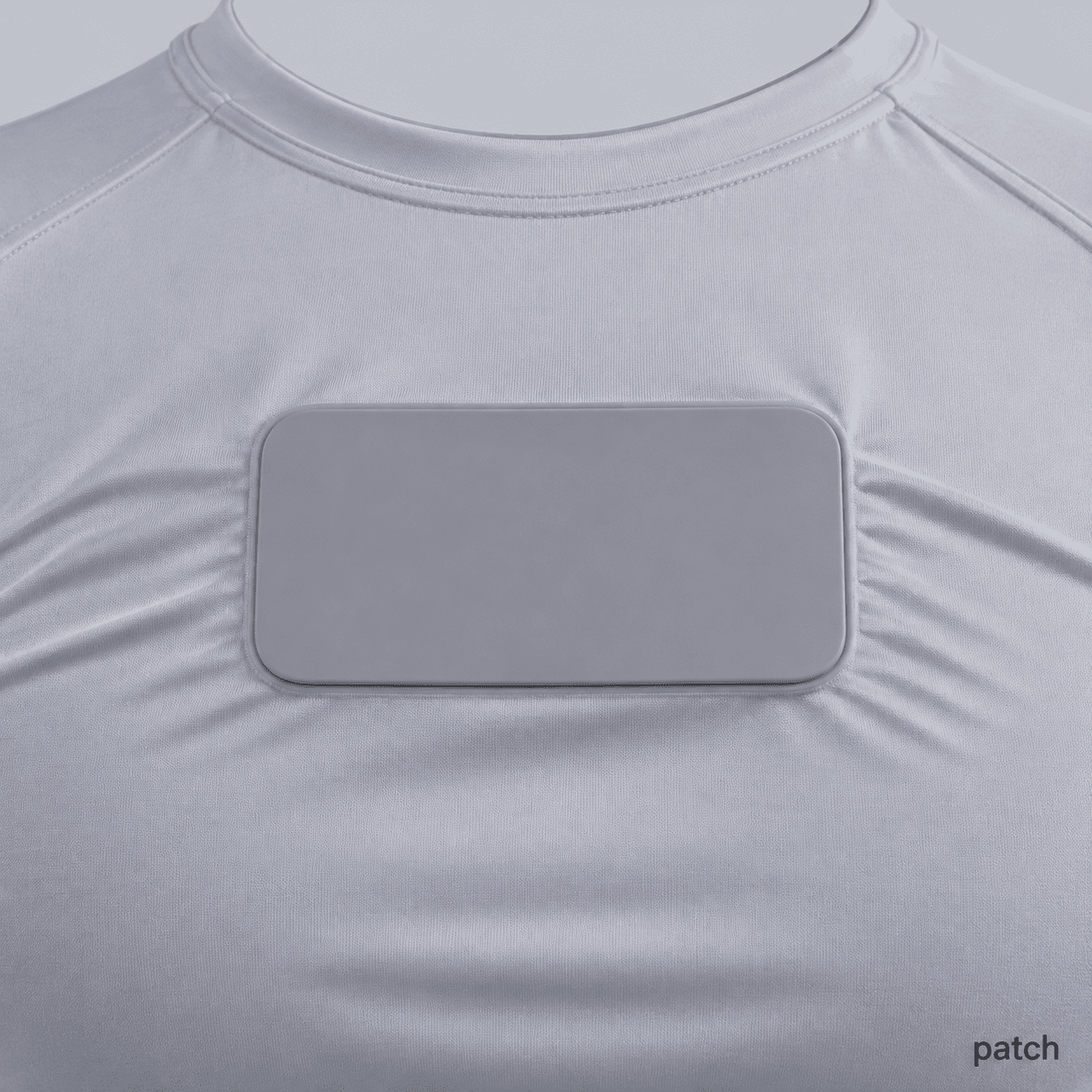
Embroidered patches and PVC/rubber labels are popular for streetwear-influenced sportswear. But when a thick, rigid PVC logo badge is placed on a yoga top or compression shirt, it creates a hard spot that restricts fabric flex and traps heat. I've seen clients use a 3mm-thick rubber chest logo on a lightweight training tee, only to receive feedback that the shirt felt "stiff" in the center.
The fix is usually straightforward: reduce label thickness (1.0–1.5mm for body-contact rubber labels), switch to a silicone label with perforated backing for breathability, or relocate the branding to a low-flex zone. These are design decisions that should happen during trim specification, not after the first round of customer returns.
Do Different Sports Demand Different Trim Specifications?
Absolutely. Treating all sportswear as one category — "athletic apparel needs durable trims" — is one of the most common sourcing mistakes I encounter. The stress profile of yoga leggings is fundamentally different from a trail-running jacket, and the trims need to reflect that.
Each sport imposes a distinct combination of mechanical stress (stretch, compression, abrasion), chemical exposure (sweat concentration, sunscreen, chlorine), and wash frequency. Effective trim specification starts by mapping these variables to each product, not by selecting trims from a general catalog.
High-Sweat Activities: Running, Gym Training, HIIT
Garments designed for high-sweat activities face heavy perspiration exposure during use and frequent laundering afterward (often after every wear). Trims for these garments need to prioritize:
- Corrosion-resistant hardware. Zipper pulls, eyelets, and cord locks should use anti-corrosion plating or non-metallic alternatives. Standard brass hardware without protective plating can tarnish within one season of regular gym use4.
- Soft-edge or edgeless labels. Neck labels, size labels, and care labels in contact with sweaty skin become significantly more irritating. Heat-transfer printing or woven labels with ultrasonic-cut edges reduce friction.
- Quick-dry compatible elastics. If the garment fabric dries in 30 minutes but the waistband elastic retains moisture for two hours, the wearer feels a persistent damp band around their waist. Polyester-core elastics without cotton content dry considerably faster than blended alternatives.
Stretch-Intensive Activities: Yoga, Pilates, Climbing
These activities involve extreme range-of-motion movements that place trims under sustained stretch rather than impact stress. The critical specifications shift:
- High-elongation elastic with low rebound decay. Yoga leggings require waistband elastic that can stretch 150–200% of resting length repeatedly without permanent deformation. In our experience, rubber-core elastic with a polyester/spandex wrap5 delivers the most consistent long-term performance for this use case.
- Flat, flexible labels only. Any rigid trim on a yoga garment will be felt during poses that press the body against the floor or a mat. I've had yoga brand clients who switched entirely to heat-transfer labels after receiving consistent feedback about tag discomfort during savasana.
- Minimal hardware. Zippers, grommets, and metal toggles are ideally avoided or placed outside contact zones. When metal components are necessary, flat-profile, nickel-free options reduce both skin irritation and snagging risk on yoga mats.
Moisture-Heavy and Outdoor Activities: Swimming Adjacent, Trail Running, Cycling
Outdoor and moisture-intensive sportswear introduces UV exposure, potential chlorine contact (pool-to-street crossover garments), and extreme temperature variation. Trim specifications for these scenarios include:
- UV-stabilized thread for embroidered patches. Standard polyester embroidery thread can fade noticeably after prolonged sun exposure. Solution-dyed polyester thread (where color is added during fiber extrusion, not post-production) offers significantly better color retention6.
- Silicone grip elastics for non-slip performance. Cycling shorts and arm sleeves benefit from elastic bands with integrated silicone grippers that maintain position during repetitive motion without relying on excessive compression.
- Water-resistant zipper tapes. For trail-running jackets and cycling windbreakers, PU-coated zipper tapes or water-repellent chain zippers prevent moisture wicking through the zipper seam7 — a common complaint point for outdoor performance brands.
Why Is the Real Cost of Wrong Trims Always Downstream?
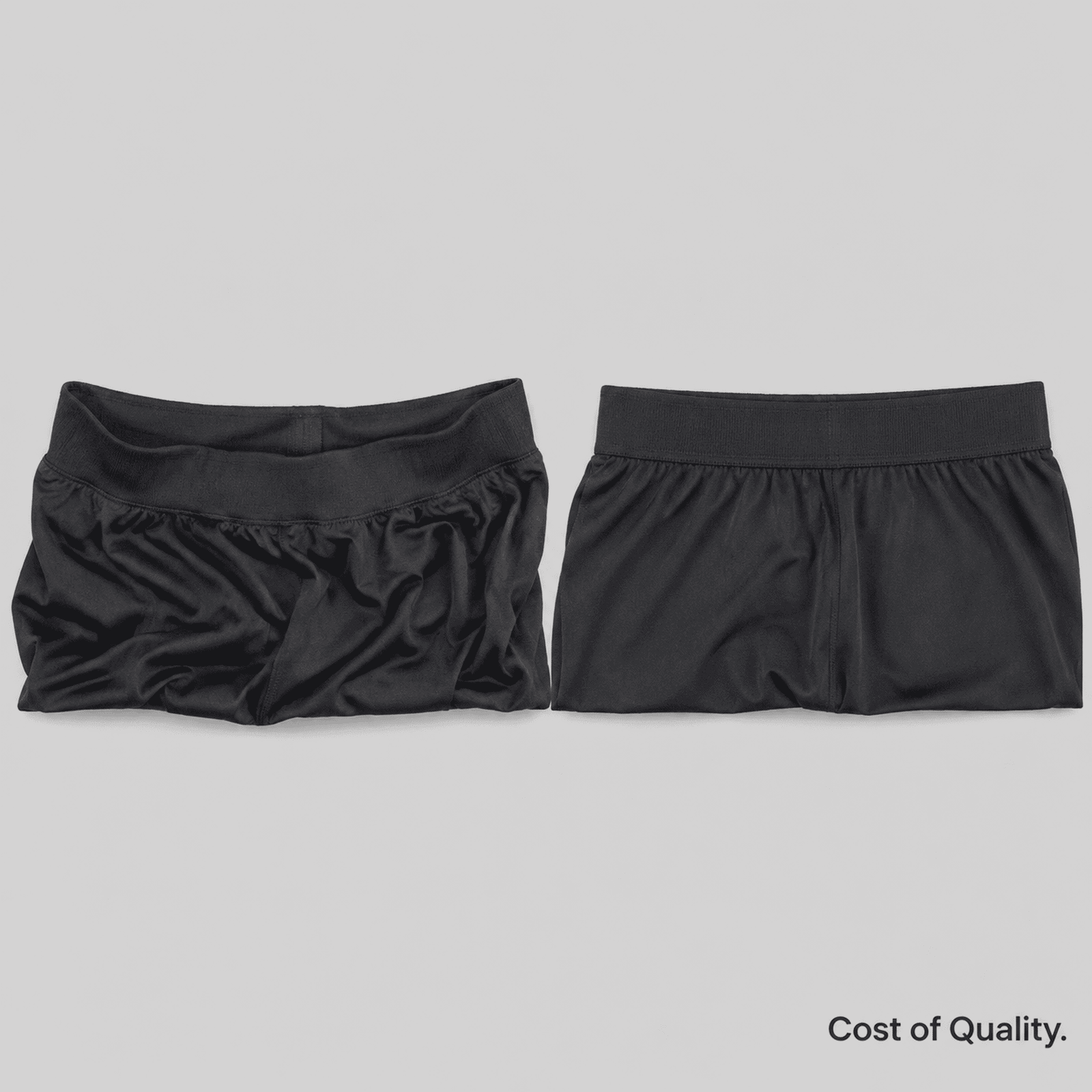
This is the conversation I wish more sourcing managers would have with their finance teams. Trims represent a tiny fraction of garment BOM cost — typically 3–8% of the total material cost — but they account for a disproportionate share of consumer complaints, returns, and brand perception damage.
The cost of getting trims wrong is not the price you pay at procurement. It's the price you pay at customer service, in return shipping fees, in lost repeat purchases, and in one-star reviews that permanently lower your product page conversion rate. Reframing trim budgets from "unit cost" to "total cost of quality failure" changes the procurement calculus entirely.
A Practical Cost Comparison
Let me walk through a simplified example based on patterns I've seen across client orders:
| Scenario | Elastic Cost per Meter | Units Produced | Total Elastic Cost | Estimated Return Rate | Return Cost per Unit | Total Return Cost | Net Impact |
|---|---|---|---|---|---|---|---|
| Economy elastic (knitted polyester, no rubber core) | $0.08 | 5,000 | $400 | 6–8% (waistband sag complaints) | $8.00 (shipping + restocking) | $2,400–$3,200 | -$2,000 to -$2,800 |
| Performance elastic (rubber-core, polyester wrap) | $0.12 | 5,000 | $600 | 1–2% (general returns) | $8.00 | $400–$800 | Saves $1,400–$2,200 |
Disclaimer: These figures are illustrative, based on cost patterns observed across our client base. Your actual numbers will depend on product pricing, return logistics, and market. The directional point holds: the $200 difference in elastic spend is trivial compared to the return cost differential.
The Hidden Costs Beyond Returns
Returns are the visible cost. The hidden costs are harder to quantify but arguably more damaging:
- Review degradation. A product that drops from 4.5 to 4.0 stars on Amazon due to trim-related complaints (itchy labels, sagging waistbands, corroded hardware) can lose 15–25% of its conversion rate, according to widely cited e-commerce benchmarks8.
- Reorder loss. DTC brands depend on repeat customers. A runner who loves the fabric of your shorts but finds the drawcord shrinks and puckers won't buy your next release. The lifetime value loss dwarfs the trim savings.
- Brand narrative damage. In the era of social media fitness communities, a single viral complaint about a trim failure ("The logo on this sports bra literally cracked off after one wash") can define brand perception for months.
I'm not suggesting that brands should over-engineer every trim. That creates its own problems — unnecessary cost, longer lead times, over-specced BOMs. The goal is right-specification: matching the trim material and construction to the specific performance demands of each garment, neither over- nor under-building.
Frequently Asked Questions
What garment trims matter most for sportswear performance?
Elastic bands, labels, zippers, and hardware carry the heaviest performance loads in sportswear. Elastic waistbands affect fit retention over time, labels affect skin comfort during exercise, and hardware (zippers, cord locks) must resist sweat-induced corrosion. Prioritize these trims during specification and sampling.
How many wash cycles should sportswear trims withstand?
Industry convention for activewear is 50+ home wash cycles9 at 30–40°C. High-quality elastics should retain at least 80% rebound after 30 washes, and heat-transfer labels should remain legible through 40+ cycles. Always request wash-test samples from your trim supplier before bulk commitment.
Are heat-transfer labels better than woven labels for sportswear?
For skin-contact placements (neck, inner waistband), heat-transfer labels are generally preferred because they eliminate raised edges that cause irritation during movement. Woven labels remain effective for side-seam or external branding placements where skin contact is minimal. The best approach matches label type to placement.
How can I verify trim quality before placing a bulk order?
Request pre-production samples and test them under realistic conditions — wash them 20–30 times, stretch elastic bands repeatedly, check label legibility and softness post-wash. Ask your supplier for any available compliance documentation (OEKO-TEX® certification, wash-fastness test reports), and verify certifications directly with the issuing body.
Do trim specifications affect sportswear compliance or certification?
Yes. Trims that contact skin must meet safety standards such as OEKO-TEX® STANDARD 100 for restricted substances10. Metal hardware may need to comply with nickel release regulations in the EU. Buyers should verify that trim suppliers hold current, valid certifications — not expired or falsified documents, which unfortunately do circulate in the supply chain.
Conclusion
How trims enhance a garment goes far beyond aesthetics. In sportswear, trims are load-bearing, comfort-critical, and brand-defining components. Elastic bands must retain rebound after dozens of wash cycles. Labels must stay soft against sweating skin. Zippers must resist corrosion. And every trim must be specified for the actual sport — not for a generic "athletic" category that doesn't exist in practice.
The brands that get trim procurement right don't necessarily spend more. They spend more precisely — matching material properties to sport-specific stress profiles and evaluating total cost of quality failure rather than unit price alone.
If you're sourcing trims for a sportswear line and want to discuss specification questions, material options, or sampling for your specific use case, our team is available to help. We've spent nearly a decade solving exactly these problems for DTC brands, e-commerce sellers, and garment factories worldwide. Reach out to start the conversation.
"Sweating Rate and Sweat Sodium Concentration in Athletes", https://pmc.ncbi.nlm.nih.gov/articles/PMC5371639/. Research on human eccrine sweat composition confirms sodium chloride concentrations typically ranging from 0.2–1.0%, along with lactic acid and urea, creating a mildly acidic saline solution capable of accelerating oxidation and corrosion of base metals such as zinc and copper alloys. Evidence role: mechanism; source type: research. Supports: Human sweat contains sodium chloride and other salts at concentrations sufficient to accelerate corrosion of common metals including zinc alloys. Scope note: Corrosion rates depend on alloy composition, plating quality, and exposure duration, which vary widely across trim suppliers. ↩
"Nickel Allergy - StatPearls - NCBI Bookshelf - NIH", https://www.ncbi.nlm.nih.gov/books/NBK557638/. Under EU REACH Regulation (EC) No 1907/2006, Annex XVII, Entry 27, articles intended for direct and prolonged skin contact must not release nickel at a rate exceeding 0.5 µg/cm²/week, a restriction that applies to sportswear hardware such as zipper pulls, eyelets, and cord locks. Evidence role: general_support; source type: government. Supports: EU REACH regulations restrict nickel release from articles intended for prolonged skin contact, supporting the use of nickel-free plating in sportswear hardware. Scope note: The regulation addresses allergenic risk rather than corrosion resistance directly; corrosion performance depends on the specific alternative plating chemistry used. ↩
"ISO 105-C06", https://cdn.standards.iteh.ai/samples/51276/bb37ae4124174869ac303511b7cc742f/ISO-105-C06-2010.pdf. ISO 105-C06:2010 specifies methods for determining the resistance of textile colour to domestic and commercial laundering procedures, using standardized detergent, temperature, and mechanical agitation conditions, and is widely used to evaluate the wash durability of labels, prints, and dyed trims. Evidence role: definition; source type: institution. Supports: ISO 105-C06 is the international standard test method for determining the colour fastness of textiles to domestic and commercial laundering. Scope note: The standard measures colour fastness specifically; other trim performance attributes such as adhesion, rebound, or structural integrity require separate test methods. ↩
"'Rusters'. The corrosive action of palmar sweat", https://pubmed.ncbi.nlm.nih.gov/84491/. Brass alloys undergo surface oxidation and dezincification when exposed to chloride-rich environments; human sweat, containing sodium chloride, lactic acid, and amino acids, creates conditions that accelerate tarnishing of unprotected copper-zinc alloys, with visible discoloration possible within weeks of repeated exposure. Evidence role: mechanism; source type: research. Supports: Unplated brass, a copper-zinc alloy, is susceptible to tarnishing and dezincification when exposed to chloride-containing solutions such as human perspiration. Scope note: Tarnishing rates depend on brass alloy composition (e.g., proportion of zinc), ambient humidity, and individual sweat chemistry, making precise timelines variable. ↩
"Impact of the Elastane Percentage on the Elastic Properties of ...", https://pmc.ncbi.nlm.nih.gov/articles/PMC9570736/. Textile engineering research confirms that natural rubber cores exhibit superior elastic recovery and fatigue resistance under repeated high-elongation cycles compared to synthetic elastomeric alternatives, with polyester or spandex wrapping yarns providing abrasion protection and dimensional stability to the composite elastic structure. Evidence role: mechanism; source type: research. Supports: Natural rubber (latex) core elastics wrapped with synthetic yarns provide high elongation with strong elastic recovery due to the inherent resilience of cross-linked natural rubber polymer chains. Scope note: Natural rubber latex may pose allergen concerns for sensitive individuals, and performance varies with rubber quality, vulcanization process, and wrap yarn tension. ↩
"Investigation of the properties of polyester blended knitted ...", https://pmc.ncbi.nlm.nih.gov/articles/PMC12034787/. In solution dyeing, pigments are dispersed into the molten polymer prior to extrusion, embedding color throughout the fiber cross-section rather than only at the surface, which textile research has shown yields substantially higher lightfastness ratings (typically ISO 105-B02 grade 6–7) compared to conventionally dyed polyester. Evidence role: mechanism; source type: research. Supports: Solution dyeing (dope dyeing) incorporates pigment into the polymer melt before fiber extrusion, producing inherently superior lightfastness and wash-fastness compared to post-production dyeing methods. Scope note: Performance gains depend on pigment selection and concentration; not all solution-dyed threads perform identically across all UV exposure conditions. ↩
"Water-resistant vs. Waterproof Zipper: What's the Difference?", https://ykkamericas.com/water-resistant-vs-waterproof-zipper/. Water-resistant zipper constructions typically employ a polyurethane (PU) film laminated to the zipper tape or a durable water-repellent (DWR) finish applied to the chain elements, sealing the needle holes and interlocking teeth against capillary moisture transfer, a technology widely adopted in outdoor and performance apparel. Evidence role: mechanism; source type: research. Supports: Polyurethane-coated zipper tapes and water-repellent treated zipper chains create a barrier that reduces moisture penetration through the zipper seam in performance outerwear. Scope note: Water resistance levels vary by construction method and degrade over time with wear and washing; fully waterproof performance typically requires additional seam sealing. ↩
"How Online Reviews Influence Sales", https://spiegel.medill.northwestern.edu/how-online-reviews-influence-sales/. Research from the Spiegel Research Center at Northwestern University found that purchase likelihood peaks for products with ratings between 4.2 and 4.5 stars and declines for both higher and lower ratings, with even small rating decreases in this range producing significant conversion impacts. Evidence role: statistic; source type: research. Supports: A measurable decline in e-commerce conversion rates occurs when product star ratings drop from the 4.5 range to 4.0. Scope note: Exact conversion rate percentage losses vary by product category, price point, and platform; the 15–25% figure may not be universally applicable. ↩
"Washing active wear : r/laundry", https://www.reddit.com/r/laundry/comments/1i072xi/washing_active_wear/. ISO 6330 provides standardized domestic washing and drying procedures for textile testing, and major sportswear brands and testing bodies commonly use 50 wash cycles at 40°C as a baseline durability benchmark for evaluating trim and fabric performance in activewear applications. Evidence role: expert_consensus; source type: institution. Supports: Activewear is generally expected to withstand at least 50 domestic wash cycles while maintaining functional performance. Scope note: The 50-cycle figure is a widely adopted industry practice rather than a single codified requirement; individual brand specifications and end-use conditions may demand more or fewer cycles. ↩
"Oeko-Tex", https://en.wikipedia.org/wiki/Oeko-Tex. OEKO-TEX® STANDARD 100, administered by the International Association for Research and Testing in the Field of Textile and Leather Ecology, certifies that textile products including accessories and trims have been tested for a range of harmful substances and meet human-ecological requirements, with product classes differentiated by degree of skin contact. Evidence role: definition; source type: institution. Supports: OEKO-TEX® STANDARD 100 is an independent testing and certification system for textile products at all stages of production, including trims and accessories, that tests for harmful substances. Scope note: OEKO-TEX® certification is voluntary and market-driven rather than a legal requirement in most jurisdictions; regulatory compliance obligations vary by destination market. ↩

0 Comments
Ask a question or share your garment accessories sourcing experience.