


What Label Material Works Best for Sportswear and Outdoor Garments?
Choosing the right label material for sportswear and outdoor garments sounds simple — until the first batch of customer complaints rolls in. A label that looked perfect on the sample suddenly pills, peels, or scratches after a few washes. The problem? Most buyers pick label materials based on price or assumptions, not on the actual conditions the garment will face.
The best label material for sportswear and outdoor garments depends entirely on the garment's use scenario — not on a universal "best" material. High-sweat sports, UV-heavy outdoor use, and gentle-wash athleisure each demand different label properties. Matching the label to the garment's real-life conditions (wash cycles, sweat, abrasion, UV exposure) is the only reliable way to avoid returns and complaints.
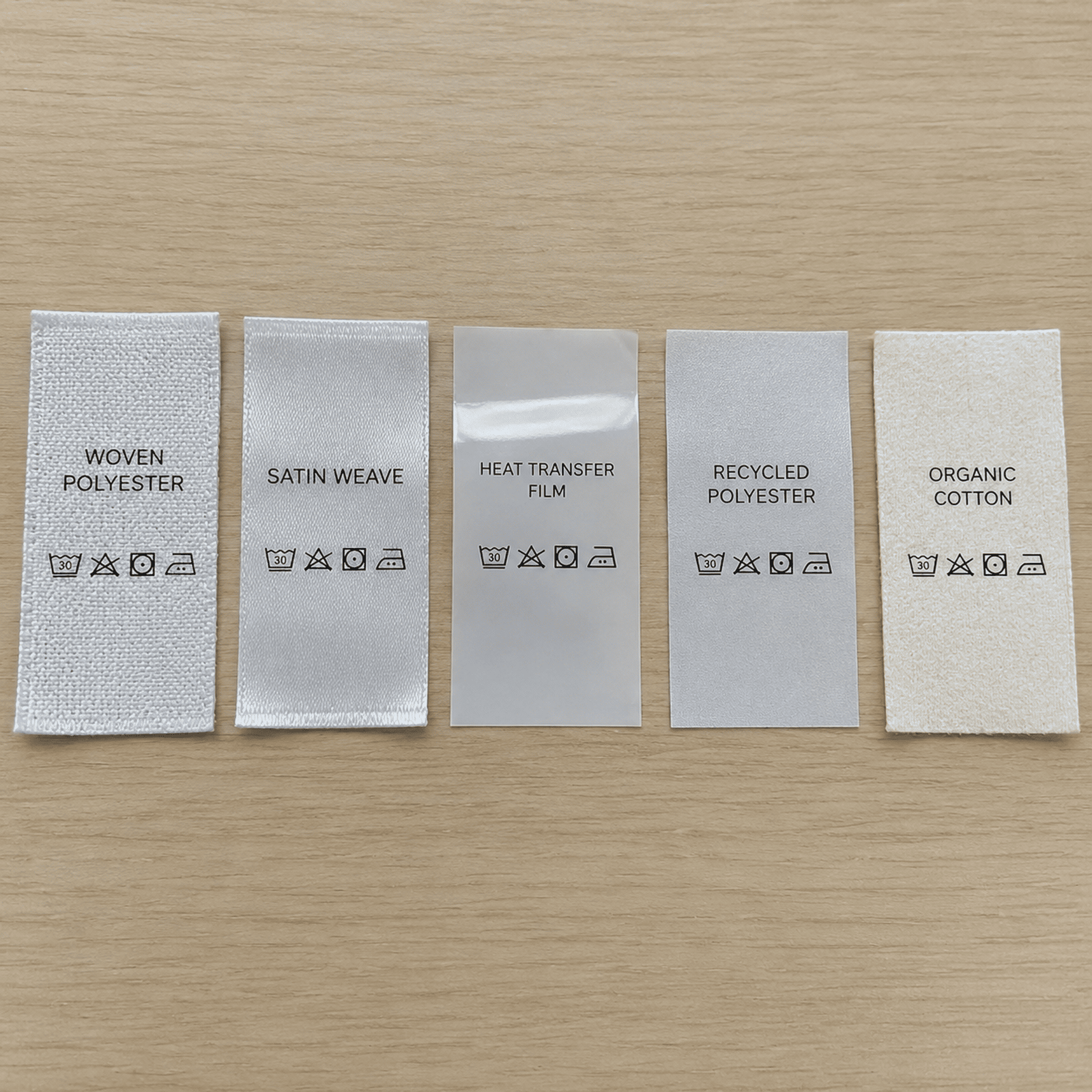
I've spent years supplying labels for activewear brands, outdoor gear makers, and DTC startups. The patterns I see are remarkably consistent: the label that fails is almost never a "bad" label — it's a good label placed in the wrong scenario. Let me walk you through what actually matters.
Why Does the Garment's Use Scenario Matter More Than the Label Spec Sheet?
Most buyers start the label conversation with "I want something soft" or "give me heat-transfer." That's like ordering shoes by color without knowing your size.
A label material spec sheet tells you thread count, material composition, and dimensions. It does not tell you whether that label will survive 50 wash-dry cycles inside a CrossFit compression shirt soaked in sweat. The garment's end-use scenario — not the material datasheet — should be your starting point for every label decision.

Map the Scenario First, Then Shortlist Materials
Here's the framework I use when a client sends us their first sportswear label order:
| Use Scenario | Key Stresses on Label | Material Considerations |
|---|---|---|
| High-intensity sports (gym, running, CrossFit) | Heavy sweat, frequent hot wash, body friction | Must resist pilling, stay soft against skin, tolerate 40–60°C wash |
| Outdoor / hiking / climbing | UV exposure, abrasion from packs, rain | Must resist fading, hold adhesion under moisture, survive rough handling |
| Athleisure / casual wear | Gentle wash but high visual expectations | Must maintain crisp print/color, no edge curling after tumble dry |
| Waterproof shells / technical outerwear | Seam-sealed construction, limited label placement | Must bond without puncturing waterproof membrane1, heat-resistant |
A common pattern I see: a DTC brand launches a running shorts line and requests the same satin woven label they use on their cotton t-shirts. Three months later, the Amazon reviews mention "scratchy tag" and "label fell apart." The label was fine — the scenario was wrong.
Think in Wash Cycles, Not in Samples
A sample always looks great. The real question is: what does it look like after 20, 30, 50 washes? In our experience, we always recommend clients request wash-tested samples before committing to bulk. A quick 10-cycle wash test reveals about 80% of the problems you'd see in real life2.
Is Heat-Transfer Always More Comfortable Than Woven for Sportswear Labels?
This is probably the most common assumption I hear. And it's a half-truth that causes real problems.
Heat-transfer labels eliminate edge scratchiness, which is a genuine comfort advantage. But they can crack, peel, or develop a plasticky feel after repeated washes — especially on moisture-wicking fabrics. Woven labels with ultrasonic-cut edges3 or satin-weave construction can match that comfort level while offering superior long-term durability.
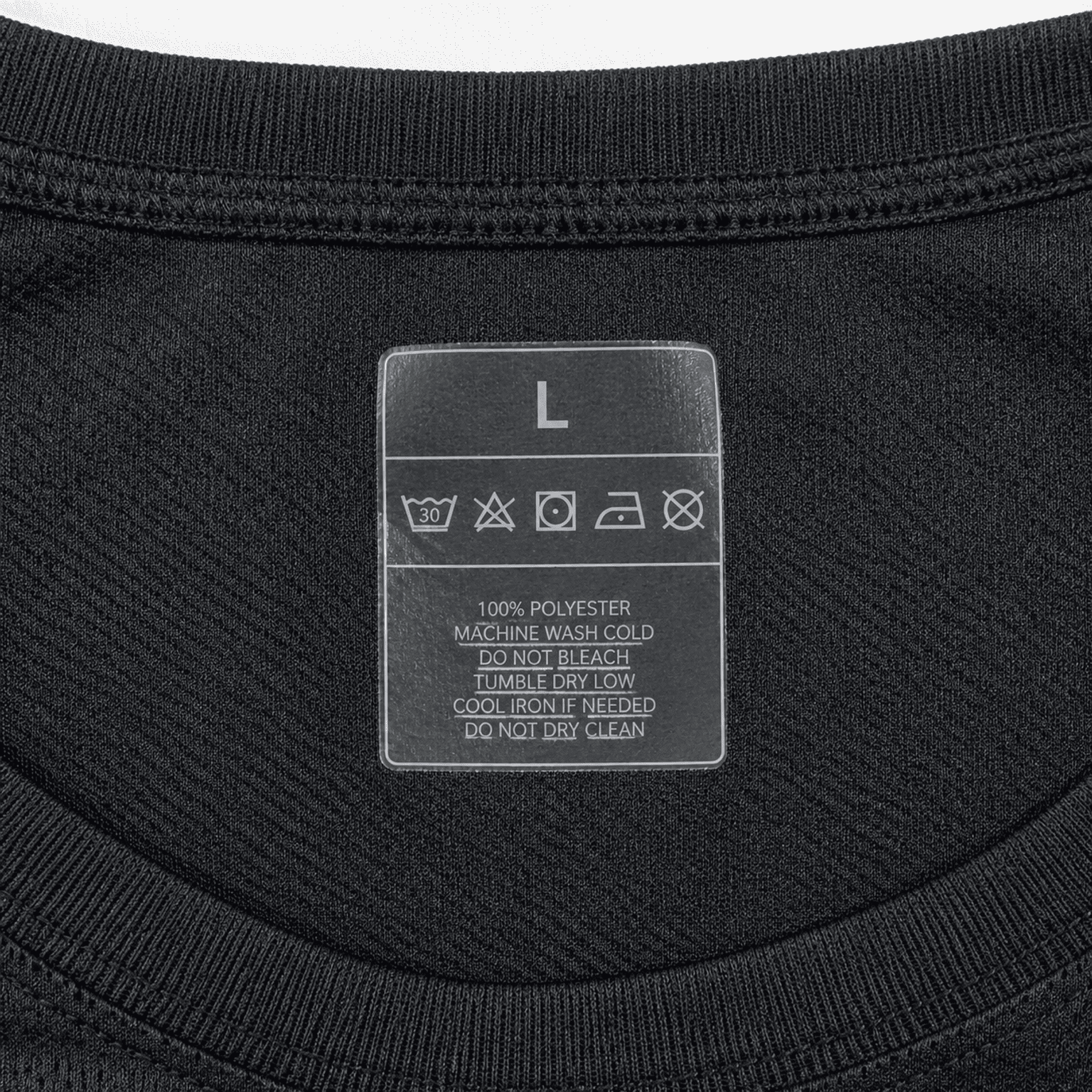
When Heat-Transfer Works Well
Heat-transfer labels shine in a few specific situations:
- Direct-to-skin placements on lightweight fabrics (think yoga tops, base layers)
- Garments with very aggressive wash instructions where any raised edge would irritate
- Small-run DTC brands that need fast turnaround and low MOQs on label changes
The ink bonds directly to the fabric, so there's no physical edge at all. For a sports bra or a compression shirt, that can genuinely reduce return rates related to skin irritation.
When Heat-Transfer Fails
Here's where I've seen it go wrong:
- On moisture-wicking polyester blends, heat-transfer prints sometimes resist the fabric's moisture management — the label area stays damp and sticky4, which defeats the garment's purpose.
- After 30+ wash cycles, cheaper heat-transfer inks crack and peel. The print becomes illegible, and small flakes can irritate skin — the exact problem it was supposed to solve.
- On garments tumble-dried at high heat, the adhesive layer can degrade faster than expected.
When Woven Labels Are the Better Choice
A well-made woven label with ultrasonic-cut edges (heat-sealed, not raw-cut) and a satin weave feels remarkably smooth. For outdoor jackets, hiking pants, or any garment that faces serious abrasion, a woven label simply outlasts heat-transfer. It won't crack. It won't peel. And if designed properly, it won't scratch.
My rule of thumb: match the label type to the fabric type and the care instructions. There is no universal winner.
Do Eco-Friendly Label Materials Hold Up in Sportswear Applications?
Sustainability pressure is real — especially for DTC brands marketing to conscious consumers. But I've seen too many cases where "eco" label choices backfire.
Eco-friendly label materials like recycled polyester or organic cotton can work well in sportswear — but only if they pass the same wash-fastness, dimensional stability, and color-bleed tests as conventional materials. An eco label that pills or shrinks after 10 washes creates more waste, more returns, and more environmental harm than a durable conventional one.
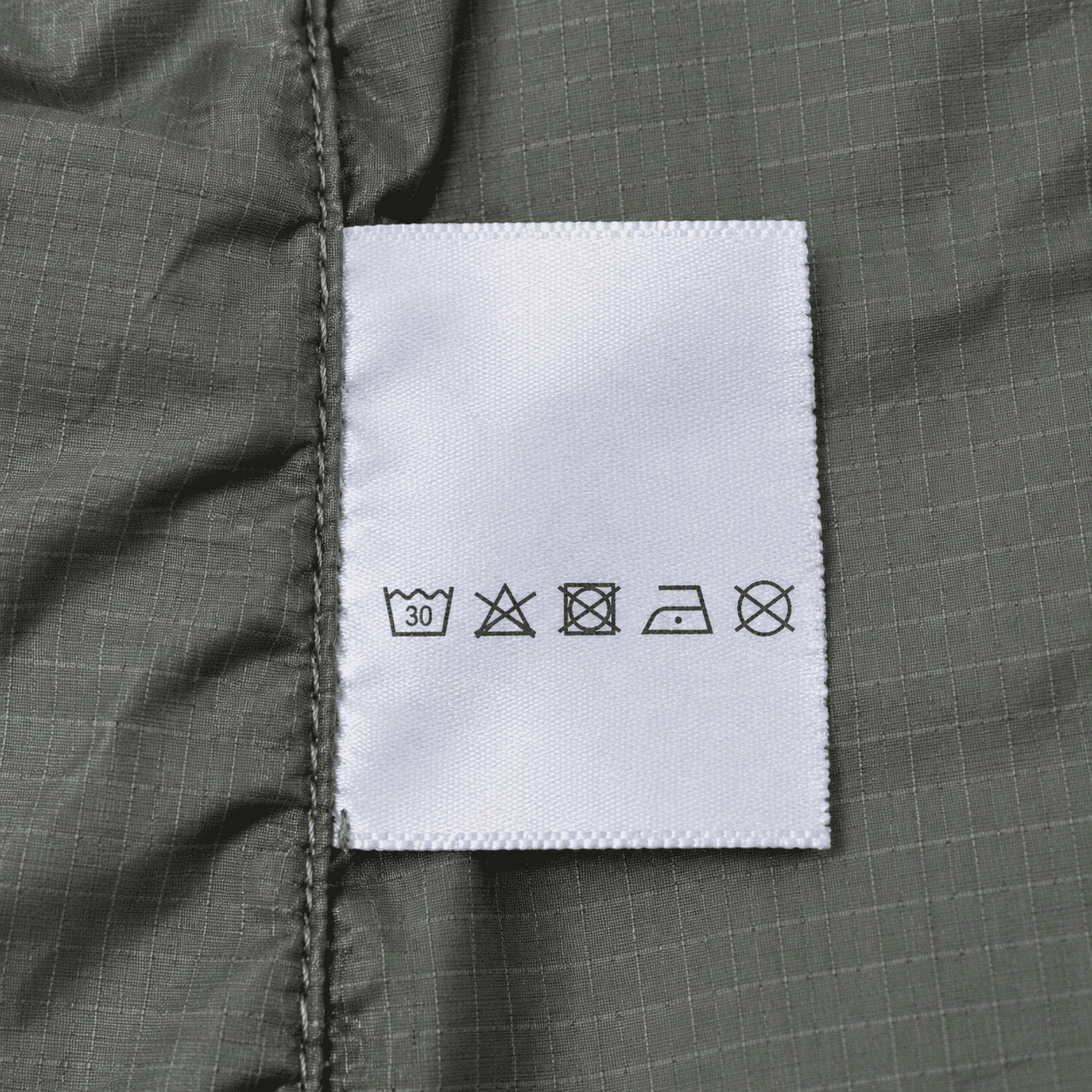
The Real Problem With Eco Labels
The issue isn't the material itself. It's that buyers often skip functional testing because the "eco" story feels sufficient. Here's what I've seen go wrong:
- Organic cotton labels in high-wash sportswear shrink noticeably, causing puckering around the label area
- Recycled polyester labels from unverified suppliers sometimes show inconsistent color-fastness — the dye bleeds onto light-colored garment fabric
- Bamboo-fiber labels marketed as eco-friendly can pill quickly under friction
How to Get Eco Right
If sustainability matters to your brand (and it should), here's a practical approach:
- Request a wash-test sample of the eco material under your garment's actual care conditions
- Verify certifications independently — ask for the OEKO-TEX® certificate number and check it on the official database5
- Compare eco vs. conventional samples side-by-side after 15–20 wash cycles
- Don't assume "eco" means "fragile" — good recycled polyester labels perform identically to virgin polyester when sourced from reliable manufacturers
Why Does Cheap Label Material End Up Costing More?
This is the conversation I have most often with Amazon sellers. The per-unit saving on a cheaper label feels significant at volume. But the math changes fast when things go wrong.
A low-cost label that frays, fades, or detaches triggers returns, negative reviews, and potential re-labelling of remaining inventory — costs that dwarf the pennies saved per unit. For sportswear and outdoor garments, label material cost should be evaluated against total cost of failure, not unit price alone.
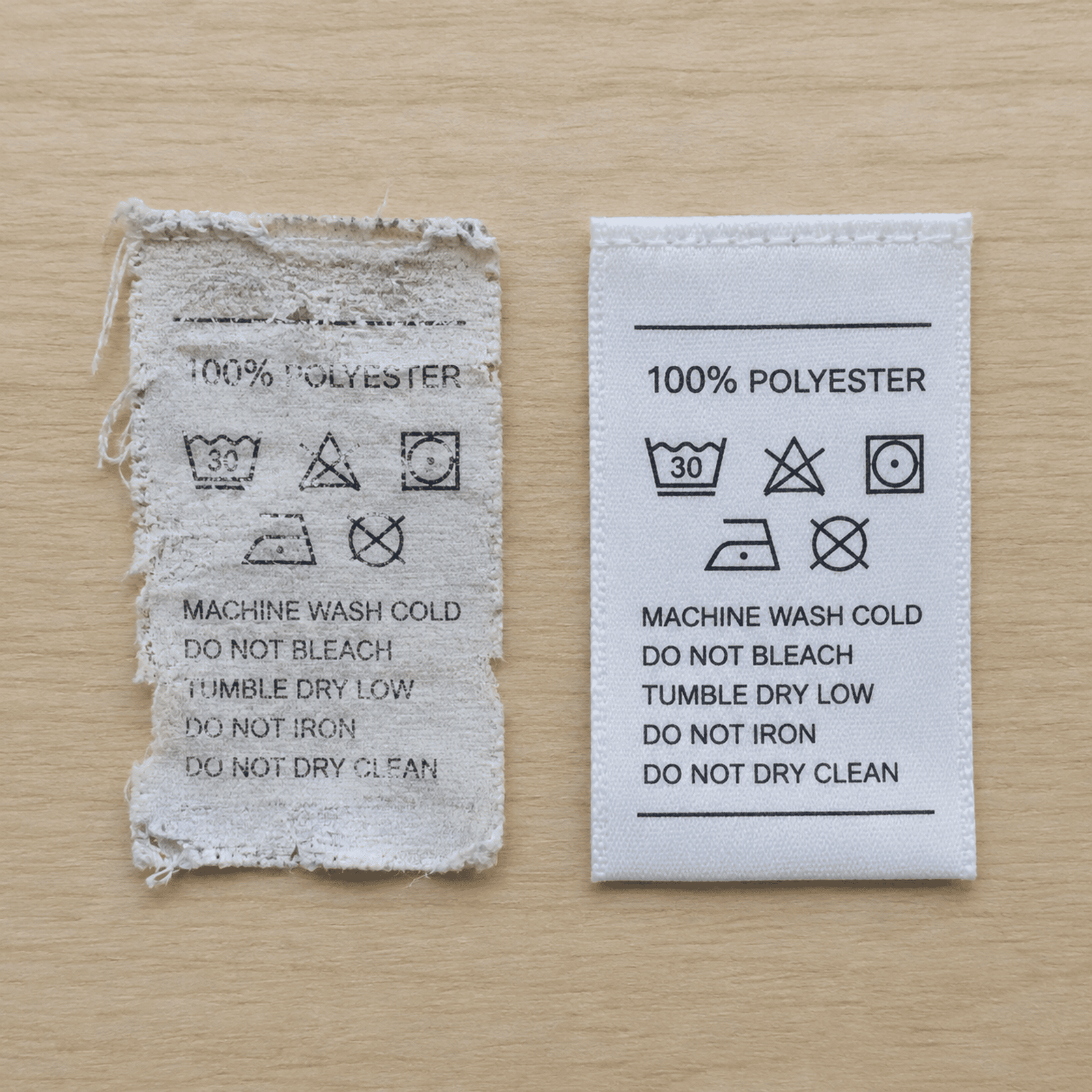
Real Failure Costs to Consider
| Failure Type | Typical Consequence | Estimated Cost Impact |
|---|---|---|
| Label fraying after 5 washes | Customer returns, negative review | $15–30 per return + review damage6 |
| Heat-transfer delamination | "Cheap quality" perception | Lost repeat customers |
| Color bleeding onto garment | Product unsellable, full refund | 100% loss on affected units |
| Skin irritation complaint | Potential liability, brand trust loss | Difficult to quantify, always significant |
One client came to us after their first outdoor jacket run. They had sourced labels at roughly 40% below our quoted price from another supplier. After the first season, the labels faded so badly in UV that customers couldn't read the care instructions7. The client had to recall and re-label 3,000 units. The "savings" evaporated many times over.
A Better Way to Think About Label Budgeting
Frame it this way: if your garment retails for $60 and the label costs $0.08 vs. $0.15, that $0.07 difference is invisible to your margin but massive to your review score8. Invest the extra fraction of a cent in a material matched to your scenario.
Frequently Asked Questions
What is the most durable label material for outdoor garments?
Woven polyester labels with ultrasonic-cut edges generally offer the best durability for outdoor garments. They resist UV fading, hold up under abrasion from backpack straps, and maintain readability through dozens of wash cycles. Always request wash-tested samples for your specific garment.
Can I use the same label material for all my sportswear products?
I wouldn't recommend it. A yoga top and a hiking jacket face very different conditions. Using one label material across all products almost always means it's wrong for at least some of them. Map each product's use scenario and choose accordingly.
How many wash cycles should I test label materials for?
For sportswear, I recommend testing at least 15–20 wash cycles at the temperature specified on the garment's care label. For outdoor garments, add UV exposure testing if possible. Most quality issues become visible between cycles 10 and 20.
Are recycled polyester labels as durable as conventional polyester labels?
They can be — when sourced from a reputable manufacturer with verified certifications. The key is testing under your garment's actual conditions. Request side-by-side wash samples before committing to bulk.
Conclusion
Choosing the right label material for sportswear and outdoor garments comes down to one principle: match the label to the scenario, not to assumptions. Heat-transfer isn't always better than woven. Eco isn't always fragile. Cheap isn't always economical. The only reliable shortcut is testing materials under the real conditions your garment will face — sweat, UV, abrasion, and repeated washing.
If you're sourcing labels for an activewear or outdoor line and want to avoid the common pitfalls I've described, feel free to reach out to our team. We offer free sample packs with wash-test documentation so you can evaluate materials before committing to production. Getting it right the first time saves far more than it costs.
"Seam Sealant Tutorial For Clothes And More!",
. Waterproof breathable membrane manufacturers specify that any needle penetration through the laminate creates a potential leak point; industry practice for seam-sealed garments therefore requires that labels in sealed zones be attached via heat bonding, adhesive lamination, or placement exclusively in unsealed areas to maintain the garment's hydrostatic head rating. Evidence role: mechanism; source type: other. Supports: Needle penetration through waterproof membranes creates permanent holes that compromise water resistance, necessitating adhesive or heat-bonded label attachment methods.. Scope note: Specific guidance varies by membrane manufacturer and garment construction; no single universal standard governs label attachment on all waterproof garments. ↩"Durability of Water-Repellent Finishes to Accelerated ...", https://digitalcommons.uri.edu/cgi/viewcontent.cgi?article=1788&context=theses. ISO 6330 specifies domestic washing and drying procedures for textile testing, providing a standardized framework for evaluating dimensional change, color fastness, and material degradation over repeated laundering cycles. Evidence role: general_support; source type: research. Supports: Standardized wash-cycle testing protocols (e.g., ISO 6330 or AATCC methods) can predict real-world textile and label degradation within a defined number of cycles.. Scope note: Industry standards define testing procedures but do not specifically quantify the percentage of defects detectable at 10 cycles versus full product life. ↩
"Development of fabric seaming for clothing using ultrasonic ...", https://commons.emich.edu/cgi/viewcontent.cgi?article=1227&context=honors. Ultrasonic cutting employs high-frequency mechanical vibrations (typically 20–40 kHz) to generate localized frictional heat at the cutting interface, which simultaneously severs and thermally fuses the edges of synthetic fabrics, producing a sealed, fray-resistant finish. Evidence role: mechanism; source type: encyclopedia. Supports: Ultrasonic cutting uses high-frequency vibrations to simultaneously cut and seal thermoplastic textile edges, preventing fraying.. ↩
"Moisture Vapor Permeability and Thermal Wear Comfort of ...", https://pmc.ncbi.nlm.nih.gov/articles/PMC8539243/. Research on coated and printed performance textiles has shown that surface treatments, including heat-transfer films, can occlude fabric pores and reduce moisture vapor permeability, potentially compromising the moisture management properties of the base fabric. Evidence role: mechanism; source type: research. Supports: Applied coatings or heat-transfer films can reduce the moisture vapor transmission rate and capillary wicking capacity of synthetic performance fabrics.. Scope note: Most published studies examine all-over prints or coatings rather than small label-sized heat-transfer applications specifically. ↩
"OEKO-TEX® Label Check", https://www.oeko-tex.com/en/label-check/. The OEKO-TEX® Association maintains a publicly accessible certificate verification portal (oeko-tex.com/en/label-check) that allows buyers to confirm the validity, scope, and expiration date of any OEKO-TEX® STANDARD 100 or other OEKO-TEX® certification by entering the certificate number. Evidence role: general_support; source type: institution. Supports: OEKO-TEX® provides a public online database where certificate numbers can be verified for authenticity and current validity.. ↩
"The True Cost of Apparel Returns: Alarming Return Rates ...", https://coresight.com/research/the-true-cost-of-apparel-returns-alarming-return-rates-require-loss-minimization-solutions/. Industry analyses of reverse logistics costs in apparel e-commerce estimate that the average cost of processing a single return ranges from approximately $10 to $30 or more per unit, encompassing return shipping, inspection, repackaging, and potential inventory write-downs. Evidence role: statistic; source type: research. Supports: The average cost of processing an apparel return in e-commerce, including shipping, handling, and restocking, falls within the $15–30 range per unit.. Scope note: Return cost estimates vary significantly by fulfillment model (FBA vs. self-fulfilled), geography, and product price point; the cited range is an industry average rather than a sportswear-specific figure. ↩
"Effects of UV radiation on natural and synthetic materials - PMC", https://pmc.ncbi.nlm.nih.gov/articles/PMC10088630/. Light-fastness testing per ISO 105-B02 (xenon arc exposure) demonstrates that textile colorants vary widely in their resistance to photodegradation, with certain dye classes and pigment formulations losing multiple grey-scale grades of color after relatively modest UV exposure equivalents, rendering fine text illegible. Evidence role: mechanism; source type: research. Supports: Prolonged UV exposure degrades textile dyes and printing inks, reducing color fastness and legibility of printed or woven labels.. Scope note: Standard light-fastness tests simulate general textile exposure conditions and are not specifically calibrated to the small-scale text legibility requirements of care labels. ↩
"Effectiveness of Online Consumer Product Review", https://scholarspace.manoa.hawaii.edu/bitstreams/413ee9dd-c185-4304-9923-8efac5dd1fa7/download. Consumer behavior research in e-commerce has found that negative reviews are disproportionately triggered by unexpected quality defects — even minor ones — rather than by overall product value, suggesting that small-cost quality improvements in components like labels can have an outsized positive effect on review sentiment and repeat purchase rates. Evidence role: general_support; source type: research. Supports: Minor product quality defects, including those in trims and labels, disproportionately drive negative customer reviews in apparel e-commerce.. Scope note: Available research typically examines overall product defects and review behavior rather than isolating label quality as a specific variable. ↩
0 Comments
Ask a question or share your garment accessories sourcing experience.