
Top 6 Types of Garment Trims You Need to Know About
Choosing the right types of garment trims can make or break your product line — yet most buyers treat trim selection as an afterthought. The consequences? Delayed production, compliance failures, and branding that looks cheap on an otherwise well-made garment. Understanding how different trim categories function — not just what they look like — gives you a genuine competitive edge in sourcing.
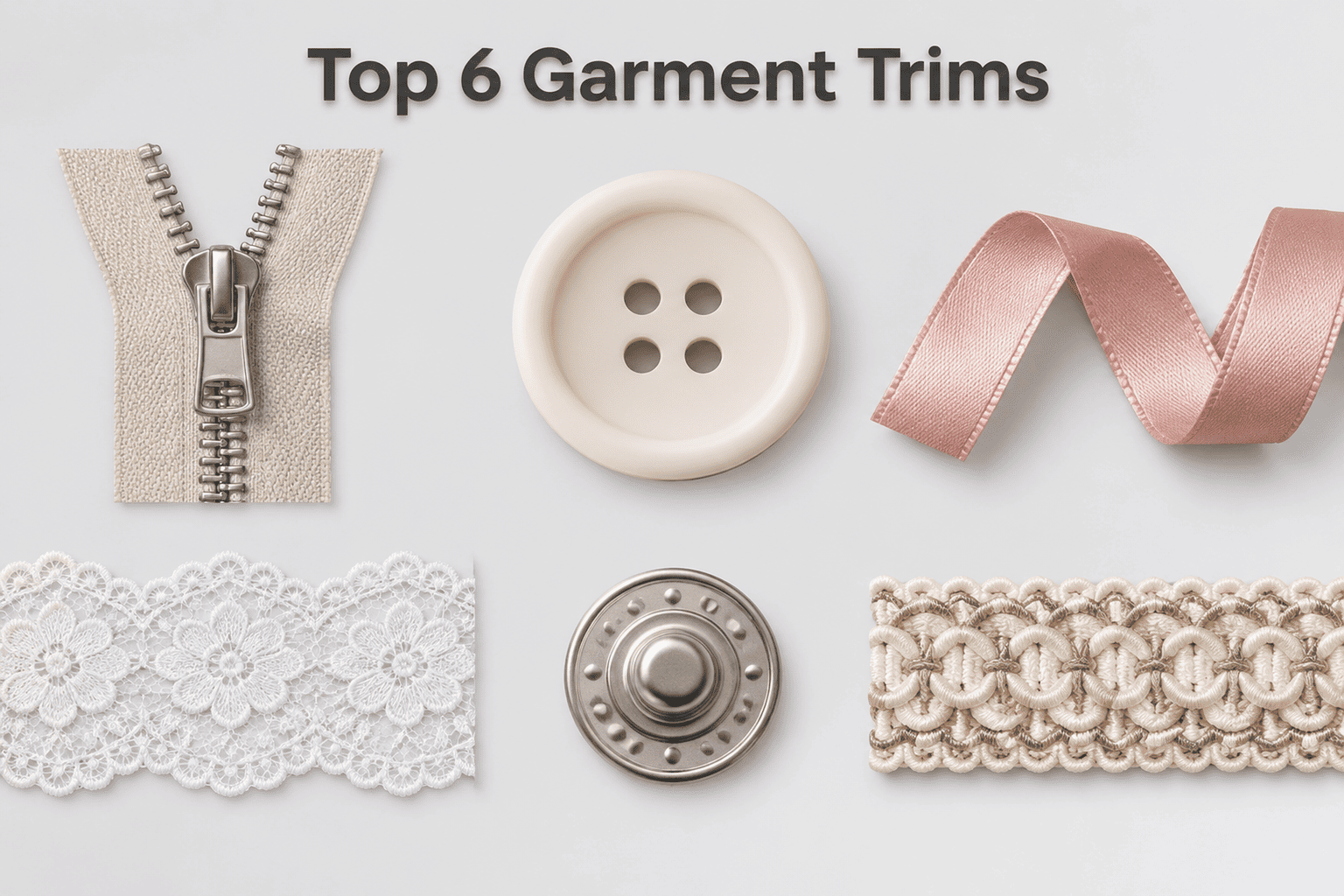
There are six core types of garment trims every buyer should understand: branding trims (woven labels, printed labels), informational trims (care labels, size labels), decorative trims (embroidered patches, PVC/rubber patches), fastening trims (zippers, buttons, snaps), structural trims (elastic bands, drawstrings, tapes), and packaging trims (hang tags, leather tags). Each category serves a distinct function in the finished garment, and selecting the right type depends on your garment's end-use, placement, production method, and target market — not just aesthetics or price.
What separates experienced buyers from first-timers isn't knowing trim names — it's understanding how each type affects your production workflow, compliance obligations, and brand perception. Below, I break down all six categories by their functional role, the specification variables that actually matter, and the sourcing pitfalls I've seen catch buyers off guard across thousands of orders.
Why Should You Organize Garment Trims by Function Instead of Material?
Most "types of garment trims" articles read like a dictionary — alphabetical lists of products with no framework for making decisions. That approach leaves buyers guessing which trims they actually need and why.
The smarter approach is to organize trims by what they must do on the garment. Every trim falls into one of six functional roles: brand, inform, decorate, fasten, reinforce, or package. When you start from function, the material, size, attachment method, and compliance requirements follow logically — rather than being random spec choices.
The Problem with Material-First Thinking
In our experience working with DTC brands and Amazon sellers, the most common early mistake is choosing a trim because of how it looks in a supplier's catalog. A brand owner sees a beautiful woven damask label and orders it — without considering that their garment is an activewear tank top that needs a heat-cut, fold-end label small enough to avoid skin irritation. The material was fine. The function was wrong.
Here's a simplified view of how function drives specification:
| Functional Role | Primary Trim Types | Key Decision Variable |
|---|---|---|
| Branding | Woven labels, printed labels, leather tags | Garment category, brand positioning, placement |
| Information | Care labels, size labels, content labels | Destination market regulations, fiber content |
| Decoration | Embroidered patches, PVC/rubber patches, heat-transfer labels | Application method, washability, MOQ |
| Fastening | Zippers, buttons, snaps, hook-and-loop | Garment construction, safety testing, durability |
| Structural | Elastic bands, drawstrings, binding tape | Stretch recovery, color fastness, garment fit |
| Packaging | Hang tags, swing tags, tissue paper, poly bags | Retail channel, unboxing experience, cost |
Why This Framework Saves You Money
When you evaluate trims by function, you avoid two expensive mistakes:
- Over-specifying. Ordering high-end damask woven labels for a product that only needs a simple heat-transfer mark.
- Under-specifying. Using a cheap printed label that fades after three washes on a premium hoodie line, damaging your brand reputation.
A common question we hear from first-time buyers is: "Just tell me what labels I need." The honest answer is always: "Tell me what the garment does, who's buying it, and where it's sold — then I can tell you." Function drives everything.
What Are Branding Trims and How Do You Choose the Right Type?
Branding trims are the single most visible type of garment trim on your product — they carry your logo, brand name, and identity directly on the garment. Get them wrong, and even a great garment feels generic. Get them right, and they become a silent salesperson.
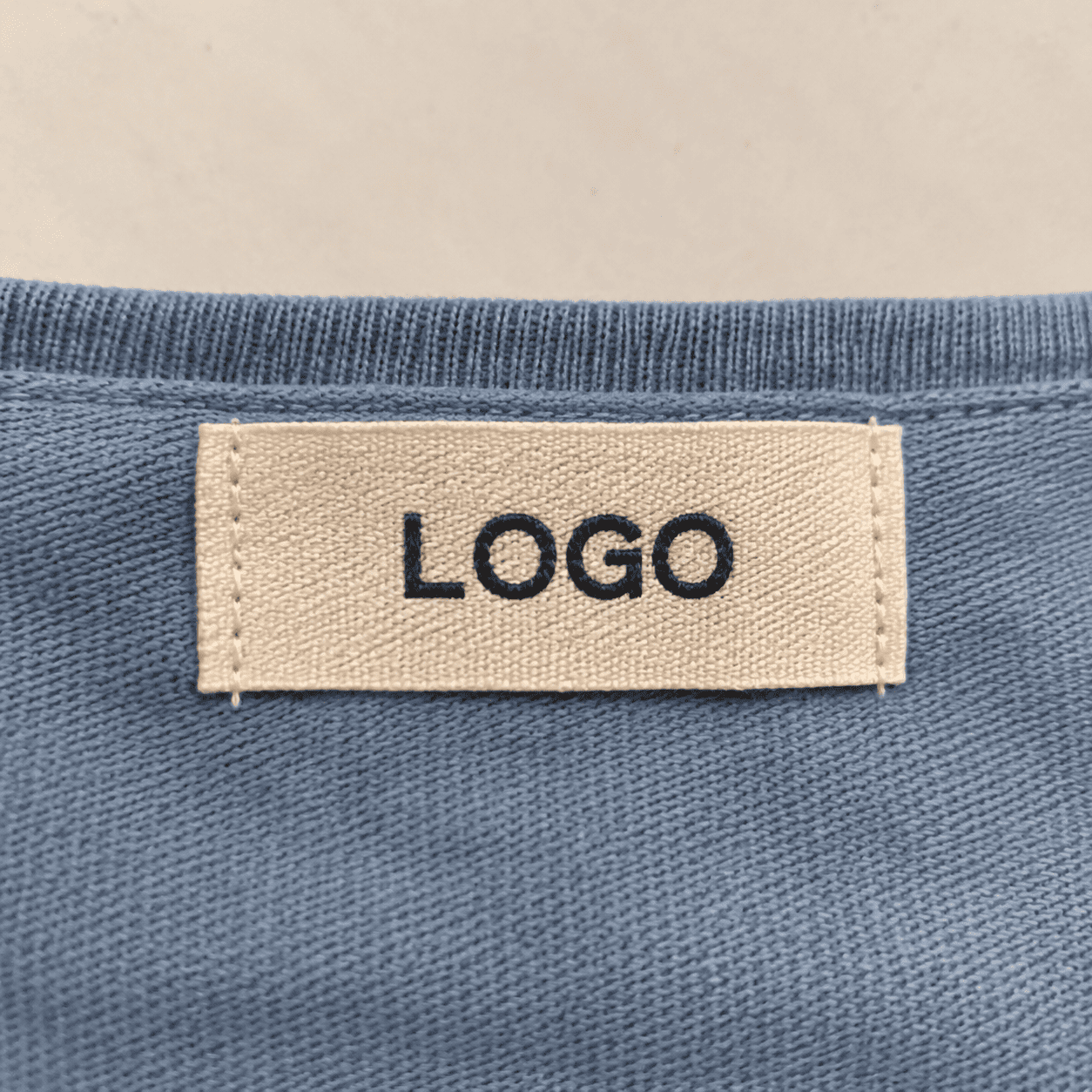
Branding trims include woven labels, printed labels, heat-transfer labels, leather/PU tags, and rubber/PVC labels. The right choice depends on three factors: garment category and fabric type, brand positioning (premium vs. value), and where on the garment the trim will be placed. There is no single "best" branding trim — only the best fit for your specific product.

Woven Labels: The Default — But Not Always the Right Choice
Woven labels are the most requested branding trim we produce. They're durable, professional, and come in a wide range of weave densities and finishes. But "woven label" is a broad category that splits into very different products depending on application.
Damask weave labels offer the highest thread density and sharpest detail — ideal for luxury outerwear, tailored clothing, and designer collections. They are typically sewn in along a folded edge and feel smooth against the skin. However, they cost more per unit and have slightly longer lead times (usually 10–15 days for production after proof approval).
Taffeta weave labels are lighter, thinner, and more cost-effective. They work well for casual wear, t-shirts, and basics where the label sits inside the neckline or side seam. They accept printed overprints for variable data like sizing.
Here's a quick comparison:
| Spec | Damask Woven Label | Taffeta Woven Label |
|---|---|---|
| Thread density | High (detailed logos) | Medium (simpler artwork) |
| Typical use | Premium outerwear, luxury | Casual wear, basics, underwear |
| Feel | Smooth, satin-like | Thinner, slightly stiffer |
| Cost per unit (5,000 pcs) | Higher | 30–50% lower |
| Lead time | 10–15 days | 7–10 days |
| Fold options | Manhattan, end fold, center fold | Center fold, end fold |
Heat-Transfer Labels: When Comfort Is Non-Negotiable
For activewear, children's clothing, and intimates, heat-transfer labels have become the dominant branding trim. They eliminate the sewn edge entirely — the label is heat-pressed directly onto the fabric, resulting in a tagless feel.
However, heat-transfer labels change your production workflow. Your factory needs a heat press station, temperature and dwell-time controls, and trained operators. Mis-applied heat transfers can scorch fabric or peel after a few washes. In our experience, the defect rate for heat-transfer application is higher than for sewn-in labels1, especially with factories applying them for the first time.
Buyer tip: Always request a wash-test sample before committing to a heat-transfer label. Ask your supplier for the recommended press temperature, pressure, and dwell time — and share that specification sheet directly with your garment factory.
Leather, PU, and Rubber Labels: The Brand Statement Piece
Leather tags (genuine or PU synthetic), rubber patches, and PVC labels serve a different branding function — they are visible from the outside and act as a brand signature element, not just an identifier. Think of the leather patch on denim jeans or the rubber logo on a streetwear hoodie.
These trims have higher MOQs (typically 500–1,000 pieces minimum), require custom molds (for rubber/PVC), and add a separate attachment step in production. A common question we hear: "Can I use rubber patches on swimwear?" The answer depends on the specific PVC/silicone formulation and its chlorine resistance — something that must be verified with a sample test, not assumed.
What Informational Trims Are Required — and What Happens If You Get Them Wrong?
Informational trims may be the least exciting category, but they carry the highest compliance risk. Care labels, fiber content labels, size labels, and country-of-origin labels are legally mandated in most destination markets. Getting them wrong isn't just embarrassing — it can mean your shipment gets held at customs or pulled from Amazon.
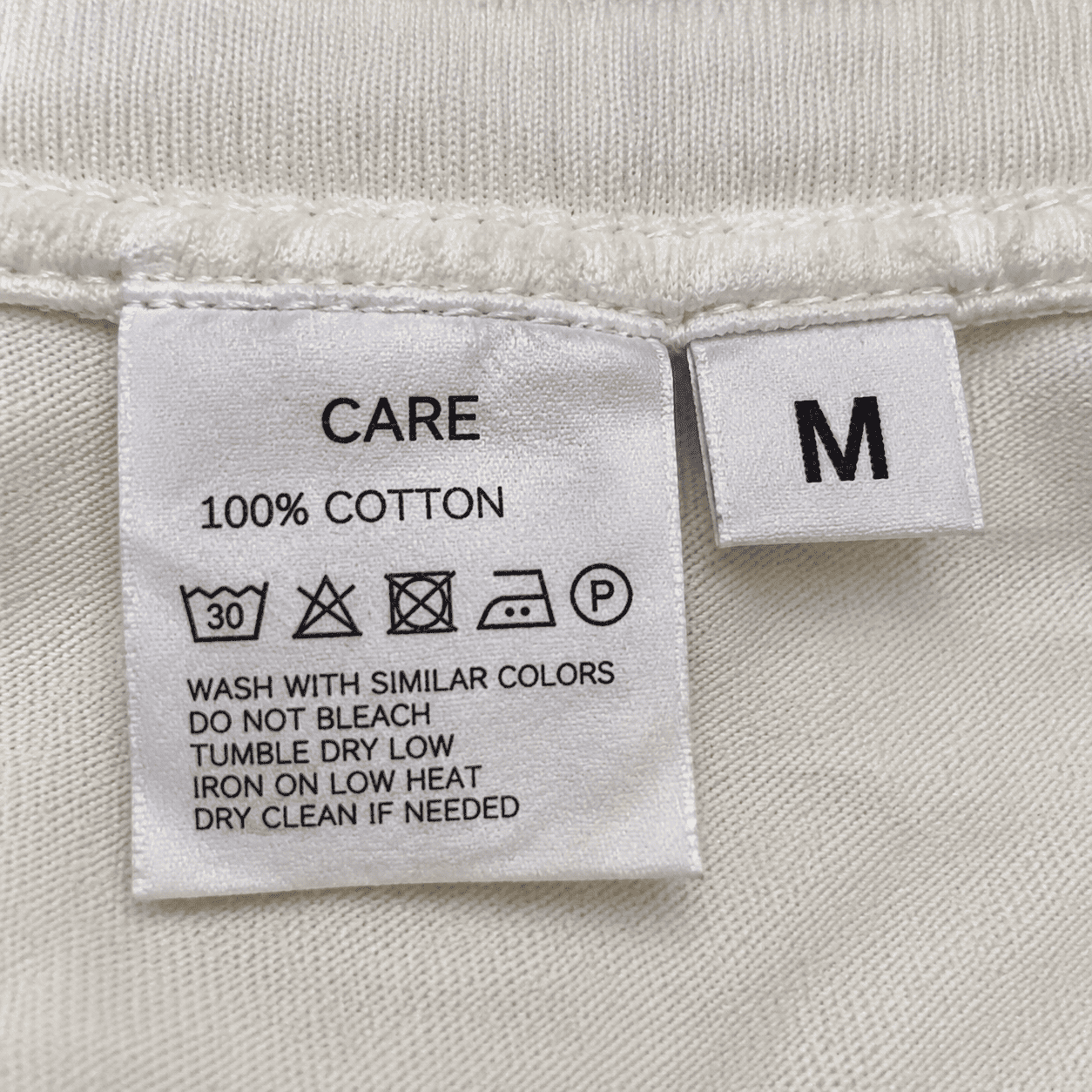
Informational trims include care/wash labels, fiber content labels, size labels, and country-of-origin tags. In the US, the FTC requires specific care instructions and fiber content disclosure (16 CFR Part 423)2; the EU has its own textile labeling regulation (EU 1007/2011)3. These labels must be permanently attached to the garment and remain legible for the product's useful life.
Care Labels: The Hidden Compliance Trap
The most common mistake I see — especially from first-time Amazon sellers — is copying care instructions from a competitor's label. This is dangerous. Your fiber blend, dye process, and garment construction determine the correct care instructions. Incorrect care labeling can lead to consumer complaints, returns, and regulatory penalties.
Key variables for care label specification:
- Material: Satin (soft, common for apparel), semi-stiff taffeta (durable, for workwear/outerwear), non-woven (for disposable or very low-cost goods)
- Print method: Flexographic (high volume, cost-effective), thermal transfer (variable data, short runs)
- Content: Must include care symbols (ASTM D5489 in the US, ISO 3758 in the EU)4, fiber percentage, country of origin, manufacturer/importer identification
- Attachment: Sewn into a seam; must survive the garment's expected wash cycles
Size Labels: Small Trim, Big Decision
Size labels seem trivial — until your factory sews the wrong size label into 2,000 units. I've seen this happen more than once. The downstream cost isn't the labels themselves (which are fractions of a cent each). It's the re-work, the shipping delay, and the missed selling season.
Buyer tip: Use a distinct color-coding system or sequential numbering on your size labels to reduce factory mix-up risk. Provide your factory with a clear, visual labeling guide — not just a spec sheet.
How Do Decorative Trims Change Your Production Workflow?
Decorative garment trims — embroidered patches, woven patches, PVC badges, heat-transfer graphics — are where brand personality comes alive. But they are also where procurement decisions have the biggest hidden impact on production lead time and defect risk.
Decorative trims include embroidered patches, chenille patches, woven patches, PVC/rubber patches, rhinestone transfers, and heat-transfer prints. The choice between these isn't primarily aesthetic — it determines your application method (sew-on, iron-on, heat-press, adhesive backing), your MOQ structure, your mold costs, and your factory's defect rate.
Embroidered Patches vs. Heat-Transfer Labels: A Case Study in Hidden Costs
A US-based DTC brand launching a streetwear hoodie line approached us wanting embroidered chest patches — 8 cm diameter, 12 thread colors, placed on a heavyweight French terry fabric. Great look. But here's what the decision actually involved:
| Decision Variable | Embroidered Patch (Sew-On) | Heat-Transfer Graphic |
|---|---|---|
| MOQ | 300–500 pcs per design | 200–300 pcs per design |
| Lead time (production) | 7–12 days | 5–7 days |
| Mold/setup cost | None (digitizing fee ~$30–50) | Screen/film setup $20–80 |
| Application at factory | Manual sewing or embroidery station | Heat press (temp/time critical) |
| Defect risk | Thread pulls, misalignment | Peeling, scorching, color shift |
| Wash durability | Excellent (if properly stitched) | Varies by transfer quality |
| Texture/dimension | Raised, tactile, premium feel | Flat, smooth |
The brand ultimately chose embroidered patches — but only after understanding that it added approximately 45 seconds per unit to their factory's sewing line and required a QC checkpoint for placement accuracy. That single trim decision changed their production cost by roughly $0.15–0.25 per garment.
PVC and Rubber Labels: Mold Cost Is the Gate
PVC and silicone rubber labels require a custom mold — typically $50–$150 depending on size and complexity. This mold cost is a one-time investment, but it means your first order has a higher upfront cost and a longer lead time (add 3–5 days for mold making). Once the mold exists, reorders are fast and consistent.
These trims are increasingly popular for outdoor apparel, children's wear, and streetwear. They are waterproof, flexible, and highly durable. However, for markets with strict chemical safety requirements — particularly children's garments sold in the US (CPSIA) or EU (REACH) — the specific PVC or silicone formulation must be tested and certified. Our products carry OEKO-TEX® STANDARD 100 certification5, which buyers should verify against their specific market requirements.
Why Are Fastening Trims the Most Underestimated Category?
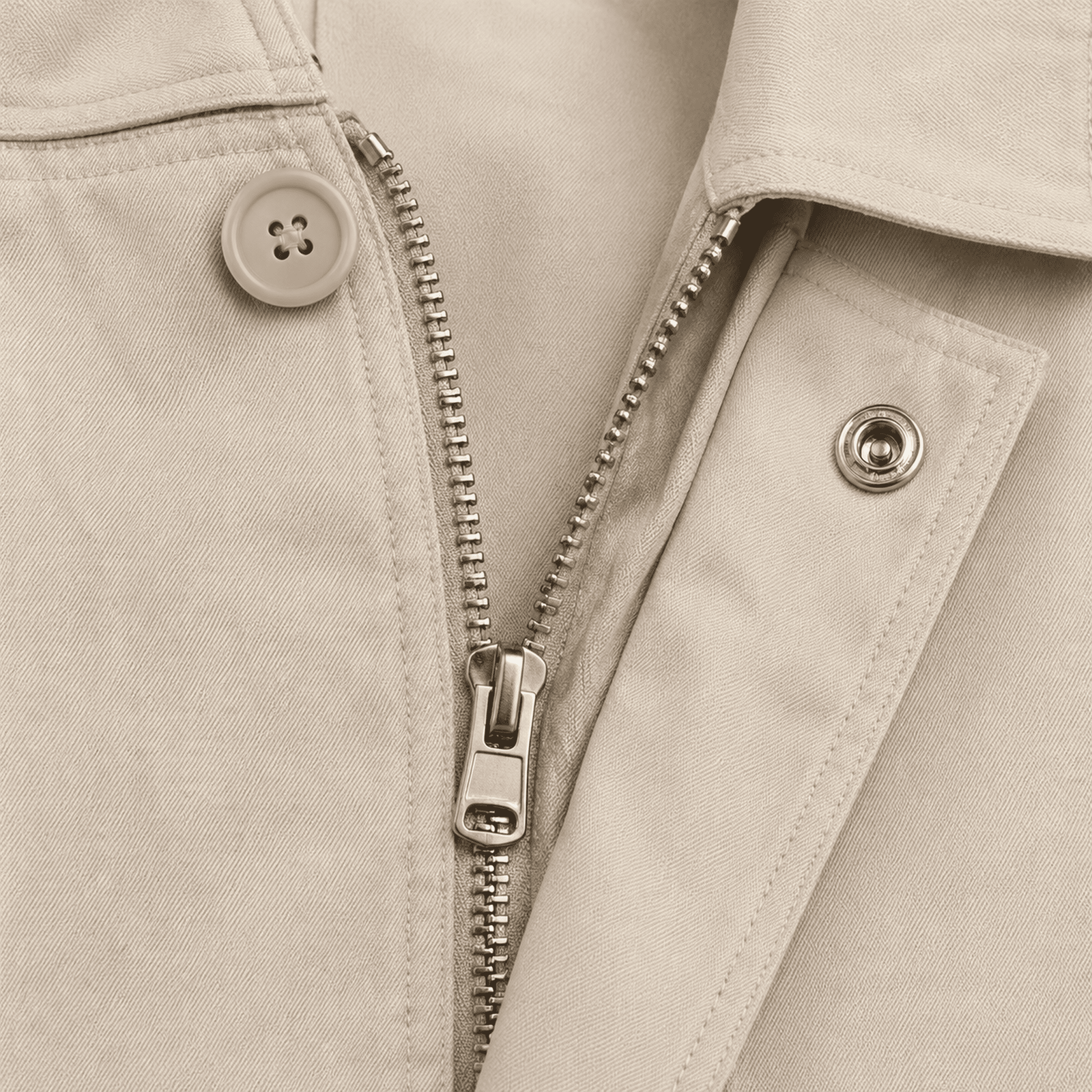
Fastening trims — zippers, buttons, snaps, hooks, and buckles — are the most structurally critical type of garment trim. A label that fades is annoying. A zipper that breaks is a return, a refund, and a one-star review.
Fastening trims include zippers (metal, nylon coil, molded plastic), buttons (metal, polyester, natural shell, corozo), snaps/press studs, hook-and-eye closures, and hook-and-loop (Velcro-type) tapes. Selection depends on garment type, stress load, safety requirements (especially for children's wear), and aesthetic direction. Fasteners must be tested for pull strength, corrosion resistance, and repeated-use durability.
Zippers: More Specification Variables Than Any Other Trim
Zippers alone have more specification variables than most other trim categories combined:
- Teeth type: Metal (brass, aluminum, antique finish), nylon coil, molded plastic (Vislon/Derlin)
- Gauge/size: #3, #5, #8, #10 — determines strength and visual weight
- Slider/puller: Auto-lock, non-lock, custom puller shape, engraved logo
- Opening type: Closed-end, open-end (separating), two-way
- Tape color: Must match or intentionally contrast garment fabric
- Length: Custom cut to garment spec
A common sourcing mistake: ordering a generic #5 nylon coil zipper for a heavy outerwear jacket that needs a #8 metal separating zipper with an auto-lock slider. The cost difference is significant — sometimes 3–5x per unit — but the performance difference is even more significant.
Buttons and Safety: A Compliance Minefield for Children's Wear
For garments intended for children aged 12 and under sold in the US, buttons and small parts fall under CPSC (Consumer Product Safety Commission) small parts regulations (16 CFR 1501)6. Buttons must pass pull-strength testing to ensure they cannot be easily detached and pose a choking hazard.
This is not optional — it is a legal requirement. I strongly recommend that buyers targeting the children's wear market engage a qualified testing laboratory (such as SGS, Bureau Veritas, or Intertek) to verify their fastening trims meet applicable safety standards before mass production.
Buyer tip: When specifying buttons, always provide your supplier with the pull-strength requirement (typically 15 lbs/70 N minimum for children's wear)7. Request test reports, not just verbal assurances.
How Do Structural Trims Affect Garment Fit and Durability?
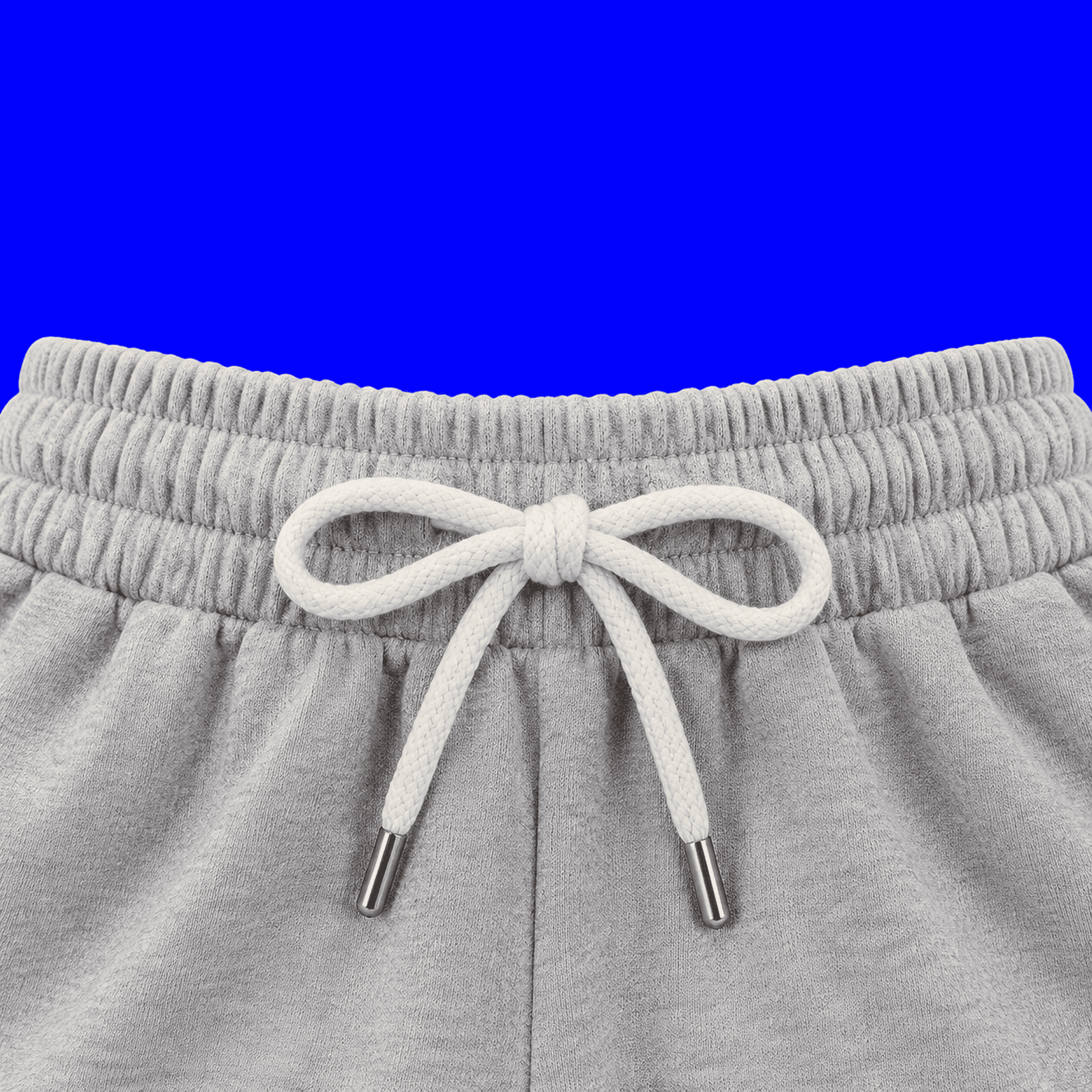
Structural garment trims — elastic bands, drawstrings, binding tape, and webbing — don't carry your logo or decorate the garment. They hold it together, make it fit, and determine how it feels after 50 washes. They are the trims buyers think about last and regret first.
Structural trims include elastic bands (woven, knitted, braided), drawstrings (cotton, polyester, nylon), binding/twill tape, webbing, and interfacing. The critical specification variables are stretch recovery (for elastics), shrinkage rate, color fastness to washing, and compatibility with the garment's fabric weight and construction method.
Elastic Bands: The Trim That Defines Your Customer's Comfort
Elastic is one of the highest-volume trims we supply, yet it generates some of the most nuanced specification questions. Here's why: a 25mm woven elastic for jogger waistbands and a 10mm knitted elastic for underwear leg openings are fundamentally different products — different construction, different stretch percentages, different recovery characteristics, and different price points.
Key elastic specifications buyers should verify:
| Spec | Why It Matters |
|---|---|
| Width (mm) | Must match garment design and casing width |
| Stretch % | Determines how the garment fits and feels (typically 100–200%) |
| Recovery rate | Poor recovery = sagging after wash cycles |
| Construction type | Woven (firmer, durable), knitted (softer, flexible), braided (narrow applications) |
| Color fastness | Must survive garment dyeing or repeated washing without bleeding |
| Shrinkage rate | Some elastics shrink 3–8% after washing — failure to account for this leads to fit problems |
Drawstrings: Simple Product, Surprising Risks
Drawstrings seem straightforward, but they carry specific safety regulations in the EU and US for children's garments. EN 146828 (EU) and ASTM F18169 (US) restrict drawstring length, placement, and type in children's clothing to prevent strangulation hazards. Buyers should verify these requirements with a qualified compliance consultant before specifying drawstrings for any children's product.
Do Packaging Trims Really Matter for Your Bottom Line?
Packaging trims — hang tags, swing tags, tissue paper, poly bags, stickers — are the first thing your customer touches and the last thing most procurement managers think about. For DTC brands and e-commerce sellers, packaging trims are your unboxing experience. They directly influence perceived value and repeat purchase rates.
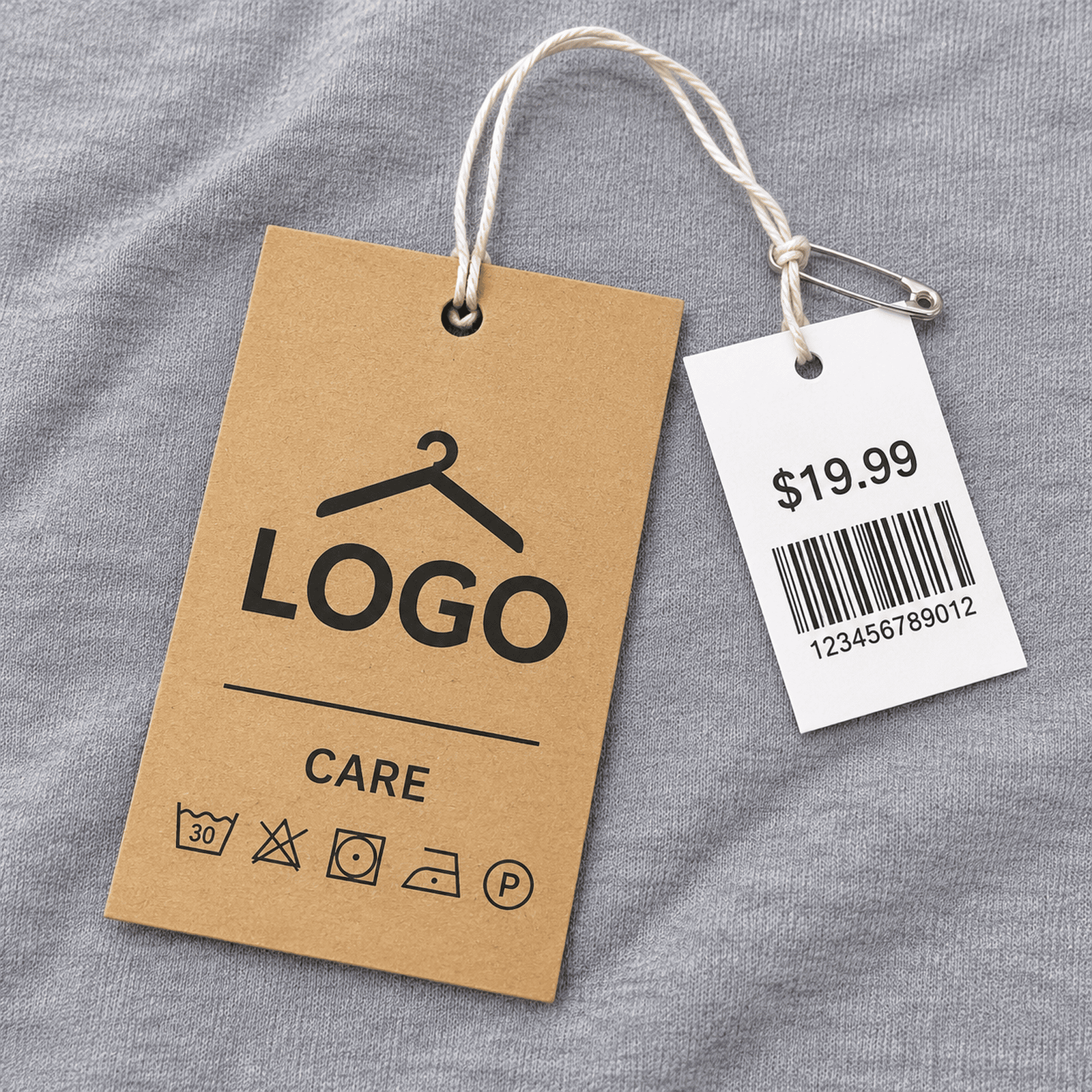
Packaging trims include hang tags (printed cardboard or specialty paper), swing tags with string or safety pin, poly bags, tissue paper, branded stickers, and packaging inserts. For retail channels, hang tags carry price and barcode information. For DTC brands, packaging trims are a branding touchpoint that can justify premium pricing and improve customer retention10.
Hang Tags: More Than a Price Carrier
Hang tags are the most versatile packaging trim. They can carry your brand story, QR codes linking to digital content, care instructions, sustainability messaging, and promotional offers — all on a small piece of card stock.
Key decisions for hang tag specification:
- Paper stock: 300gsm–600gsm art paper, kraft paper, specialty textured stocks
- Finish: Matte lamination, gloss lamination, spot UV, foil stamping, embossing/debossing
- Shape: Standard rectangle, die-cut custom shapes, rounded corners
- Attachment: Cotton string, waxed cord, safety pin, plastic barb (for retail)
- Print: CMYK offset (high volume), digital (short runs, variable data)
In our experience, the biggest surprise for first-time buyers is how much finish options affect perceived quality. A 350gsm hang tag with matte lamination and debossed logo feels dramatically more premium than the same design printed flat on uncoated card — and the cost difference is often less than $0.02–0.05 per piece at moderate volumes.
Lead Time and MOQ Considerations for Packaging Trims
Packaging trims generally have the shortest lead times and lowest MOQs of any trim category — often 500 pieces minimum with 5–7 day production. This makes them ideal for testing brand concepts or running limited-edition collections without large inventory commitments.
Frequently Asked Questions
What is the difference between garment trims and garment accessories?
In the industry, "trims" typically refers to all secondary materials attached to a garment beyond the main fabric — labels, buttons, zippers, patches, tags, elastic, and thread. "Accessories" sometimes refers specifically to add-on items like belts, scarves, or jewelry. However, the terms are often used interchangeably in sourcing conversations. Clarify definitions with your supplier to avoid miscommunication.
What types of garment trims need safety testing for children's wear?
Fastening trims (buttons, snaps, toggles) require small-parts and pull-strength testing under CPSC regulations in the US. Drawstrings must comply with length and placement restrictions (EN 14682 in the EU, ASTM F1816 in the US). All trims should be tested for harmful substances — OEKO-TEX® STANDARD 100 or equivalent testing covers this. Consult a qualified testing lab for your specific product and market.
How do I determine the right MOQ when ordering multiple types of trims?
MOQs vary significantly by trim type. Woven labels may start at 1,000–2,000 pieces; custom PVC patches may require 500 pieces minimum plus a mold fee; hang tags can start as low as 500 pieces. A one-stop trims supplier can often consolidate your order across categories, lowering per-item MOQs and simplifying logistics. Ask about flexible MOQ options when evaluating suppliers.
Can I get free samples of garment trims before placing an order?
Most reputable trims manufacturers offer free samples of existing products and low-cost custom sampling (typically 3–7 days for production). At Zhunming, we provide free samples and technical specification sheets so buyers can evaluate quality, color accuracy, and material feel before committing to production orders.
How long does it take to produce custom garment trims?
Standard production timelines after sample approval: woven labels (7–15 days), heat-transfer labels (5–7 days), embroidered patches (7–12 days), PVC/rubber labels (10–15 days including mold), hang tags (5–7 days), zippers and buttons (7–10 days). Rush orders may be available — discuss timelines early in your sourcing process to avoid production delays.
Conclusion
Understanding the six core types of garment trims — branding, informational, decorative, fastening, structural, and packaging — is the foundation for smarter sourcing decisions. The key takeaway is that trims are chosen by function, not by appearance. Each category carries its own specification variables, compliance requirements, MOQ structures, and production workflow implications. Buyers who evaluate trims through this functional lens avoid costly mistakes — wrong specifications, compliance failures, factory delays, and brand-damaging quality issues.
If you're sourcing garment trims for a new product line or switching suppliers, I encourage you to start with your garment's end-use requirements and work backward to specifications. Our team at Zhunming is available 24/7 to help you navigate these decisions — from free samples and technical spec sheets to custom development and consolidated trim sourcing across all six categories. Contact us to discuss your specific trim requirements and get a personalized recommendation.
"Heat Transfer Labels vs Woven Labels", https://qualitywovenlabels.com/blog/post/heat-transfer-labels-vs-woven-labels-which-is-right-for-your-brand. Quality management literature in apparel manufacturing notes that heat-transfer label application is sensitive to process parameters including temperature, pressure, and dwell time, and that deviations can result in defects such as incomplete adhesion, peeling, or fabric scorching; proper operator training and equipment calibration are cited as critical factors in reducing defect rates. Evidence role: general_support; source type: research. Supports: Heat-transfer label application involves process variables (temperature, pressure, dwell time) that can increase defect rates compared to sewn-in labels when not properly controlled.. Scope note: Comparative defect rate data between heat-transfer and sewn-in labels is not widely published in peer-reviewed literature; the claim likely reflects practitioner experience rather than controlled studies. ↩
"Care Labeling of Textile Wearing Apparel & Certain Piece ...", https://www.ftc.gov/legal-library/browse/rules/care-labeling-textile-wearing-apparel-certain-piece-goods. The Federal Trade Commission's Care Labeling Rule, codified at 16 CFR Part 423, requires manufacturers and importers of textile wearing apparel to attach care labels with instructions for the regular care of the garment; see FTC, 'Threading Your Way Through the Labeling Requirements Under the Textile and Wool Acts.' Evidence role: definition; source type: government. Supports: The FTC's Care Labeling Rule (16 CFR Part 423) mandates that manufacturers and importers attach care instructions to textile garments and provide fiber content disclosure.. ↩
"Factsheet - 32011R1007 | European Free Trade Association", https://www.efta.int/eea-lex/32011r1007. Regulation (EU) No 1007/2011 of the European Parliament and of the Council on textile fibre names and related labelling and marking of the fibre composition of textile products establishes rules for labelling textile products placed on the EU market, including fibre content disclosure requirements. Evidence role: definition; source type: government. Supports: EU Regulation No 1007/2011 governs textile fibre names and related labelling and marking of fibre composition of textile products in the European Union.. ↩
"Clothes Captioning: Complying with the Care Labeling Rule", https://www.ftc.gov/business-guidance/resources/clothes-captioning-complying-care-labeling-rule. ASTM D5489, 'Standard Guide for Care Symbols for Care Instructions on Textile Products,' provides the care symbol system used in the US, while ISO 3758, 'Textiles — Care labelling code using symbols,' defines the internationally recognized care labelling system adopted in the EU and most other markets; the two systems use different symbol sets. Evidence role: definition; source type: institution. Supports: ASTM D5489 defines care symbols used in the United States, while ISO 3758 establishes the international system of textile care labelling symbols widely used in the EU and other markets.. ↩
"Oeko-Tex", https://en.wikipedia.org/wiki/Oeko-Tex. OEKO-TEX® STANDARD 100, administered by the International Association for Research and Testing in the Field of Textile and Leather Ecology (OEKO-TEX®), tests textile products for harmful substances including regulated chemicals, pesticides, heavy metals, and formaldehyde, with limit values that often exceed national and international requirements. Evidence role: definition; source type: institution. Supports: OEKO-TEX® STANDARD 100 is an independent testing and certification system for textile raw materials, intermediate, and end products at all stages of production, verifying that tested articles are free from harmful levels of regulated and unregulated substances.. ↩
"16 CFR Part 1501 -- Method for Identifying Toys and Other ...", https://www.ecfr.gov/current/title-16/chapter-II/subchapter-C/part-1501. 16 CFR 1501, issued by the U.S. Consumer Product Safety Commission, identifies small parts that present choking, aspiration, or ingestion hazards to children under 3 years of age; the regulation applies to toys and other articles intended for use by children in that age group. Evidence role: definition; source type: government. Supports: CPSC's 16 CFR 1501 defines small parts testing requirements for products intended for children, establishing size thresholds to prevent choking hazards.. Scope note: The article states the regulation applies to children aged 12 and under, but 16 CFR 1501 specifically addresses children under 3 years of age. Broader CPSIA requirements may apply to children's products for ages up to 12, but the specific CFR citation has a narrower age scope. ↩
"16 CFR 1500.51 -- Test methods for simulating use and ...", https://www.ecfr.gov/current/title-16/chapter-II/subchapter-C/part-1500/section-1500.51. Testing standards for children's garment attachments, including ASTM and retailer-specific protocols, commonly specify minimum pull-strength thresholds in the range of 50–90 N depending on the component type and child age group; specific requirements vary by standard and retailer. Evidence role: statistic; source type: institution. Supports: Industry testing standards specify minimum pull-strength requirements for buttons and attachments on children's garments to prevent detachment and choking hazards.. Scope note: The exact 70 N / 15 lbs figure cited in the article may reflect a common industry benchmark or specific retailer requirement rather than a single universal regulatory threshold; actual requirements vary by testing standard and market. ↩
"EN 14682:2014 - Safety of Children's Clothing Cords ...", https://standards.iteh.ai/catalog/standards/cen/71dcd208-3fb7-48ef-aa21-ad8abdbd6d94/en-14682-2014?srsltid=AYCX9vIDg_zHwMS4rkjSlq8xXKlwlZMMbBeN8Tbk_dcrzXBhIZPc_GUg. EN 14682:2014, published by the European Committee for Standardization (CEN), sets safety requirements for cords, drawstrings, and decorative strings on children's clothing, specifying restrictions by garment area and child age group to mitigate strangulation and entrapment hazards. Evidence role: definition; source type: institution. Supports: EN 14682 is a European safety standard that specifies requirements and test methods for cords and drawstrings on children's clothing to reduce strangulation and entrapment risks.. ↩
"Drawstrings in Children's Upper Outerwear", https://www.cpsc.gov/FAQ/Drawstrings-in-Children%E2%80%99s-Upper-Outerwear. ASTM F1816, 'Standard Safety Specification for Drawstrings on Children's Upper Outerwear,' establishes requirements for drawstring design on children's outerwear to minimize strangulation and entanglement risks; the CPSC has used this standard as a basis for enforcement actions. Evidence role: definition; source type: institution. Supports: ASTM F1816 is a safety specification addressing drawstrings on children's upper outerwear to reduce strangulation and entanglement hazards.. Scope note: ASTM F1816 specifically addresses upper outerwear rather than all children's clothing categories; separate standards may apply to other garment types. ↩
"The Impact of Visual Elements of Packaging Design on ... - PMC", https://pmc.ncbi.nlm.nih.gov/articles/PMC11851823/. Research in consumer behavior and marketing, including studies published in the Journal of Consumer Psychology and Journal of Retailing, has demonstrated that packaging design elements such as material quality, finish, and tactile properties significantly influence consumers' perceived product value and purchase intentions. Evidence role: general_support; source type: paper. Supports: Product packaging design and unboxing experience influence consumer perceptions of product quality and can affect repeat purchase behavior.. Scope note: Most packaging perception research examines consumer packaged goods broadly rather than garment hang tags and trim packaging specifically; direct applicability to apparel trims is inferred rather than directly studied. ↩

0 Comments
Ask a question or share your garment accessories sourcing experience.